










We also considered 10 others:


Our Top Choice
Compare Features


The order above is not editorial opinion, and it is not paid placement. It comes from what shoppers across our network actually do - which crockpots they compare, and which they ultimately buy. We re-rank as new data comes in, so the long-term favorites have to keep earning their spot against new entrants. The full method, including how we make money.
Crockpots Buyer's Guide
A good crockpot has to be big enough for the way you actually cook, yet small and manageable enough that you will wash it, store it, and use it often. The sharpest tradeoffs are capacity versus handling, and convenient set-and-forget controls versus dependable, safe heat performance.
Capacity Fit
Capacity determines both cooking performance and everyday convenience. A crockpot that is too small limits recipes, while one that is too large can overcook small portions and take up unnecessary sink, cabinet, and counter space.
Match capacity to your normal batch size, not the biggest meal you can imagine. Small 1.5- to 3-quart cookers are best for dips, sauces, oatmeal, single meals, and couples; mid-size cookers suit routine family dinners; 6- to 8-quart oval cookers make more sense for roasts, whole poultry, meal prep, and freezer batches. For best slow-cooking results, avoid routinely running the crock nearly empty or packed to the rim; many recipes perform best when the insert is roughly half to two-thirds full. Owner feedback strongly supports this size-matching approach: compact 2-quart units are appreciated for single meals, couples, dips, gravies, and small portions, while 7-quart oval models are praised for family meals, batch cooking, and larger dishes without feeling hard to use.
Heat Control
Slow cooking depends on controlled heat over several hours, not just whether the appliance turns on. Poor heat control can leave food underdone, dry out liquids, scorch dairy-based dips, or make recipe timing unreliable.
Prioritize steady, predictable heating over raw speed. A useful crockpot should bring dense foods to a safe simmer over time, hold low heat without boiling sauces aggressively, and keep warm without drying food out. Look for clear low, high, and warm behavior, and be cautious when owner patterns mention food staying lukewarm, scorching around the edges, uneven cooking, or inconsistent heat from one cycle to the next. Sentiment on this point is notably mixed: many owners report successful basic slow-cooking for stew, queso dip, and smaller servings, but others say some cookers run hotter than expected, do not get hot enough, heat too slowly, or power on without actually warming food.
Control Style
Controls affect how confidently you can leave a meal cooking while you work, sleep, or prep other dishes. The best interface is not always the most complex one; it is the one that reliably matches your routine and recipes.
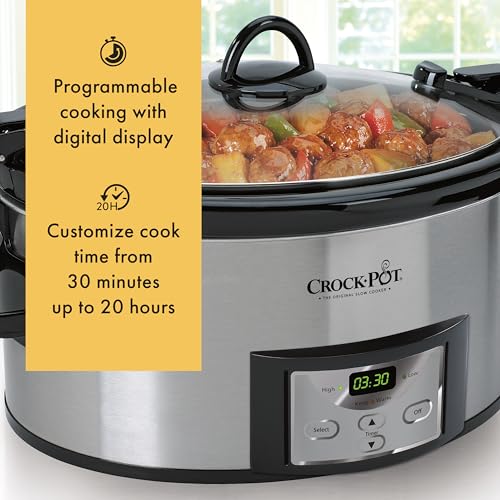
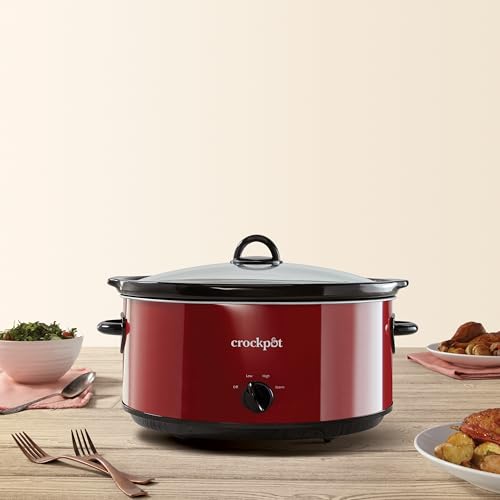
Choose the control style that fits how you cook. Manual knobs are best if you want simplicity, fewer settings, and a cooker that is easy to understand at a glance; programmable controls are better for meal prep when you need timed cooking, automatic warm mode, or more precise scheduling. For digital models, look beyond the feature list and check whether the timer, display, and heat cycle behave consistently, because a control panel that resets or fails to trigger heat undermines the whole set-and-forget purpose. Owners often praise both approaches when done well: simple knob-controlled cookers are liked for straightforward operation, while programmable timer and temperature options are described as making meal prep low-effort. The caution is that reliability feedback is split, with some reports of timers restarting or units powering on without actually heating.
Insert Handling
The insert is the part you fill, lift, scrub, and store, so its material matters as much as the base. A heavy or awkward crock can make a large cooker unpleasant even when the cooking results are good.
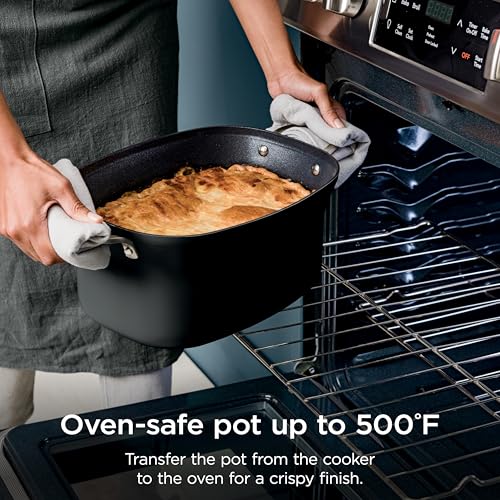
Pay close attention to the cooking insert, because it determines weight, browning options, washing effort, and day-to-day handling. Traditional stoneware holds heat well but can be heavy and awkward when full; lighter nonstick or metal-style inserts can be easier to lift, wash, and move to the table or fridge. If you want to sear meat or sauté aromatics before slow cooking, confirm that the insert is explicitly stovetop-safe for your burner type; never assume a removable crock can go on direct heat. Owner sentiment backs this as a real differentiator: lighter inserts are praised for being easier to lift, wash, and handle, and inserts that can brown or sauté before slow cooking are valued because they reduce extra pans.
Easy Cleanup
Crockpots often cook sticky, saucy foods for hours, so cleanup can determine whether the appliance gets used regularly. Easier washing also matters because dried-on residue around the insert or lid can affect odors and long-term satisfaction.
Look for a fully removable insert, a lid that is easy to rinse, and surfaces without unnecessary crevices where sauce can bake on. Nonstick interiors can make sticky queso, beans, oatmeal, and braises easier to clean, but they also require gentler utensils and care to avoid coating damage. If you cook small batches, a smaller removable insert can be easier to fit in the sink and may be convenient for fridge storage. Owners repeatedly describe cleanup as a major strength when the pot is nonstick or conveniently sized, and small removable inserts are specifically appreciated for easy washing and storage.
Build Trust
A crockpot is a long-duration heating appliance, so reliability matters more than flashy extras. Good construction supports stable cooking, safer handling, and confidence that the unit will perform the same way across repeated meals.
Inspect the practical build details: a stable base, snug lid, solid handles, a cord that suits your counter layout, and a heating base that does not feel flimsy. Because crockpots are often left running for hours, early heating failure is more than an inconvenience; it can ruin a meal and make unattended use hard to trust. Favor models with consistent owner patterns around everyday use, and treat repeated reports of stopping after a few uses or failing to warm as serious red flags. Positive owner feedback notes that some cookers feel well made, look better than expected, and handle daily cooking without seeming flimsy, but the main negative watch-out is durability and heating failure in low-rated experiences.
1,000,000+ shoppers use Buyer's Guide every week to find the best products and services online.

Helping millions of users make smarter purchases online.


