










We also considered 10 others:


Our Top Choice
Compare Features


The order above is not editorial opinion, and it is not paid placement. It comes from what shoppers across our network actually do - which countertop griddles they compare, and which they ultimately buy. We re-rank as new data comes in, so the long-term favorites have to keep earning their spot against new entrants. The full method, including how we make money.
Countertop Griddles Buyer's Guide
Countertop griddles are a tradeoff between batch-cooking space and the realities of a wide electric plate: storage, sink fit, grease control, and uneven heat matter as much as raw surface area. The sharpest checks are whether the surface handles your main foods without sticking or pooling grease, and whether the heating pattern stays usable across the full plate rather than only in the center or near the plug.
Cooking
How well a grill cooks determines whether you can get strong sear marks, even browning, and reliable doneness without constant babysitting. Look for steady heat, enough power for high-temperature searing, good control at lower temperatures, and grates or heat distribution that minimize hot spots and flare-ups. A grill that struggles here may cook slowly, burn the outside before the inside is done, or make it hard to handle common tasks like burgers, vegetables, chicken, and steaks.
For cooking, choose the griddle around the foods you actually make: pancakes, eggs, and French toast need a very flat, low-stick surface with controllable low-to-medium heat, while bacon, burgers, sausage, chops, tortillas, and carne asada benefit from a grease channel, a secure drip tray, and enough temperature range to sear without flooding the counter. Avoid designs with a strong slope if you cook runny eggs often, and avoid shallow or awkward grease trays if bacon or burgers are regular meals. Owner feedback supports this range of use: shoppers commonly report quick cooking and good results for breakfast staples, tortillas, sandwiches, burgers, steaks, pork chops, and small indoor grilling jobs, especially when the controls are simple and adjustable.
Build
A grill’s build quality determines how well it holds up to heat, weather, movement, and repeated use outdoors. Look for sturdy construction, stable legs or cart design, durable grates and firebox materials, tight-fitting parts, and a finish that resists rust and peeling. Watch out for thin metal, wobbly frames, flimsy handles, or components that feel loose, since those can signal weaker long-term durability.
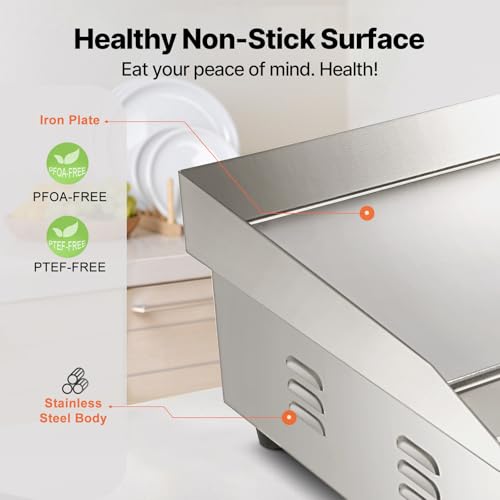
For build, prioritize a rigid plate that sits flat, resists warping, has stable legs, a firmly seated temperature probe, cool-touch handles, and a nonstick surface that does not have obvious seams or crevices where batter and grease can collect. On large griddles, also check whether handles or legs feel strong enough when carrying the unit to the sink; flexing, rocking, or a loose drip tray are more serious here than on a normal pan because hot grease can shift. Owner sentiment is broadly reassuring on day-to-day durability, with many buyers describing these appliances as dependable everyday cookers that keep performing for frequent breakfasts, sandwiches, burgers, and dinner use, and noting that smoother, better-finished surfaces tend to release food cleanly and trap less mess.
Ease
You want a grill that feels intuitive from startup to cleanup, because easier controls, clear temperature feedback, and straightforward fuel or ash management help you cook more confidently with fewer interruptions. Look for simple ignition, readable gauges or displays, accessible grates and grease trays, and clear cooking information; watch out for cramped layouts, confusing settings, or maintenance steps that make regular use feel like a chore.
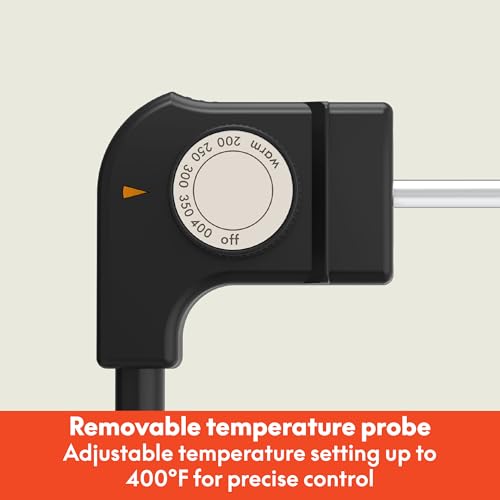
For ease of use, look for temperature markings that are specific enough to repeat results, a ready/preheat light, a removable probe, easy-grip handles, and a shape you can lift, turn, and store without tilting hot grease. If you want one appliance to replace several, consider whether it has reversible or removable plates, a floating lid, or fold-flat modes; if you only want pancakes and eggs, a simpler open griddle may be easier and less fussy. Owner reports back this up: simple adjustable controls are repeatedly praised for bacon, eggs, pancakes, and French toast, while removable washable plates and multi-mode designs are valued when shoppers want low-effort setup, cleanup, and everyday versatility.
Cleaning
A grill that’s easy to clean saves you time after cooking and helps prevent flare-ups, stuck-on residue, and lingering odors from old grease. Look for grates that release food easily, removable grease trays or ash catchers, and accessible interior surfaces; watch out for designs with tight corners, awkward drip paths, or parts that are difficult to remove and scrub.
For cleaning, the key niche check is not just “nonstick” but whether the electrical control removes fully, whether the plate or tray can fit in your sink, and whether grease has a clear path into a removable drip cup instead of collecting under handles or around the probe socket. Avoid relying on dishwasher claims alone if the nonstick coating is delicate; many griddles last longer when wiped after cooling and washed gently with nonabrasive tools. Owner feedback strongly supports removable parts as the cleaning advantage: buyers especially like removable plates, removable temperature controls, detachable handles, and nonstick or ceramic surfaces that release pancakes and bacon residue easily and make rinse-and-wipe cleanup simple.
Size
Choose a grill that fits both how you cook and where you’ll keep it: the overall footprint affects patio space, storage, and how easily you can move it. Look for enough cooking area for your usual group size, but watch out for oversized grills that are harder to maneuver, store, clean, and use efficiently.
For size, measure the actual usable cooking area, not just the outside footprint, then compare it with your counter clearance, cabinet space, and sink size. Extra-large griddles are excellent for families, pancakes, bacon strips, tortillas, sandwiches, and burgers, but the wider the plate, the more important heat consistency, carrying stability, cord reach, and storage become; removable handles or legs can make a big griddle far more livable. Owner sentiment matches this tradeoff: large and extra-large surfaces are repeatedly praised for feeding families and making batches of pancakes, eggs, sausage, French toast, bacon, burgers, English muffins, and tortillas faster, while shoppers also appreciate family-size models that remain manageable to store.
Heat
Heat affects how well your grill can sear, cook evenly, and hold steady temperatures for low-and-slow cooking. Look for strong temperature control, consistent heat distribution across the grate, and enough heating performance for the way you cook; watch out for grills with obvious hot spots, weak recovery after opening the lid, or controls that make small adjustments difficult.
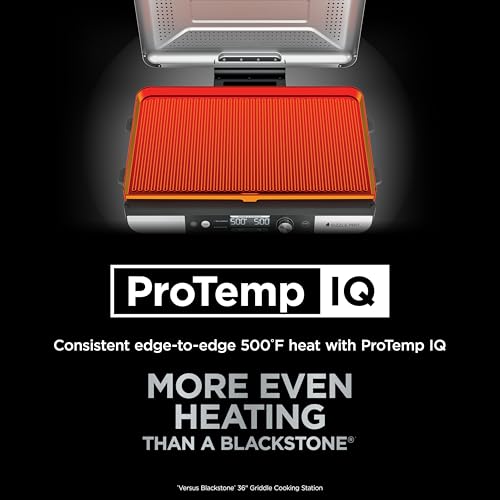
For heat, do not judge by wattage alone; check for an element layout that reaches the edges, a thermostat that cycles predictably, fast recovery after cold batter or meat hits the plate, and enough preheat time for the whole surface. If you plan to cover the entire griddle with pancakes or burgers, avoid models known for strong hot and cool zones, because you will end up rotating food constantly; if you cook only a few items at a time, minor edge variation may be acceptable. Owner feedback is positive but cautionary: many buyers report fast warm-up and even cooking for breakfast foods, meats, vegetables, and family-style meals, yet recurring mixed comments mention hot spots, cooler zones, and hotter areas near the plug or heating element layout on some wide surfaces.
1,000,000+ shoppers use Buyer's Guide every week to find the best products and services online.

Helping millions of users make smarter purchases online.


