





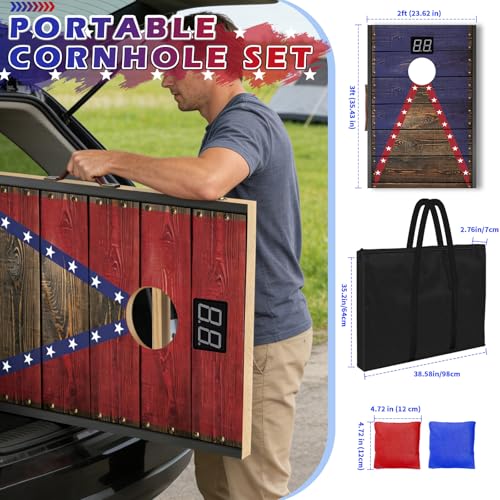


We also considered 10 others:


Our Top Choice
The order above is not editorial opinion, and it is not paid placement. It comes from what shoppers across our network actually do - which cornhole boards they compare, and which they ultimately buy. We re-rank as new data comes in, so the long-term favorites have to keep earning their spot against new entrants. The full method, including how we make money.
Cornhole Boards Buyer's Guide
Cornhole boards are a tradeoff between tournament-like play and real-world hauling: full-size wood boards feel better under bags, but they are heavier and more vulnerable to dents, swelling, and finish wear if they are poorly made or stored damp. The sharpest buying concerns are a flat, smooth, stable playing surface and a complete setup that can survive repeated backyard, tailgate, camping, and party use.
Board Build
Cornhole depends on a board that stays flat and stable when bags land. Better construction improves both the feel of each throw and the board’s ability to hold up through repeated setup, takedown, and storage.
Choose boards with a rigid wood frame, a flat deck, well-secured folding legs, and a smooth top that lets bags slide without bouncing wildly. For serious-feeling play, avoid thin, flexy decks, rough seams around the hole, uneven veneer, and boards that wobble when a bag lands; those flaws change how the game plays even if the set looks fine out of the box. Owner feedback strongly supports this priority: shoppers repeatedly praise sturdy, solid-feeling boards, smooth surfaces, careful finishing, and well-made construction, while the main complaints mention cracked, swollen, flimsy, or inconsistent boards.
Play Format
Size and proportions affect difficulty, scoring rhythm, and whether the set feels like the game people expect. A board that is too small, too bouncy, or paired with mismatched bags can be fun casually but less satisfying for repeated adult play.
Decide whether you need regulation-style play or a more casual portable size before buying. Regulation-size boards are the right choice for adults practicing standard spacing and for a familiar backyard-game feel, while smaller boards are easier for kids, tight patios, camping, or travel; also check that the included bags match the board size and that the hole and leg height are consistent. Owner sentiment favors full-size sets for easy setup and fun family play, and buyers commonly describe complete two-board sets with bags as convenient crowd-pleasers for gatherings.
Portability
Cornhole sets are often moved more than they are played in one fixed spot. Portability features matter because two boards, bags, and accessories can become awkward quickly, especially when the set is full-size and made from wood.
For a set you will take to cookouts, campsites, parks, or tailgates, look for folding legs, secure latches or closures, a reliable carry case, and a realistic listed weight for both boards plus bags. Full-size wood boards are not featherlight, so avoid assuming “portable” means easy for every person to carry one-handed; a bag with weak seams or thin fabric can fail before the boards do. Owners consistently like included carrying cases for storage and transport, but they also note that all-wood full-size sets can feel heavy and that some storage bags tear or break early.
Durability
Outdoor yard games face moisture, sunlight, impacts, and repeated transport. A durable finish and sturdy components help preserve both the board’s appearance and the predictable slide of the bags over time.
Because cornhole is used outdoors but often stored indoors, prioritize sealed edges, a durable topcoat, protected graphics, solid hinges, and bags with tough fabric and tight stitching. Avoid leaving wood boards in rain, wet grass, or humid storage unless they are explicitly built and sealed for that exposure; swelling, peeling, dents, and paint wear can all affect play and appearance. Owner feedback is positive on many boards holding up well, but durability is the main watch-out: some buyers report boards, finishes, or storage bags breaking, tearing, denting, wearing, or showing damage after little use.
Kit Value
A cornhole purchase usually needs more than two boards to be useful right away. The best value comes from a complete set whose accessories are durable enough to match the boards rather than becoming disposable add-ons.
Judge value by the whole playable kit, not just the boards: two boards, properly filled bags, storage/carry gear, usable scoring features, and accessories all affect whether the set is ready for a gathering. Be cautious with bargain sets that look complete but cut corners on deck rigidity, bag quality, or carrying gear, since those are common early failure points. Owner sentiment repeatedly frames better-built complete sets as strong value, especially when the boards feel sturdier than cheaper alternatives and include bags, carrying totes, useful extras, or convenient scoring features.
Finish Look
Cornhole boards are both game equipment and visible party gear. The finish influences how the board looks, how bags slide, and how well the set continues to feel presentable after repeated use.
Look for a finish that is smooth enough for consistent bag slide, attractive enough for parties or gifting, and protected well enough that graphics or paint will not chip quickly. Very rough, sticky, or overly glossy surfaces can make bags behave unpredictably, while cosmetic veneer flaws may signal weaker finishing quality even if the board is still playable. Owners often praise nice-looking, gift-worthy boards with a premium feel, but some also mention veneer flaws, dents, paint wear, and variable material finish.
1,000,000+ shoppers use Buyer's Guide every week to find the best products and services online.

Helping millions of users make smarter purchases online.


