

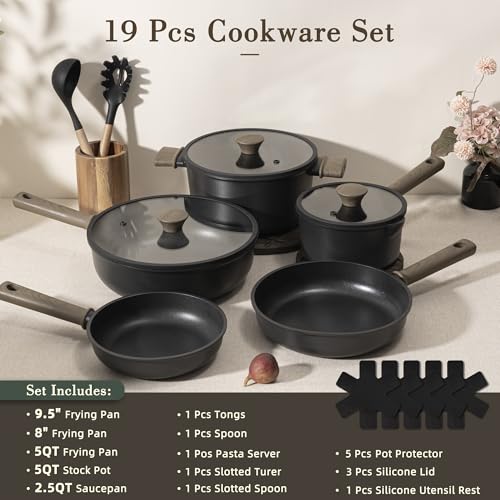


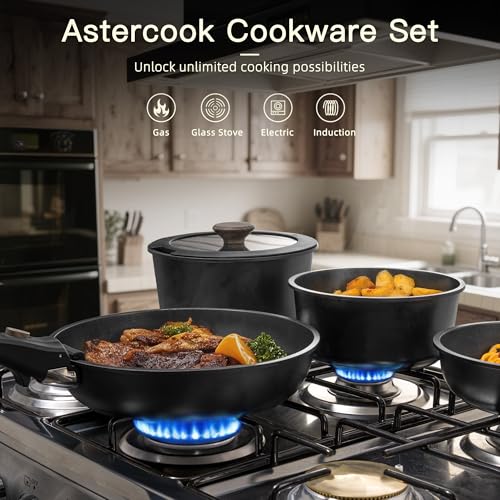


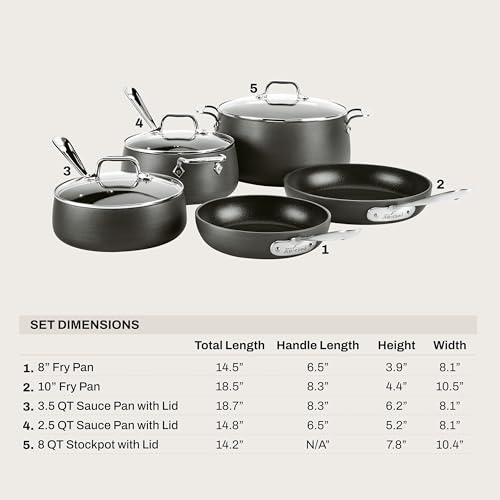


We also considered 10 others:


Our Top Choice
Compare Features


The order above is not editorial opinion, and it is not paid placement. It comes from what shoppers across our network actually do - which cookware sets they compare, and which they ultimately buy. We re-rank as new data comes in, so the long-term favorites have to keep earning their spot against new entrants. The full method, including how we make money.
Cookware Sets Buyer's Guide
Cookware sets are a tradeoff between getting a complete kitchen in one box and accepting every piece, coating, lid, and handle choice the set maker selected for you. The sharpest checks are whether the pans match your cooktop and cooking style, and whether the nonstick or stainless construction will survive the way you actually cook, clean, stack, and heat them.
Quality
You’ll notice quality in how the cookware feels in your hand: solid construction, smooth finishes, secure handles, and materials that seem built to withstand daily heating, washing, and movement on the stove. Look for pieces that feel balanced and well-finished, and watch out for flimsy walls, rough edges, loose fittings, or coatings that seem thin or easily scratched.
For a cookware set, judge quality by the pieces you will use most: the skillet should sit flat without rocking, the saucepan should pour cleanly, lids should fit without rattling excessively, and handles should feel secure when the pan is full. If you use induction, confirm every pot and pan in the set is induction-compatible, not just the stockpot; if you sear or deglaze often, prioritize fully clad stainless or thick bases over thin, lightweight nonstick. Owner feedback supports this focus: buyers repeatedly praise sets that feel sturdy, well made, polished, and like a step up from starter cookware, while everyday nonstick sets are valued when they cook evenly and release food easily.
Cleaning
Cleaning matters because cookware that releases food easily and resists staining is more pleasant to use day after day. Look for smooth, nonporous interiors, rivets and seams that don’t trap residue, and care instructions that match how you actually cook and wash up. Be cautious with surfaces that discolor easily, need special scrubbing, or lose their easy-clean qualities if overheated or cleaned with the wrong tools.
Choose the cleaning burden that matches your habits: nonstick and ceramic-coated sets are easiest for eggs, sauces, and low-oil cooking, but they usually require gentler utensils, lower heat, and careful stacking; stainless sets tolerate tougher scrubbing but may need soaking, deglazing, or stainless cleaner for discoloration. Avoid sets with many rivets, exposed seams, or tight lid rims if you hate detail cleaning, because grease and starch collect there. Owner sentiment strongly backs easy-clean surfaces as a major satisfaction driver, with many buyers saying food residue wipes away quickly, especially after everyday meals or a short soak.
Nonstick
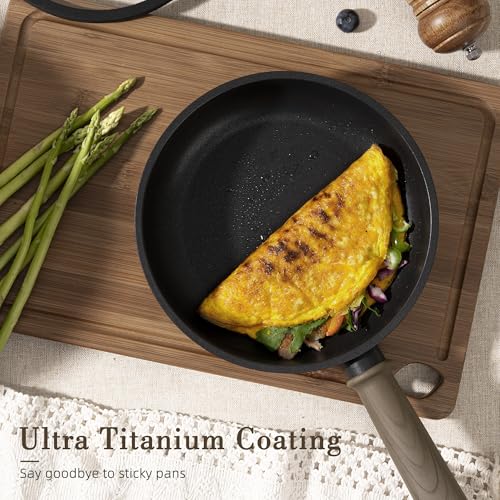
A good nonstick surface helps food release cleanly, so you can cook delicate items like eggs, fish, and pancakes with less frustration and less oil. Look for cookware that releases food evenly across the whole pan, not just in the center, and watch for reviews noting that stickiness develops after regular use or cleaning.
For nonstick cookware sets, look beyond the first-week glide: check the coating type, maximum heat rating, oven-safe limit, utensil restrictions, and whether the set includes protective pads for stacking. Avoid using nonstick as your high-heat searing pan; repeated overheating, aerosol sprays, metal utensils, and dishwasher cycles are common ways coatings lose release. Owner feedback is very positive on nonstick convenience, especially for eggs, sauces, sticky foods, low-oil cooking, and fast cleanup, but the safest buy is still one whose care rules fit your kitchen routine.
Value
Value matters because a cookware set should give you the performance, durability, and useful pieces you’ll actually use without making you pay for filler. Look for even heating, sturdy construction, comfortable handles, and lids or pan sizes that match your cooking habits, not just a high piece count. Watch out for sets that seem like good value for money but include many small or redundant items while cutting corners on the core pots and pans.
Measure value by usable pieces, not box count: lids, utensils, tiny pans, and duplicate sizes can inflate the set while leaving you without the skillet, sauté pan, or stockpot you actually need. A better-value set has the right mix for your household, lids that fit multiple vessels, cooktop compatibility across all pieces, and materials that match your main cooking tasks. Owners commonly describe well-assorted sets as strong values when they include practical pots, pans, lids, and tools, and when the cookware feels sturdier or more polished than expected for an entry-level purchase.
Durability
You want a cookware set that can handle daily cooking without warping, scratching easily, or developing loose, wobbly handles. Look for durable materials, sturdy construction, scratch-resistant interiors or surfaces suited to your utensils, and securely riveted or welded handles. Watch out for thin pans, delicate coatings, or handle designs that feel flimsy, especially if you cook often or use high heat.
Durability depends heavily on material choice: fully clad or tri-ply stainless is the safer long-term pick for high heat, metal utensils, oven use, and aggressive cleaning, while ceramic and traditional nonstick need lower heat and gentler handling to preserve release. Check handle attachment, lid material, rim thickness, stated oven limits, and whether the cookware can tolerate the dishwasher if that matters to you; also watch for handles that can overheat when used outside the recommended burner size or heat range. Owner sentiment reflects this split: buyers praise solid steel, tri-ply construction, heavy-duty builds, metal lids, and cookware that keeps its polished look, but they flag coating wear, staining, fading ceramic performance, and hot handles as long-term watch-outs.
Design
Because cookware often lives on the stovetop, a rack, or open shelving, its appearance can affect how cohesive and inviting your kitchen feels. Look for colors and finishes that match your style and are likely to age well, but watch out for glossy or light-colored exteriors that may show stains, scorch marks, scratches, or fingerprints more easily.
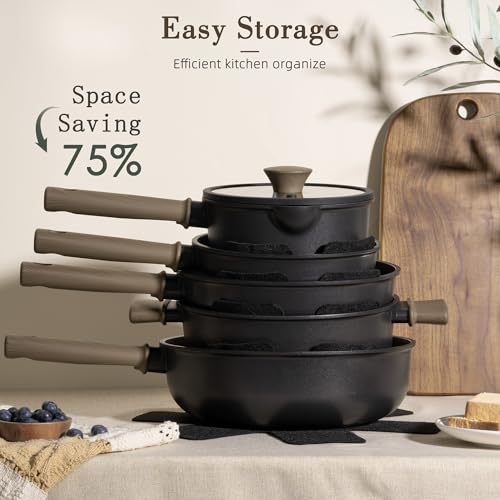
Design should serve storage, safety, and stove fit before color: confirm the set nests without grinding coatings, the handles clear neighboring burners, lids are easy to store, and the pan shapes match your cooking style, such as sloped skillets for tossing or straight-sided sauté pans for reducing sauces. Glass lids let you monitor food but can be more fragile, while metal lids are tougher but less visible; colorful exteriors can look great but may show scorch marks if used over high gas flames. Owners often mention attractive finishes, color options, and polished stainless looks as part of the appeal, with some saying the sets look good enough to leave out, but the best design choice is still the one that fits your burners, cabinets, and cleaning habits.
1,000,000+ shoppers use Buyer's Guide every week to find the best products and services online.

Helping millions of users make smarter purchases online.


