





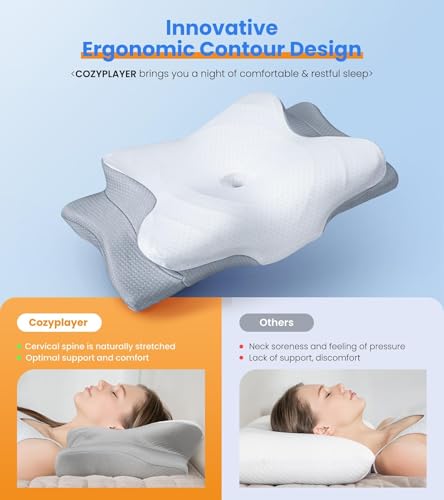


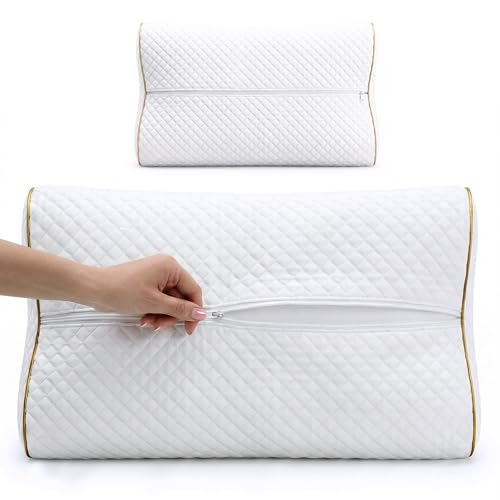


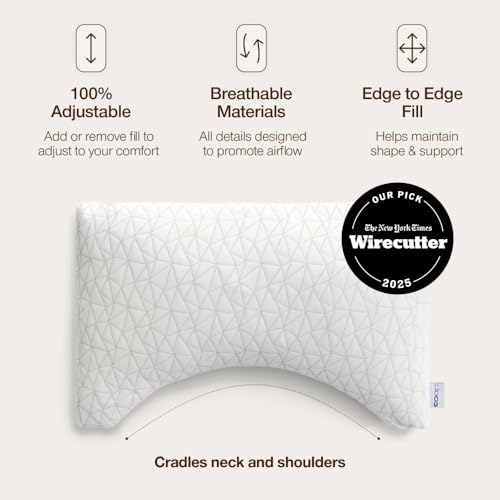


We also considered 10 others:


Our Top Choice
Compare Features


The order above is not editorial opinion, and it is not paid placement. It comes from what shoppers across our network actually do - which contour pillows they compare, and which they ultimately buy. We re-rank as new data comes in, so the long-term favorites have to keep earning their spot against new entrants. The full method, including how we make money.
Contour Pillows Buyer's Guide
Contour pillows can help alignment, but only if the contour height, firmness, and shape match your sleep position, shoulder width, mattress sink, and whether you need neck support or knee/leg spacing. The biggest risks are buying a pillow that props the neck too high, lets the head drop into the hollow, is too short for side-sleeping support, or feels good at first but loses shape and stops holding alignment.
Quality
A well-made pillow holds its loft and support over time, so pay attention to the fill material, stitching, cover fabric, and whether it resists clumping, flattening, or losing shape. You’ll also want to check care instructions and washability, since some pillows are easy to freshen while others require spot cleaning or special handling. Watch for strong odors, flimsy seams, uneven fill, or materials that seem likely to break down quickly.
Prioritize dense, resilient foam that rebounds slowly but fully, with contours that stay defined under head weight; avoid pillows that feel airy, crumbly, or already compressed at the edges, because a collapsed neck roll can force the cervical spine into extension or side bend. For nightly use, also check for a removable washable cover, clean stitching around the raised lobes, and enough surface area that your head does not slide off the contour when you change positions. Owner feedback supports these priorities: buyers often associate higher quality with better, longer sleep, shape retention versus regular pillows, supportive memory foam, reliable construction, and practical washable covers.
Comfort
Comfort matters because your pillow directly affects how relaxed you feel when you settle in and whether you stay asleep without constant shifting. Look for a pillow with the right balance of softness and support for your sleep position, and watch for materials or designs that help with cooling if you tend to overheat. A pillow that feels plush at first but lets your head sink too far, traps heat, or creates pressure points can quickly hurt your sleep quality.
Choose comfort by matching the contour to your body mechanics, not by softness alone: back sleepers usually need a lower neck roll with a shallow head cradle, side sleepers need enough loft to fill the shoulder-to-neck gap, and combination sleepers should avoid aggressive wings or steep ridges that make rolling feel awkward. If you use it between the knees, confirm it spans the right contact points without feeling like a bulky bed pillow or being too small to separate the thighs and knees. Owner sentiment lines up with this: many buyers report a soft, cushiony feel that still positions the head and neck well, better spinal alignment, less morning stiffness, and improved sleep for back and side sleepers when the shape fits their position.
Support
Support matters because the right pillow helps keep your head, neck, and spine aligned, which can reduce strain and help prevent waking up with neck pain or other soreness. Look for a pillow that matches your sleep position and body needs, offering targeted support where you need it without forcing your neck too high, letting it sink too low, or creating pressure points. If you need extra relief for pregnancy, recovery, or leg support, consider whether the pillow holds its shape well and supports the area consistently through the night.
For support, inspect the actual contour heights and whether they are adjustable or dual-sided; a pillow that is too tall can kink the neck upward, while one that is too low can let the head sag and strain the shoulder. Side sleepers with broad shoulders or firm mattresses usually need more loft, while back sleepers and smaller frames often need less; shoppers with neck pain should favor a stable cervical roll that holds the curve without pushing the chin toward the chest. Owners frequently report less neck and shoulder stiffness, fewer aches, relief from morning headaches, and better alignment when the pillow keeps the head, neck, and shoulders held in place; leg-contour users also value support for back, hip, knee, and sciatica discomfort while side sleeping.
Feel
How a pillow feels affects whether your head and neck stay supported or sink too far, so consider the balance of softness, firmness, thickness, and loft that matches your sleep position. Watch out for pillows that feel plush at first but flatten quickly, as well as overly firm or high-loft options that can push your neck out of alignment.
Look for a feel that is pressure-relieving on the skull and ear but firm enough under the neck roll that it does not bottom out overnight; overly plush foam can feel cozy while failing at alignment, while overly hard ridges can create pressure at the jaw, ear, or cervical vertebrae. If you sleep hot, check for breathable cover fabric and foam that does not trap warmth, and if you are sensitive to smell, favor low-odor materials and removable covers that can air out separately. Buyer reports commonly describe the preferred feel as soft and cushiony yet supportive, firm-but-comfortable rather than hard or flimsy, and able to hold its shape over months without flattening.
Function
A pillow needs to do more than feel soft at first touch — it should support your head and neck in a way that suits your sleep position and keeps you comfortable through the night. Look for stable fill or construction that resists flattening, shifting, or clumping, and be wary of pillows that lose shape quickly or require constant adjustment to stay useful.
Buy for the specific function you need: a cervical contour pillow should stabilize the head and neck through back or side sleeping, while a knee/leg contour should keep hips, knees, and lower back aligned without drifting out of place. Check whether the shape supports your whole intended contact area; some leg pillows are compact and may not provide full thigh-to-knee separation, and some neck pillows only work when your head lands precisely in the cradle. Owner experience reinforces this functional fit issue: many report reduced back, hip, knee, sciatica, neck, and shoulder discomfort, straighter alignment, and better rest, but size, firmness, staying in place, and positioning are more personal, especially when the pillow is smaller or less supportive than expected.
Value
A pillow’s value comes down to how well it supports your sleep needs for the price, not just whether it is cheap or expensive. Look for durable materials, consistent comfort, and features you will actually use, and be cautious of paying more for extras that do not improve your sleep or of saving money on a pillow that quickly loses shape.
Judge value by adjustability, usable contour geometry, cover quality, durability, and whether the pillow solves your specific alignment problem—not just by memory foam labeling or a medical-looking shape. Adjustable layers, dual heights, washable covers, cooling features, low odor, and reliable shape retention can make one pillow useful across positions or body changes; poor value often shows up when the pillow arrives thinner, smaller, or less substantial than expected. Owners generally see strong value when a contour pillow is comfortable, effective, well packaged, shape-holding, washable, and versatile, but some feel disappointed when size or thickness does not match the support they thought they were buying.
1,000,000+ shoppers use Buyer's Guide every week to find the best products and services online.

Helping millions of users make smarter purchases online.


