


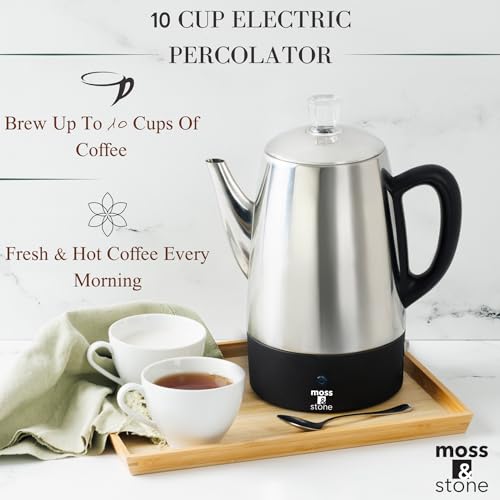

- Type: Percolator
- Uses: Grounds
- Brew Size: Up to 10 cups
- Water Reservoir: 54 oz





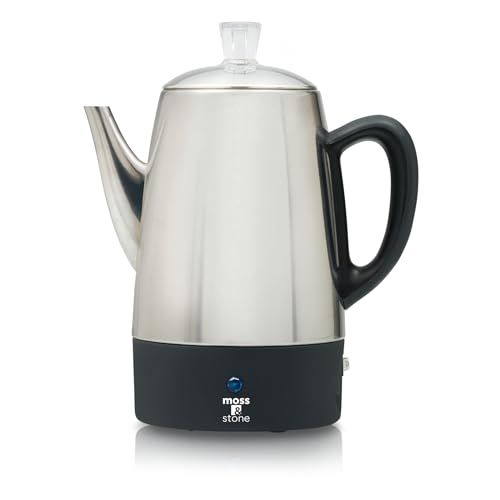
Moss & Stone Percolator
Review Overview and Coffee Quality

The Moss & Stone Percolator is aimed at people who like coffee with a traditional, full-bodied profile and who enjoy the simple ritual of percolation. A percolator brews by cycling hot water up a central tube and over the grounds repeatedly, which tends to create a bolder cup than many drip machines and a different character than pour-over. When it’s dialed in, you can expect a strong aroma, a robust taste, and a satisfying, classic “diner-style” finish that many coffee drinkers specifically seek out.
In everyday use, the biggest strength of this style of brewer is consistency once you learn your preferred timing. Because the brew recirculates, small changes in heat level and brew duration have an outsized effect on flavor. Kept to a controlled perking pace, the Moss & Stone Percolator can produce coffee that is rich and hearty without becoming harsh. Let it run too long or let the perking get too aggressive, and you may taste bitterness or an over-extracted edge. That isn’t a flaw unique to this model; it’s the nature of percolation. The “sweet spot” is achievable, but it rewards attention more than a set-and-forget drip machine.
Another benefit is volume. Percolators are popular for serving multiple cups at once, making them useful for families, small gatherings, or anyone who likes to brew a larger batch rather than a single mug. If your morning routine involves sharing coffee or topping up throughout the morning, this format can be genuinely practical. The coffee itself tends to hold up well with milk or cream, and the boldness can be a plus if you prefer a stronger base for flavored syrups or sweeteners.
Where a percolator may not be the ideal match is for drinkers who prioritize clarity, delicate origin notes, or a lighter roast’s nuanced aromatics. Repeated cycling of water through the grounds can flatten some of those high notes, and it’s easier to drift into over-extraction if you aren’t paying attention to heat and timing. If your favorite cups are tea-like, bright, and lightly extracted, a drip machine with precise temperature control or a manual pour-over might suit you better. But if “comforting,” “strong,” and “classic” describe what you want, the Moss & Stone Percolator fits that goal well.
What to Consider Before Buying (and What Matters Most)
The most important factor to consider before buying the Moss & Stone Percolator is whether you actually enjoy percolated coffee. Percolation is a distinctive method with a distinctive flavor outcome. If you love that deep, familiar taste, you’ll likely be happy. If you’re unsure, it can be worth trying percolated coffee at a friend’s house or a café that uses a percolator before committing.
Close behind that, heat control and your willingness to monitor brewing are key. Percolators typically ask you to pay attention to the strength of the perk and the duration. Users who want automation and precision at the push of a button may find a percolator less convenient. Users who don’t mind a small hands-on step, or who enjoy the process, will find it straightforward. The “set it and forget it” expectation is one of the main reasons people end up disappointed with percolators in general, not because the brewer is poor, but because the method is different from drip.
Capacity should also shape your decision. Think about how many cups you realistically need in a typical session. Buying larger than necessary can mean brewing more coffee than you’ll drink, which often leads to reheating or extended holding time that can dull flavor. Buying too small can turn a single morning routine into multiple brew cycles. Matching the percolator’s capacity to your household’s habits is an underrated way to improve satisfaction.
Material and durability matter, especially because percolators are exposed to heat and frequent washing. A sturdy build and well-fitted components help keep brewing predictable and reduce mess. Pay attention to how the lid fits, how the basket and stem assemble, and whether the handle and knob feel secure in regular use. A percolator is a simple device, but small design choices affect comfort and confidence over time.
Ease of cleaning is another practical consideration, and it becomes more important the more frequently you brew. Percolators typically involve multiple parts that need rinsing and occasional deeper cleaning to remove oils. If you know you won’t keep up with cleaning, you may notice flavor carryover over time. A model that disassembles easily and has accessible surfaces makes it easier to keep coffee tasting fresh and to prevent residue buildup.
Finally, consider grind and filtration. Percolators generally perform best with a coarser grind than drip; too fine a grind can lead to sediment and harsher extraction. If you don’t already have a grinder that can reliably produce a coarse grind, you may end up adjusting your coffee buying habits. This factor is less “glamorous” than capacity or looks, but it has a major effect on taste and clarity in the cup.
Common Questions
Does percolated coffee taste stronger than drip coffee?
Often, yes. Percolation repeatedly cycles hot water through the grounds, which can increase perceived strength and body. However, “stronger” can also mean more bitter if it runs too long or perks too hard, so controlling time and heat is the best way to get strength without harshness.
How do I avoid bitter coffee with the Moss & Stone Percolator?
Use a coarse grind, keep the perking action gentle rather than rapid, and don’t over-brew. Starting with fresh water, measuring your coffee carefully, and stopping the brew once it reaches your preferred intensity will typically prevent the most common bitterness issues.
Will I get coffee grounds in my cup?
You can, but it’s usually preventable. A too-fine grind is the main cause of sediment. Switching to a coarser grind and making sure the basket and internal parts are assembled correctly greatly reduces the chance of grounds ending up in the final cup.
Is a percolator good for light roasts?
It can be, but it may not highlight the brightest, most delicate notes as well as methods like pour-over. If you love light roasts for their floral or fruity complexity, you might find a percolator produces a heavier profile. If you like light roasts but want a bolder, rounder cup, it can still be enjoyable.
Is it difficult to clean?
It shouldn’t be difficult, but it does require consistency. Rinsing after each use and doing an occasional deeper clean to remove coffee oils helps maintain flavor and keeps the parts functioning smoothly. If you prioritize minimal cleanup above all else, a simpler single-piece brewer may be more appealing.
Overall, the Moss & Stone Percolator is a solid choice for anyone who wants classic, bold coffee and doesn’t mind a slightly more hands-on brewing style. If you value rich flavor, practical batch brewing, and a traditional approach, it can be a satisfying upgrade from basic drip coffee. The best results come from matching the percolator to your taste preferences, choosing the right grind, and paying attention to brew time and heat control.