













We also considered 10 others:


Our Top Choice
The order above is not editorial opinion, and it is not paid placement. It comes from what shoppers across our network actually do - which closet lights they compare, and which they ultimately buy. We re-rank as new data comes in, so the long-term favorites have to keep earning their spot against new entrants. The full method, including how we make money.
Closet Lights Buyer's Guide
Closet lights sit in a tricky middle ground: they need to be bright enough to identify clothes and shelf contents, but compact, cool-running, and easy to mount around fabric and stored items. The sharpest buying concerns are whether the light reaches the right spots without glare or shadows, and whether the power, sensor, and mount will hold up in the exact closet traffic pattern.
Light Coverage
Closet lighting has to reveal clothing colors, shelf contents, and floor edges without creating harsh glare in a tight space. Output, beam spread, and color temperature matter more than raw brightness because deep shelves and hanging clothes create shadows quickly.
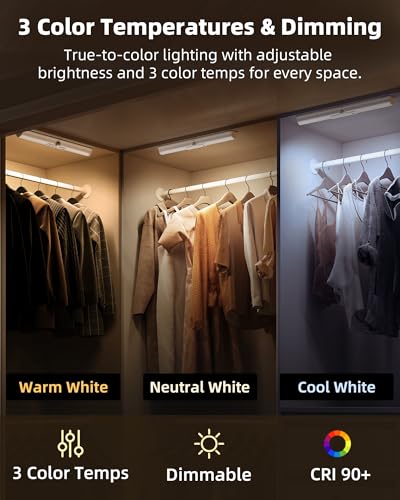
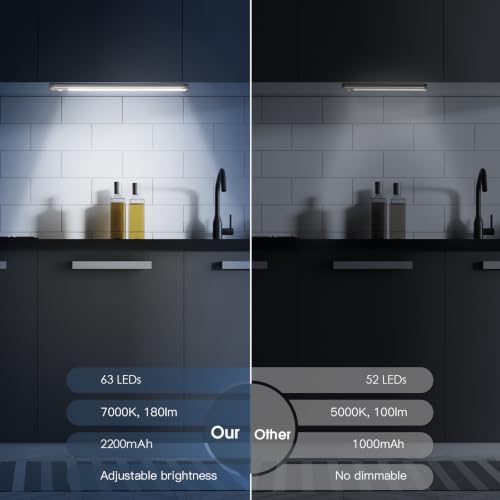
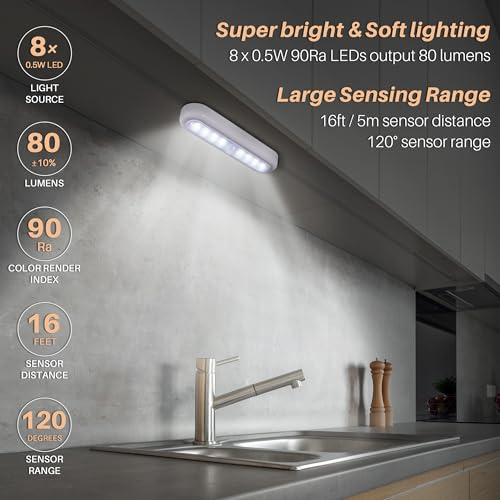
Choose enough output for the closet depth, not just the fixture length: a small reach-in may only need a compact bar or puck, while a walk-in or deep shelving bay benefits from multiple lights placed to reduce shadows. Look for a diffused lens, wide beam angle, and a clean neutral-to-cool white tone if you need to distinguish dark fabrics; avoid tiny spot-style LEDs that create bright dots but leave corners and lower shelves dim. Owner feedback supports this priority: buyers specifically praised bright, clean white light with enough output even on lower settings for shelves, counters, and stair areas, and they found the lights useful in closets and other dark spots.
Power Runtime
Battery closet lights trade wiring work for charging upkeep. Runtime depends heavily on how often the closet is opened, how long the light stays on, and whether the sensor triggers from hallway traffic or pets.
For battery models, favor rechargeable lights that can be removed easily for charging, and check whether charging uses a dock, cable, or replaceable pack. Match runtime expectations to traffic: a rarely used linen closet can go much longer between charges than a pantry, hallway closet, or stair-adjacent location that triggers constantly. Look for low-battery indication, adjustable brightness, and a practical way to keep the closet lit while one unit is charging; avoid sealed designs if battery aging would make the whole light disposable. Owner sentiment lines up with this tradeoff: rechargeable, removable magnetic lights and a charging dock were seen as convenient, but battery life varied from weeks or nearly a month in lighter-use placements to frequent recharging in high-use areas.
Mounting Fit
A closet light is only useful if it stays attached, fits around shelves and rods, and can be reached for charging or adjustment. Adhesive and magnetic mounts are convenient, but surface texture, humidity, dust, and repeated removal can change how well they hold.
Before buying, decide where the light can mount without being blocked by hanging clothes, sliding doors, bins, or shelf lips. Magnetic-and-adhesive systems are best when you want tool-free installation and easy removal for charging, but screws or stronger mounting plates are safer for unfinished wood, textured walls, dusty shelves, or overhead placements where a falling light could hit someone. Slim bars work well under shelves and over rods; puck lights can fit corners, but may need more units for even coverage. Owner feedback strongly supports easy mounting as a differentiator, with buyers praising magnetic installation that sticks up quickly and removes without screws or nails.
Auto Controls
Closet lights often sit where hands are full, so activation style affects day-to-day satisfaction. A good control setup turns on when needed, avoids nuisance triggers, and lets you override the sensor when sorting clothes or cleaning.
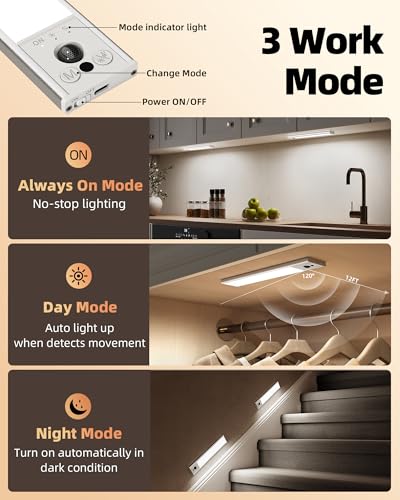
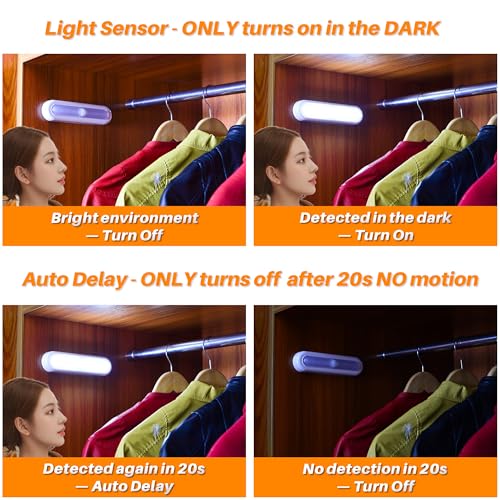
Look for controls that match the closet type: motion sensing works well for reach-ins and walk-ins, door-triggered behavior is useful when the fixture has a clear view of the opening, and manual-on modes help for long organizing sessions. Adjustable brightness and timeout settings reduce battery drain and glare; daylight sensors can prevent daytime triggers but may behave poorly in dim hallways. Avoid mounting motion sensors behind clothes, beside swinging garments, or facing a hallway where passing movement can drain the battery. The available owner sentiment supports the importance of practical functionality, noting that these lights reliably put light where needed in closets, stairs, lockers, hallways, and similar dark spots, with usable output even on lower settings.
Closet Safety
Closets concentrate fabric, dust, and stored goods around the fixture, so heat and attachment failures matter. Electrical style also matters: battery lights avoid wiring, while hardwired fixtures should be properly rated and installed for the location.
Favor LED closet lights with low heat output, a covered or diffused emitter, and a housing that will not expose hot elements to clothing, paper, or storage bins. Keep any fixture clear of hanging garments and avoid placing adhesive-only lights directly over fragile items unless the mount is proven secure; for hardwired ceiling or wall fixtures, use properly listed closet-rated lighting and follow local clearance requirements. Also check whether the light is intended for dry indoor use only if the closet is near a laundry, entry, or utility area. Owner sentiment supports general quality and practical use in dark interior spaces, but it also warns that unsupported claims about installation, brightness, design, or value should not be treated as proven when review evidence is thin.
Review Proof
Closet lights can look similar on paper, but long-term problems usually show up in owner history: weak batteries, failing adhesive, flicker, unreliable sensors, or short-lived LEDs. Review depth helps separate a promising specification from a fixture that keeps working after repeated charging and daily use.
Use reviews to verify the exact failure modes that matter for closet use: whether the battery still holds charge after repeated cycles, whether the adhesive or magnet sags overhead, whether sensors false-trigger, and whether brightness drops over time. Give more weight to comments from similar placements, such as closets, stair areas, shelves, lockers, and hallways, because traffic level and mounting orientation change the experience. Be cautious with models that have too little owner history to confirm installation, brightness, design, or value. The sentiment provided includes this exact watchout: for one ceiling-light case, there was not enough review data, no rating distribution or sample comments, and therefore no specific strengths or watch-fors could be supported from buyer feedback.
1,000,000+ shoppers use Buyer's Guide every week to find the best products and services online.

Helping millions of users make smarter purchases online.


