

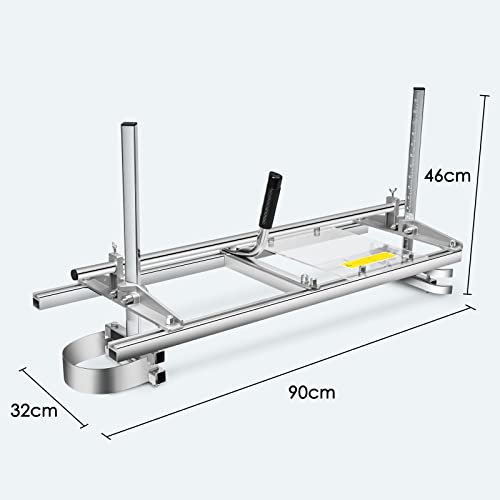


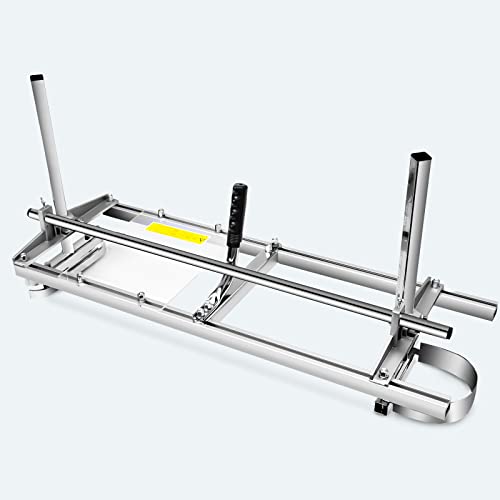



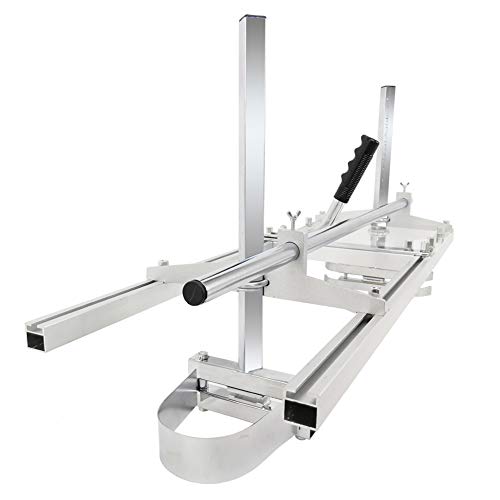


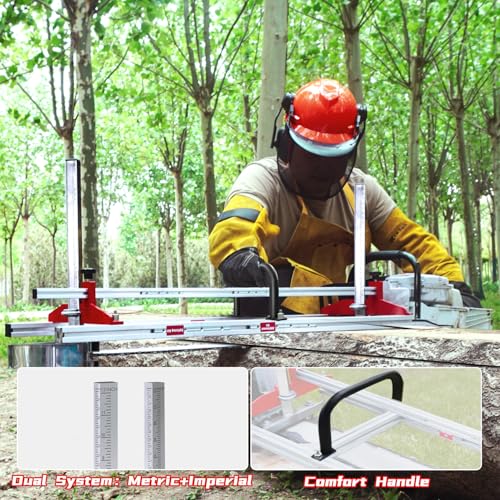


We also considered 10 others:


Our Top Choice
The order above is not editorial opinion, and it is not paid placement. It comes from what shoppers across our network actually do - which chainsaw mills they compare, and which they ultimately buy. We re-rank as new data comes in, so the long-term favorites have to keep earning their spot against new entrants. The full method, including how we make money.
Chainsaw Mills Buyer's Guide
A chainsaw mill is a compromise: it can turn yard trees and logs into usable slabs without a dedicated sawmill, but it asks a lot from the saw, the chain, and the operator’s setup. The sharpest buying concerns are whether your powerhead and bar are truly matched to the cut width, and whether the mill/rail system can hold a straight first cut without twisting, loosening, or drifting.
Saw Match
A chainsaw mill is only as capable as the saw driving it. Underpowered saws, short bars, dull chains, or the wrong chain style make milling slow, hot, and inaccurate even if the frame itself is solid.
Match the mill to the saw before anything else: check the clamping range, the maximum and minimum bar length, and remember that clamps and rails reduce the usable cutting width. For wide hardwood, favor a stronger saw, a sharp ripping chain, good oiling, and a patient feed rate rather than trying to force the cut. Owner feedback repeatedly supports this: mills were liked for doing real log work when paired with an appropriate or properly set up saw, while performance was described as depending heavily on a strong enough saw and a straight starting setup.
Straight Cuts
The first pass determines the reference surface for every later board. A mill that can follow a rigid, straight guide with minimal rocking is far more likely to produce consistent lumber instead of tapered or wavy slabs.
Look for a mill that works cleanly with a ladder-style rail, purpose-made first-cut rail, or other rigid guide, especially for long logs. Plan to use wedges to prevent bar pinch, support the log so it cannot roll, and take time leveling the first cut; freehanding the first pass is where many poor results start. Owner sentiment backs this up: cutting performance was strongest for rough slabs and large planks when rails, wedges, and a sharp chain were used, while stability required attention and some buyers needed a solid guide system and careful technique to keep cuts straight.
Frame Rigidity
Milling creates vibration, leverage, heat, and repeated side loading on the mill frame. Thin rails, weak clamps, or loosening fasteners can turn a usable setup into one that drifts, chatters, or needs constant correction.
Prioritize thick aluminum or steel rails, square brackets, broad bar clamps, locknuts or thread-locking provisions, and leveling screws that can be tightened without stripping. Avoid flimsy rail systems that can twist under load, and expect to inspect bolts after the first cuts because vibration can loosen small hardware. Owner feedback is generally positive on sturdy alloy-and-steel construction and solid build quality, but it also flags real watch-outs: some rails felt flimsy or prone to twisting, and bolts, leveling screws, and other hardware sometimes needed checking or small upgrades.
Setup Ease
Chainsaw mills are simple tools, but they are not always plug-and-play. Accurate milling depends on the bar sitting parallel to the rails, the depth setting staying even, and the operator understanding how to adjust the frame before cutting.
Choose a mill with clear measurement marks, repeatable thickness adjustment, accessible clamp points, and instructions that show bar mounting, rail alignment, and first-cut setup. If you are not mechanically inclined, assume you may need extra time, outside references, and test cuts before the setup is dialed in. Owner sentiment strongly points to this as a watch-out: assembly was often manageable, but instructions were sometimes incomplete, attaching the chainsaw could be frustrating, and setup or adjustment issues kept some mills from feeling fully effortless.
Usable Capacity
A mill’s advertised capacity is not the same as the board size you will comfortably produce. Usable capacity depends on bar length, clamp spacing, log support, kerf loss, and how much roughness you are willing to plane or flatten later.
Buy for the lumber you actually want to make: small boards, occasional slabs, and rough planking have different demands than repeated wide hardwood cuts. Check maximum slab thickness, minimum cut depth, bar-length requirements, and whether the frame has enough width and support for long logs without flexing. Owner feedback shows these mills can turn logs and trees into usable boards and lumber, including rough slabs and large material, but the best results came when the setup was supported properly and operated at a patient pace.
Safety Control
Chainsaw milling keeps the saw under heavy load for long cuts, so fatigue and loss of control matter as much as cutting speed. A safer setup preserves secure clamping, stable log support, visibility, and room for protective gear and controlled body positioning.
Favor designs that keep hands away from the bar path, do not interfere with the chain brake or controls, and allow a steady two-hand stance while the mill rides the guide. Plan for full chainsaw PPE, eye and ear protection, wedges, stable log cribbing, and gloves with enough dexterity to operate equipment without feeling sloppy. Owner sentiment around saw work reinforces the importance of protection and comfort: buyers valued sturdy protective gear, proper fit, and the ability to work for hours with enough flexibility and dexterity, while mill feedback also shows that stability and loosening hardware require attention during use.
1,000,000+ shoppers use Buyer's Guide every week to find the best products and services online.

Helping millions of users make smarter purchases online.


