














We also considered 10 others:


Our Top Choice
Compare Features


The order above is not editorial opinion, and it is not paid placement. It comes from what shoppers across our network actually do - which ceiling fans with lights they compare, and which they ultimately buy. We re-rank as new data comes in, so the long-term favorites have to keep earning their spot against new entrants. The full method, including how we make money.
Ceiling Fans with Lights Buyer's Guide
Ceiling fans with lights are a compromise fixture: the fan has to move air quietly while the light has to be good enough for everyday use, often from the same low-profile housing. The sharpest things to verify are airflow from a flush or compact design, the quality and serviceability of the integrated LED, and whether the controls let you manage fan and light independently without annoying resets.
Build
Build quality matters because a ceiling fan is a moving fixture you’ll rely on for years, often mounted overhead and used for long stretches. Look for sturdy materials, a solid motor housing, well-finished blades, and tight-fitting hardware that won’t wobble, rattle, or loosen over time. Be wary of flimsy parts, uneven finishes, or vague reliability feedback, since small construction issues can become noisy or inconvenient once the fan is installed.
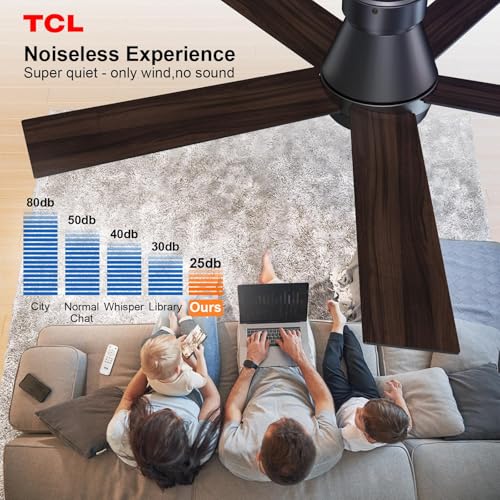
For build quality, prioritize a fan-rated mounting system, a rigid low-profile housing, well-balanced blades or an enclosed fan wheel, and a diffuser that locks in securely without rattling. This matters more here than with a plain light fixture because any looseness can become wobble, hum, or vibration once the motor runs; also check ceiling clearance so the fixture does not hang too low in bedrooms, hallways, or lower-ceiling rooms. Owner feedback supports this emphasis: buyers repeatedly praise quiet operation, slim modern profiles, secure mounting once installed, and units that feel solid rather than bulky.
Airflow
Airflow determines how effectively a ceiling fan makes a room feel cooler and keeps air moving, especially in larger spaces or rooms with high ceilings. You should look for a fan with enough speed range and circulation strength for your room size, and watch out for models that seem powerful on paper but create uneven airflow, excessive wobble, or more noise than comfort at higher speeds.
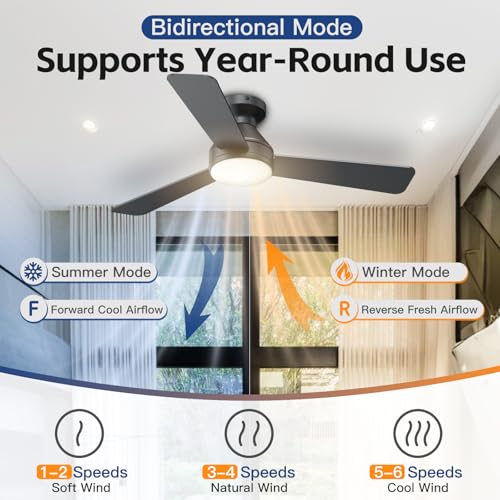
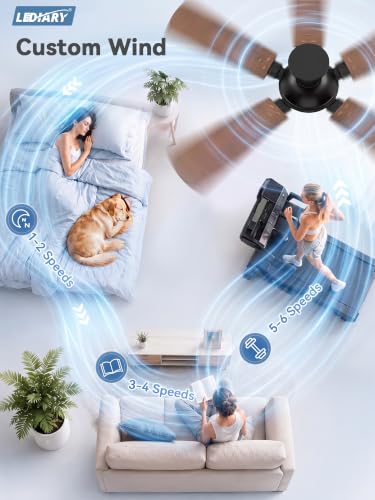
For airflow, do not assume a fan-light combo will cool like a full-size downrod fan; check blade span or enclosed-fan size, room-size guidance, speed range, and whether the design leaves enough clearance for air intake. Low-profile and enclosed designs can work well in small to medium rooms, but larger bedrooms or patios need stronger output, multiple speeds, and ideally reverse airflow for seasonal use. Owners often report stronger-than-expected airflow from compact designs, quiet motors, useful speed settings, and enough air movement for bedrooms, patios, and smaller rooms.
Controls
Controls determine how easy your ceiling fan is to live with day to day, especially if it’s installed in a bedroom, high ceiling, or shared space where quick adjustments matter. Look for a remote control, wall control, app control, or smart control setup that matches how you actually use the room, with clear speed, direction, light, timer, and scheduling options if you need them. Watch out for overly complicated interfaces, remotes that are easy to misplace, or smart features that depend on apps or connections you may not want to rely on.
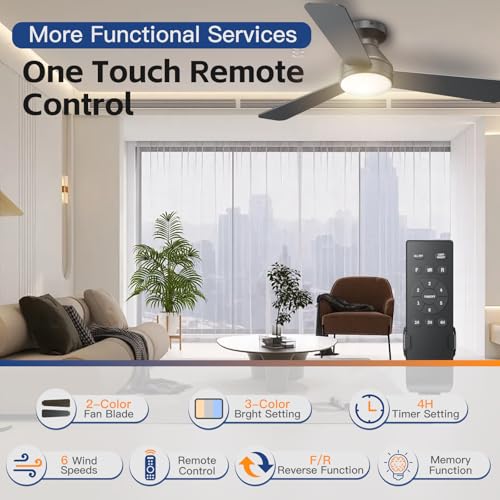
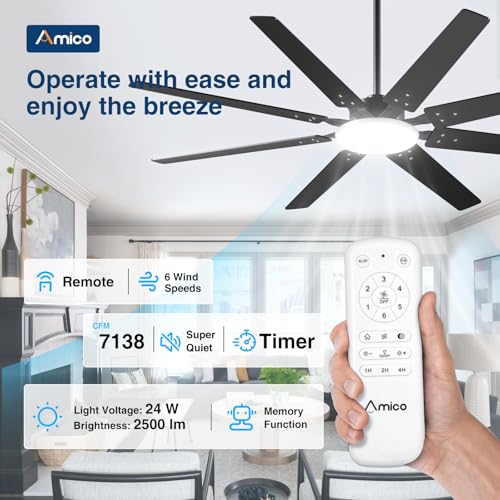
For controls, look for separate fan and light operation, dimming, color-temperature adjustment, speed selection, reverse control, and memory settings that restore your preferred light after a wall-switch cycle. Be cautious with remote-only designs if the remote is easy to lose, if you are installing multiple fans nearby, or if you need standard wall-switch behavior; app or smart controls are useful only if setup and daily operation remain simple. Owner sentiment backs this up, with buyers appreciating remotes, apps, and smart-style controls that make it easy to adjust speed, brightness, color temperature, reversibility, and on/off settings from across the room.
Lighting
Lighting matters because a ceiling fan often doubles as the main light source in a room, so you’ll want enough brightness for the space without harsh glare. Look for dimming, adjustable color temperature, or separate light/fan controls if you want flexibility for different times of day, and watch out for integrated LEDs that may be difficult or costly to replace if they fail.
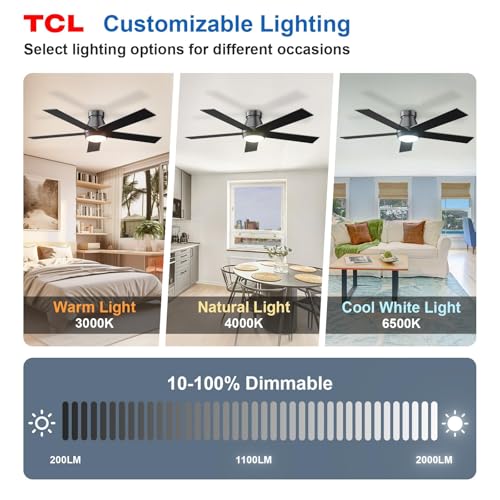
For lighting, verify lumens, dimming range, warm-to-cool color temperatures, glare control, and whether the integrated LED module is replaceable or at least well supported. A ceiling fan with a light often becomes the room’s main fixture, so make sure it can provide bright task lighting as well as a warm low setting for bedrooms; also check that the shade or diffuser spreads light evenly instead of creating harsh spots. Owners consistently highlight lighting as a strength when it is bright, dimmable, and flexible, especially when warm and cool modes can be changed from the remote or app.
Installation
A ceiling fan that’s easier to install can save you time, frustration, and potentially the cost of extra help, especially if you’re replacing an existing fixture. Look for clear instructions, preassembled parts, well-labeled wiring, included mounting hardware, and compatibility with your ceiling type and electrical box. Watch out for heavy units, unclear blade assembly, remote-receiver wiring, or angled/low ceilings that may make installation more complicated.
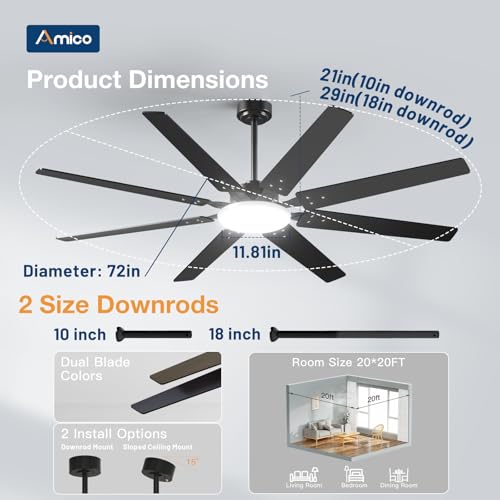
For installation, confirm your ceiling box is fan-rated, not just light-rated, and check whether the fixture is flush-mount, semi-flush, or downrod compatible with your ceiling height and slope. Because these units combine motor, light, receiver, and wiring in one canopy, look for clear instructions, labeled wires, a manageable fixture weight, and a temporary hanging cable or hook that frees both hands during wiring; hire an electrician if the box, wiring, or wall-switch setup is uncertain. Owner feedback is encouraging here: many buyers describe installation as straightforward, helped by lightweight designs, clear mounting setups, pre-assembled parts, and basic electrical know-how.
Design
A ceiling fan is a visible fixture, so its appearance should complement your room rather than feel like an afterthought. Look at the overall design, blade shape, finish, and color options to make sure the fan fits your decor, and watch for styles that may clash with nearby lighting, furniture, or hardware.
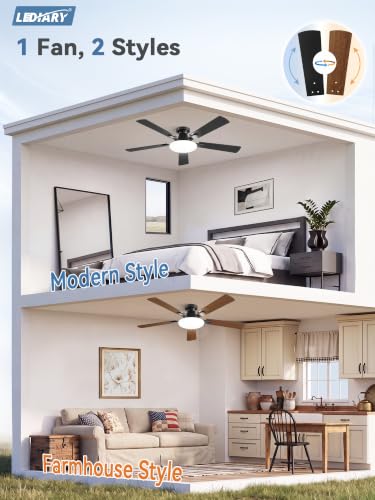
For design, choose the style only after confirming the depth, blade clearance, and light spread fit the room; a sleek fixture that sits too low, blocks cabinet doors, or casts poor light will not feel like an upgrade. In low-ceiling bedrooms and smaller rooms, slim or enclosed profiles are especially useful, while reversible blade finishes or neutral housings help the fan blend with changing decor. Owners frequently describe these fan-light combos as clean, modern, unobtrusive upgrades that look sturdy, elegant, and well suited to bedrooms or low-ceiling spaces.
1,000,000+ shoppers use Buyer's Guide every week to find the best products and services online.

Helping millions of users make smarter purchases online.


