





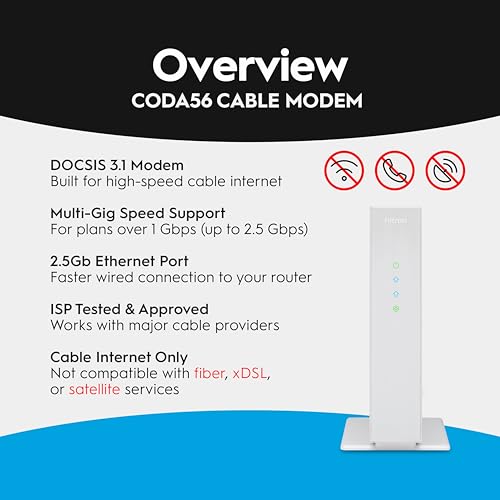


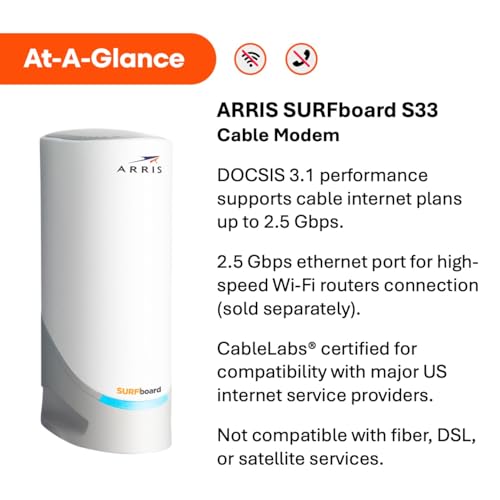


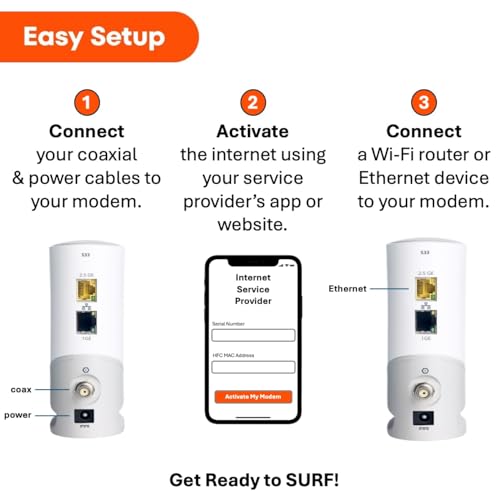

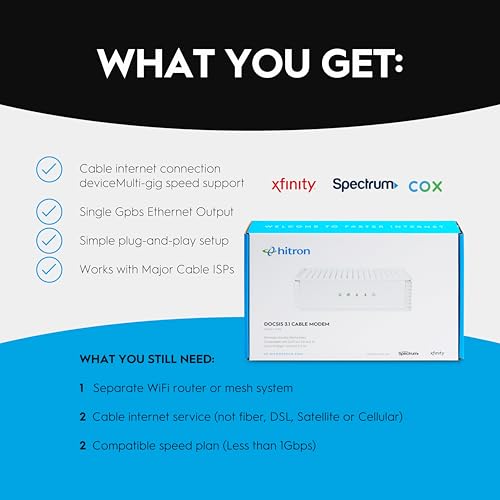
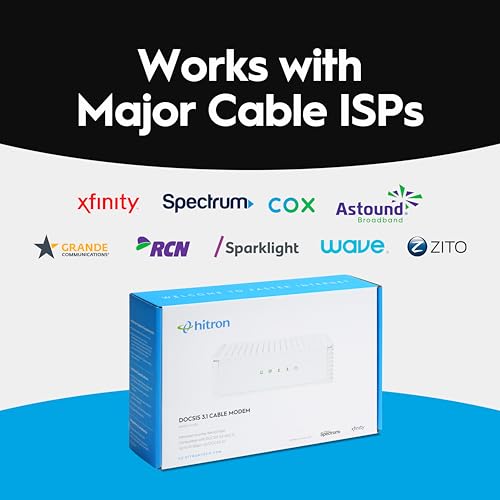


We also considered 10 others:


Our Top Choice
Compare Features


The order above is not editorial opinion, and it is not paid placement. It comes from what shoppers across our network actually do - which cable modems for xfinity they compare, and which they ultimately buy. We re-rank as new data comes in, so the long-term favorites have to keep earning their spot against new entrants. The full method, including how we make money.
Cable Modems for Xfinity Buyer's Guide
For this cable-modem category, the key tradeoff is not just “fast versus cheap” but whether the exact modem is approved for your provider’s speed tier, upload tier, and activation system. The sharpest pitfalls are buying a modem that caps your plan below what you pay for, or choosing a unit that activates but later causes heat-related resets, VPN drops, or troubleshooting loops.
Speed
Speed matters because your modem has to support the download and upload rates in your internet plan, or it can become the bottleneck even when the rest of your network is capable. Look for a modem rated comfortably above your plan’s advertised speeds and pay attention to both downstream and upstream capability, since video calls, cloud backups, gaming, and multiple users can expose weak upload or real-world throughput limits.
Start by matching the modem to your exact service tier on the provider’s approved-device list, not just to a generic advertised maximum speed. For gigabit-class service, choose a DOCSIS 3.1 modem, and for plans that can exceed standard gigabit Ethernet in real-world throughput, look for a 2.5 GbE port or other multi-gig output so the modem itself is not the bottleneck. If upload speed matters for work, cameras, backups, or gaming, verify that the specific model is approved for the provider’s higher-upload or next-generation upload tiers; DOCSIS 3.1 alone does not guarantee that. Owner feedback supports this focus: buyers often report major speed gains after replacing older DOCSIS 3.0 or cable-company equipment, with many finally seeing the download rates their plans support.
Reliability
You want a cable modem that can stay online for long stretches without random drops, overheating, or needing frequent reboots, because reliability directly affects everything from video calls to streaming and smart-home devices. Look for signs of solid durability such as consistent owner feedback over long-term use, good ventilation, stable performance under heavy traffic, and a low pattern of failure or defect complaints.
Prioritize a modem with a strong thermal design, stable chipset reputation, and enough ventilation space, because cable modems can run continuously for years and heat-related instability often looks like random internet trouble. Avoid cramped placements, weak third-party power adapters, and used units of uncertain history; repeated reboots, slow recovery after outages, or rising uncorrectable errors are warning signs, not normal behavior. Also confirm your coax signal levels are healthy, since a good modem can still appear unreliable if upstream power is too high or downstream signal is noisy. Owner sentiment is mostly positive on long-term dependability, with many units described as steady workhorses, but complaints about early failure, hot operation, reset loops, and service interruptions make durability and heat management important checks.
Connectivity
Reliable connectivity matters because your cable modem is the link between your home network and your internet provider, so poor signal quality can show up as dropouts, slowdowns, or devices that won’t stay online. Look for a modem that matches your provider’s service requirements and supports the speeds you pay for, and watch for signs of weak signal strength such as frequent resets or inconsistent performance. If you need Wi-Fi coverage, remember that range and Wi-Fi signal strength depend on the router or gateway, not a standalone modem alone.
Decide first whether you need a modem-only unit or an all-in-one gateway: a modem-only device requires a separate router or mesh system, while a gateway should offer bridge mode if you plan to use your own router. For busy homes, remote work, VPNs, video calls, gaming, and streaming, the modem’s Ethernet handoff and signal stability matter more than the number printed on the box; a single flaky coax splitter or old wall outlet can cause dropouts that interrupt calls. Check port type, router compatibility, IPv6 support, and whether the provider can provision the exact model cleanly before buying, especially with renewed or previously activated hardware. Owner reports back this up: many households get stable multi-device performance, but the most common connectivity complaints involve dropouts long enough to break VPNs, video meetings, or basic service.
Quality
You want a cable modem that reliably delivers the speeds and features your internet plan requires without frequent dropouts, overheating, or setup headaches. Look for solid build quality, dependable day-to-day functionality, compatibility with your provider, and enough performance headroom for your home use, especially if multiple people stream, game, or work online. Watch out for modems that meet only the bare minimum specs, since they may struggle as your household’s needs grow.
Judge quality by the parts that affect continuous cable service: DOCSIS generation, certified compatibility, chipset stability, thermal headroom, power supply condition, status-light clarity, and access to modem signal/error pages. For larger or multi-level homes, remember that a modem’s quality will not fix weak Wi-Fi unless it is a gateway with strong radios or is paired with a capable router/mesh system. If buying renewed, inspect for the correct power adapter, clean coax connector, no account lock from a prior user, and a return path if activation fails. Owner sentiment generally describes strong real-world performance, improved signal behavior, and dependable operation compared with older provider or DOCSIS 3.0 gear, but the best-quality choice is still the one that fits your service tier and network layout.
Setup
A cable modem that’s easy to set up can save you time and reduce the need for support calls, especially during activation with your internet provider. Look for clear instructions, simple status lights, and compatibility with your service plan, and watch out for modems that require complicated provisioning or extra steps to get online.
Before installation, record the modem’s cable MAC address, confirm the coax outlet is active, and make sure the old rental or previous modem can be removed from the account. Activation is usually easiest through the provider’s app or self-service flow, but used or renewed modems can fail if they are still tied to another account, and voice service requires a telephony-capable modem rather than a standard data-only model. After activation, reboot the modem and router in order, then test wired speed directly from the modem or router before blaming Wi-Fi. Owner feedback is encouraging here: many buyers describe setup as straightforward, often close to plug-and-play once the device is registered, with app-based activation avoiding support calls in many cases.
Value
A cable modem’s value comes down to how quickly it can offset rental fees while still meeting your speed, reliability, and service-compatibility needs. Look for a cost-effective model that supports your internet plan without overpaying for capabilities you can’t use, and watch out for older or unsupported modems that may cost less upfront but limit performance or require replacement sooner.
Value comes from buying only the modem capability you can actually use while avoiding a device that will need replacing at your next speed upgrade. For lower and mid-tier plans, a properly approved modem can be a better value than overbuying, but gigabit, multi-gig, or higher-upload plans justify DOCSIS 3.1 and potentially multi-gig Ethernet. Factor in the separate router cost if you choose a modem-only device, and check whether any provider equipment bundle affects unlimited data, support, or home-phone service before assuming ownership saves the most. Owner sentiment strongly supports the savings angle: shoppers often feel the upgrade is worthwhile because it replaces rented gear, avoids monthly equipment fees, and helps them get the performance they are already paying for.
1,000,000+ shoppers use Buyer's Guide every week to find the best products and services online.

Helping millions of users make smarter purchases online.


