







We also considered 10 others:


Our Top Choice
The order above is not editorial opinion, and it is not paid placement. It comes from what shoppers across our network actually do - which burger presses they compare, and which they ultimately buy. We re-rank as new data comes in, so the long-term favorites have to keep earning their spot against new entrants. The full method, including how we make money.
Burger Presses Buyer's Guide
A burger press has to apply enough force for a thin, even patty without becoming awkward or unsafe over a hot griddle. For smash burgers, the sharpest tradeoffs are weight, plate coverage, and handle heat control: too little pressure misses the crust, while poor ergonomics or fussy cleanup make the tool stay in the drawer.
Smash Pressure
Smash burgers depend on fast, firm contact between meat and a very hot cooking surface. A press that supplies steady downward force helps create thin patties, crisp edges, and repeatable results without requiring the cook to lean dangerously over the griddle.
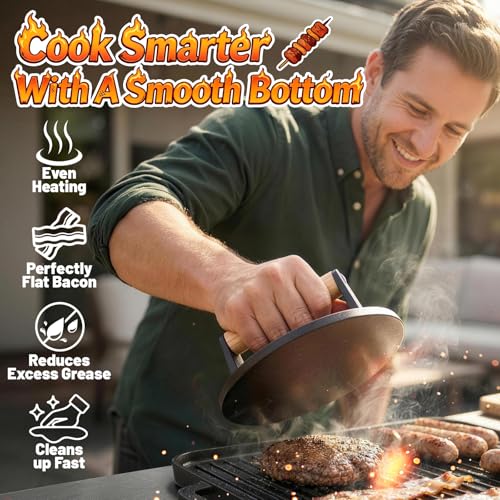
Look for a press with enough mass to flatten a loosely packed ball of beef in one decisive push, but not so much that it is tiring to lift repeatedly during a batch. Cast iron and thick stainless designs tend to deliver the downward pressure smash burgers need; very light presses may shape patties but often fail to maximize griddle contact for a crust. Owner feedback strongly supports weight as a separator: buyers repeatedly praised presses that flattened burgers evenly, produced thin patties with crispy edges, and pressed firmly without feeling excessive. The same pressure also helped with bacon and other griddle foods, reinforcing that the best picks are heavy enough to work rather than just decorative.
Plate Coverage
The pressing face determines whether the patty spreads evenly or bulges around the edges. A good burger press should match the patty size you actually cook and keep contact broad and flat enough for consistent browning.
Choose a broad, flat, round pressing surface that can cover most of the meat ball as it spreads; for home smash burgers, a plate around typical bun width is usually more useful than a tiny press that leaves thick edges. Avoid heavily ridged or overly small faces if your goal is a true smash-burger crust, because uninterrupted contact is what drives browning. Owner sentiment points to size as a real buying factor: broad round surfaces were liked because they covered burgers well and formed even patties. Shoppers also described well-sized presses as suited to home smash burgers and useful for pressing other meats on the griddle.
Safe Handling
Pressing food on a ripping-hot griddle puts the handle directly above heat, steam, and splatter. A secure, comfortable grip helps keep pressure controlled and reduces the chance of slips when the press is greasy or hot.
Prioritize a handle with enough height and clearance to keep knuckles away from the cooking surface, plus a grip material or design that stays manageable during short pressing bursts. Wooden or cool-touch style grips are helpful, but the handle also needs firm attachment so it does not twist when you press hard. Owners called out comfortable handles, manageable weight, and cool-touch grips as reasons these tools were convenient for regular use. Feedback also linked good size and weight balance with easier handling while pressing burgers, bacon, and other meats.
Build Quality
A burger press is a simple tool, but it takes repeated force, heat cycling, grease, and scraping. Strong materials and solid construction matter more here than extra features because failure usually shows up as warping, loose handles, or a surface that no longer sits flat.
Look for cast iron, thick stainless steel, or another heavy, heat-tolerant material with a flat base and a handle that is securely fastened. Avoid thin metal that can flex, sharp unfinished edges, or multi-piece designs that trap grease and loosen under repeated downward force. Owner sentiment repeatedly praised sturdy, well-made, heavy-duty construction, especially cast-iron builds and thick stainless surfaces. Buyers also expected durable presses to hold up over time, which matters because a burger press is often used with force on hot griddles rather than gently handled like a serving tool.
Easy Cleanup
Burger presses contact raw meat, rendered fat, seasoning, and high heat, so cleanup affects both hygiene and whether the tool is pleasant to reuse. The best designs minimize crevices and use surfaces that can be maintained without complicated care.
Favor a smooth pressing face, simple handle hardware, and a finish you are willing to maintain after greasy griddle use. Cast iron can work very well, but it should be dried and lightly oiled as needed; stainless is less seasoning-dependent, while either material is easier to live with when there are few seams to trap meat and grease. Owners consistently treated easy cleaning as a practical advantage, saying cleanup was simple and that this made the tool more likely to be used often. Some also appreciated pre-seasoned surfaces that worked well right away, which reduces friction for shoppers who want a ready-to-use press.
Griddle Use
Many shoppers buy a burger press for smash burgers but end up using it across the griddle. A versatile press earns its space when it can flatten, hold contact, or speed browning for several foods without needing special setup.
If you cook on a flat-top, skillet, or outdoor griddle, pick a press that can handle more than beef: bacon, sausage, sandwiches, and smash-style tacos all benefit from even pressure and broad heat contact. For value, judge the tool by material thickness, handle security, usable plate size, and whether a multi-pack actually helps your cooking style rather than just adding duplicates. Owner feedback supports this broader utility: buyers reported strong performance for burgers and bacon, with bacon cooking quickly and crisply, and also mentioned other griddle jobs like smash tacos. Sentiment around value was strongest when quality, performance, easy storage, and useful pack size aligned.
1,000,000+ shoppers use Buyer's Guide every week to find the best products and services online.

Helping millions of users make smarter purchases online.


