






























Our Top Choice
Why These Features Matter:
A soundbar is one of those deceptively simple upgrades: a slim rectangle that promises “cinema sound” and then spends the rest of its life dodging houseplants, hiding cords, and getting bumped every time someone wipes the console. The best ones don’t just sound good in a demo. They behave well in a real home — the kind with open-plan echo, thin walls, a sleeping baby down the hall, or a neighbor who believes bass is a human right.
Good soundbars solve three annoyances at once: TVs with whisper-quiet dialogue, action scenes that suddenly detonate, and the general flatness that makes everything feel like it’s happening inside a shoebox. The right features make them feel effortless; the wrong ones turn “movie night” into “where’s the remote and why is it doing that?”
Dialogue clarity (the feature that actually changes daily life)
The most revealing test isn’t an explosion — it’s a mumbly prestige drama at 10 p.m. with the dishwasher running. A soundbar that handles dialogue well makes TV feel less like work. Look for modes that focus on voices without making everyone sound like they’re speaking through a phone call.
- What it gets right: voices stay forward even when the soundtrack swells; subtitles become optional again.
- What to look for: a dedicated dialogue/voice mode; a center channel (or convincing virtual center) that doesn’t smear consonants.
- Small, real-world tell: if the bar makes “S” sounds sharp or hissy, it’ll fatigue fast — especially in smaller rooms.
Soundstage: making a flat TV feel wider than it is
A good soundbar doesn’t just get louder; it makes the room feel wider. That “where did that noise come from?” effect matters most in modest spaces where you’re sitting fairly close to the TV. Wider sound helps everything: sports broadcasts feel less tinny, live albums feel less trapped, and movies stop sounding like they’re happening behind glass.
- What it gets right: a sense of left-to-right space; cleaner separation between voices, music, and effects.
- What to look for: drivers angled outward, room calibration (helpful in awkward layouts), and processing that doesn’t sound like a gimmick.
- Thing people forget: placement matters. Shoving a bar into a tight cubby can choke the sound and make “wider” modes feel strange.
Bass choices: the subwoofer decision nobody wants to make
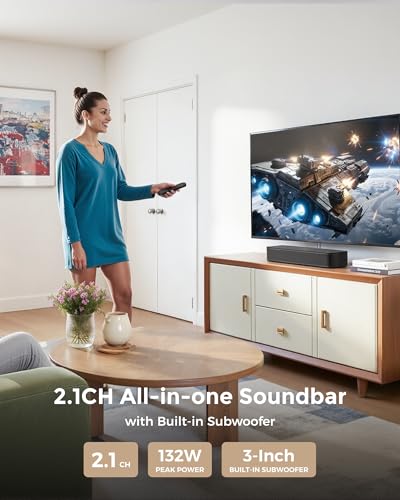
Bass is where taste, neighbors, and square footage collide. Some bars have enough low end for casual viewers; others really need a subwoofer to avoid that thin, cardboard sound. The trade-off is physical: a separate sub takes up floor space and inevitably becomes either a dust magnet or a dog’s new best friend.
- What it gets right: fullness at low volumes; impact that doesn’t just mean “boom.”
- What to look for: adjustable sub level; a night mode; bass that stays controlled rather than rattly.
- Honest caveat: tiny subs can be weirdly enthusiastic — lots of thump, not much texture. Great for blockbusters, less charming for jazz.
Surround sound: convincing vs. “party trick”
Virtual surround can be genuinely enjoyable, but it’s also the easiest place for a soundbar to get theatrical in an unhelpful way. In real rooms (sofas off-center, open hallways, ceilings that slope), some “3D audio” modes end up sounding phasey — like the TV is trying to throw sound around your head and missing.
- What it gets right: ambience that expands without making dialogue swim; effects that have direction, not confusion.
- What to look for: optional rear speakers if you truly want surround; an auto-calibration tool; the ability to tone down height/virtual effects.
- Thing to know: the more complicated the format support, the more important the setup — otherwise you’re paying for features that never quite show up.
Volume behavior: the “stop waking everyone up” problem
Many people aren’t chasing maximum loudness. They’re chasing consistent loudness. A good soundbar makes quiet scenes audible without turning loud scenes into a domestic incident.
- What it gets right: stable levels between dialogue and action; less remote jockeying.
- What to look for: dynamic range compression (often called Night Mode); clear, granular volume steps (not “too quiet” to “neighbor complaint”).
- Honest caveat: some leveling features squash the life out of movies. Useful on weeknights, less so when you actually want drama.
Connectivity that doesn’t feel like a riddle
Soundbars are at their best when they disappear — sonically present, operationally invisible. That means the TV remote should control volume without theatrics, inputs shouldn’t mysteriously change, and everything should wake up when it’s supposed to.
- What it gets right: reliable TV audio with minimal tinkering; fewer “why is it playing through the TV again?” moments.
- What to look for: HDMI eARC/ARC (for one-remote life); a solid optical fallback; Bluetooth that actually stays paired if you’ll use it for music.
- Small annoyance worth noting: some bars are overly chatty — bright LEDs, scrolling messages, or input announcements that feel like a robot clearing its throat.
Wi‑Fi streaming & smart features (nice, until they’re needy)
Built-in streaming can be a quiet luxury: play music without turning on the TV, link to multiroom audio, control it from the kitchen while pretending not to. But smart features also mean apps, updates, and the occasional moment where the soundbar decides it’s the main character.
- What it gets right: easy music playback; stable casting; multiroom that behaves.
- What to look for: a good companion app (simple EQ, clear toggles); the ability to disable voice assistants if that’s not the vibe.
- Honest caveat: app setup can be the worst five minutes of ownership. If the home Wi‑Fi is flaky, pick simpler.
Size, aesthetics, and the tyranny of the TV stand
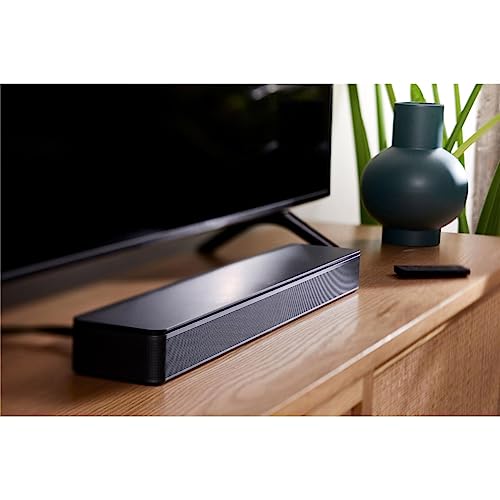
Soundbars are marketed like they float elegantly under the TV. In reality, they live among picture frames, game consoles, and the daily clutter migration. A bar that’s too tall can block the TV’s IR sensor, sit in front of the screen on short legs, or force the TV onto risers that look like a temporary solution that becomes permanent.
- What it gets right: fits without rearranging furniture; doesn’t look like a server rack on a walnut console.
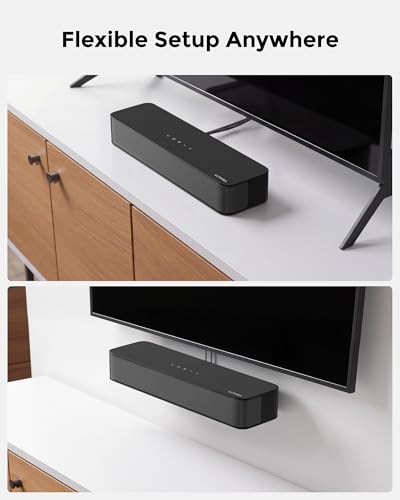
- What to look for: width that roughly matches the TV; low profile if your TV sits low; wall-mount options if the stand is chaos.
- Thing people don’t admit: fabric-wrapped bars look great until they meet pet hair. Glossy bars look great until they meet fingerprints.
Setup, calibration, and the “read the manual” tax
The best soundbar setups are the ones that don’t become a weekend project. Auto-calibration can help in tricky rooms, but only if it’s easy to run and doesn’t require moving furniture like you’re staging a home sale.
- What it gets right: quick pairing; clear prompts; settings that make sense.
- What to look for: guided setup that doesn’t hide basics; EQ presets that are actually distinct; the ability to save preferences (so it doesn’t revert after updates).
- Honest caveat: “AI sound” modes can be unpredictable. Sometimes they’re thoughtful. Sometimes they’re caffeinated.
Controls: remotes, apps, and the tiny daily frictions
This is where good products quietly earn loyalty. If the remote is microscopic and slippery, it will live in the couch forever. If the bar has only touch controls on top, they will be activated by dusting, cats, or an innocent hand reaching for popcorn.
- What it gets right: controls that are legible; a volume response that feels immediate; minimal lag.
- What to look for: TV-remote compatibility; a remote with backlighting (especially if movie night is usually lights-down); clear status indicators you can dim.
- Small but real: if switching inputs takes three buttons and a prayer, it’ll never happen — and you’ll resent the feature you paid for.
Room types: quick guidance that feels like real life
- Tiny apartment, thin walls: prioritize dialogue clarity and night mode over maximal bass. A bar with controlled low end beats a subwoofer you can’t actually use.
- Open-plan living room: look for a wider soundstage and room calibration. Without it, audio tends to evaporate into the kitchen.
- Kids/pets/constant movement: durability and stable placement matter. Wall-mounting avoids the daily “someone bumped it” drift.
- Design-forward space: pick a finish that matches the room and be honest about maintenance. Fabric attracts fuzz; glossy attracts fingerprints; matte hides a lot.
- People who truly want surround: consider models that allow rear speakers later. Virtual surround can be lovely, but real rear channels are less fussy about room shape.
Things to know before buying (so it doesn’t become a return)
- Check TV compatibility: HDMI eARC/ARC simplifies life; older TVs may require optical and can limit fancy audio formats.
- Measure the physical setup: TV stand height, distance between TV legs, and whether the bar blocks the screen or sensor.
- Plan for cords: power + HDMI + maybe a subwoofer cable (or power for a wireless sub) adds up. Cable management is not optional; it’s the whole vibe.
- Decide what “music” means: some bars sound great for TV but feel flat for music. If it’ll double as a speaker, prioritize warmth and balance, not just cinematic punch.
Honest caveats (because perfect products don’t exist)
- Software can age badly: app reliance is convenient until an update changes the interface or breaks a feature that used to work.
- Atmos and virtual effects aren’t magic: ceiling height, room symmetry, and seating position matter more than the logo on the box.
- Bass can become a negotiation: between roommates, neighbors, and the structural integrity of a flimsy media console.
- “Simple” can be the luxury choice: fewer modes and fewer inputs often means fewer weird moments.
The quick shortcut: what “best” usually looks like
- For most homes: a bar with excellent dialogue handling, HDMI eARC, a restrained-but-present low end, and a night mode that actually works.
- For movie lovers with tolerant neighbors: a bar that can expand with a subwoofer and optional rears, plus calibration that tames awkward rooms.
- For people who hate fiddling: prioritize reliability over features. The “smartest” bar is the one that never makes anyone open an app.
1,000,000+ shoppers use Buyer's Guide every week to find the best products and services online.

Helping millions of users make smarter purchases online.

