





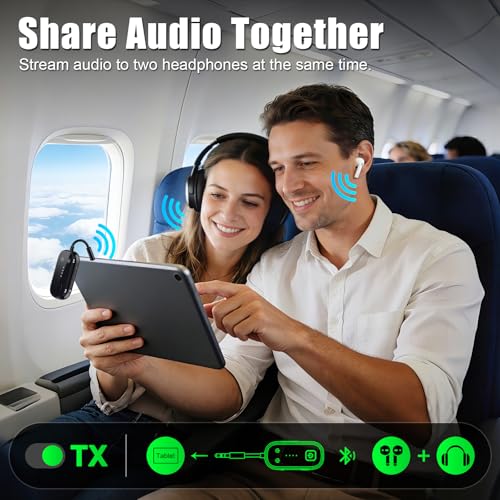


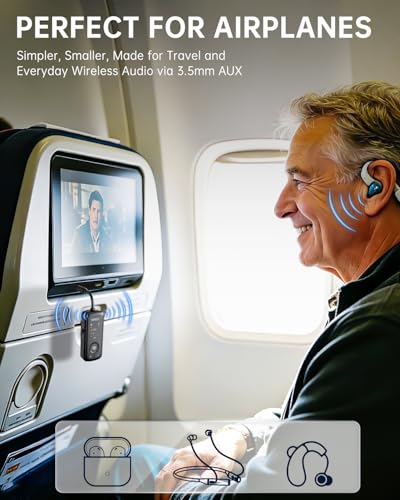




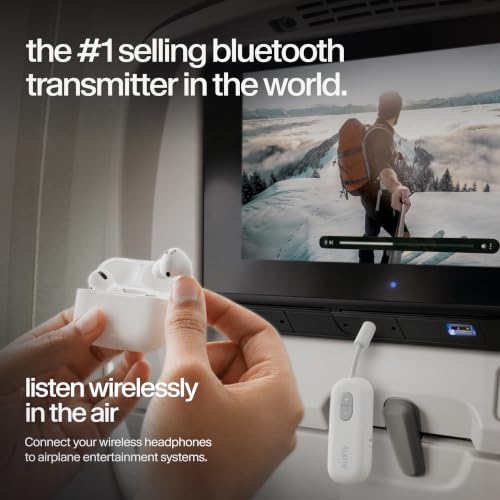




We also considered 10 others:


Our Top Choice
The order above is not editorial opinion, and it is not paid placement. It comes from what shoppers across our network actually do - which bluetooth tv adapters for hearing aids they compare, and which they ultimately buy. We re-rank as new data comes in, so the long-term favorites have to keep earning their spot against new entrants. The full method, including how we make money.
Bluetooth TV Adapters for Hearing Aids Buyer's Guide
Bluetooth TV adapters for hearing aids live or die on a narrow compatibility tradeoff: the adapter must match both the TV’s audio output and the hearing aids’ wireless streaming standard. The sharpest concerns are clear dialogue without lip-sync problems and independent hearing-aid volume so one listener can hear well without raising the room volume for everyone else.
Aid Compatibility
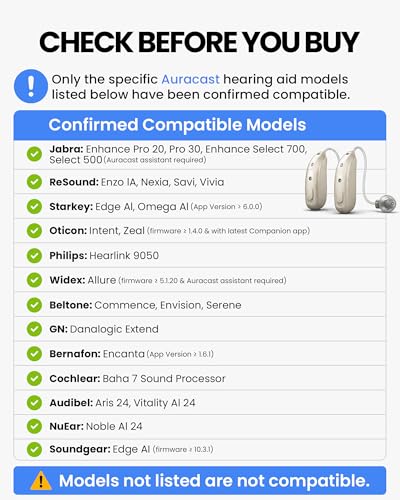
Bluetooth hearing aids do not all use the same streaming standard, so a transmitter that works with headphones may not work with hearing aids. Compatibility determines whether pairing is simple, whether audio reaches both aids correctly, and whether the connection stays useful in daily TV watching.
Start by confirming the exact wireless system your hearing aids use, not just that they are “Bluetooth.” Many hearing aids require a specific Bluetooth LE Audio, Auracast, or hearing-aid-compatible pairing mode, while many TV transmitters are built mainly for earbuds and headphones; a mismatch can mean no pairing, one-ear audio, unstable reconnection, or missing volume control. Check whether the adapter supports the hearing aids directly, whether it needs an intermediary app or accessory, and whether it can remember the hearing aids after power cycles. Owner feedback strongly supports this as a make-or-break factor: buyers report very good results with compatible Bluetooth hearing aids, but also note that compatibility and connectivity can vary depending on the hearing aids, phone, TV output, headphones, earbuds, or Bluetooth mode being used. The best picks make compatibility explicit and avoid leaving the shopper to infer it from generic Bluetooth claims.
TV Inputs
The adapter is only as useful as the signal it can receive from the television. TV audio menus, optical format settings, and existing soundbar connections can all affect whether the hearing-aid stream works cleanly.
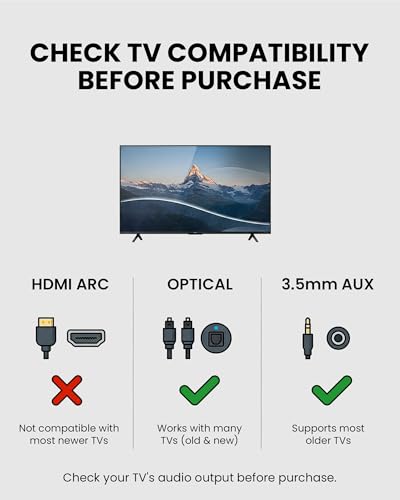
Choose an adapter that matches the TV’s real audio outputs: optical/TOSLINK, 3.5mm headphone out, RCA, USB audio, or HDMI-based extraction if needed. For optical connections, verify that the TV can output PCM stereo, because many hearing-aid streaming adapters cannot decode surround formats; otherwise the result may be silence, distorted audio, or a setup that only works after changing TV menus. If the household also uses a soundbar or receiver, check whether the TV can output to speakers and the adapter at the same time or whether a splitter/passthrough setup is required. Owner sentiment shows why this matters: shoppers value compact transmitters that combine modern wireless support with optical and 3.5mm options, but mixed reports mention that results depend on the TV output and Bluetooth mode. A good buyer’s-guide pick should therefore reward adapters with broad input support and clear instructions for TV audio settings, not just wireless specs.
Dialogue Clarity
For hearing-aid TV adapters, the main goal is speech intelligibility, not room-filling sound. Clear, synchronized dialogue reduces listening strain and is often the difference between following a program and giving up on it.
Prioritize clean dialogue over loudness alone. Look for low-latency streaming, stable digital input support, a codec or hearing-aid protocol designed for speech, and enough output control to avoid clipping, hiss, or a weak signal. For TV use, latency matters because even clear audio becomes frustrating if mouths and voices do not line up, and excessive compression or noisy analog output can make speech harder to understand through hearing aids. Owner reports repeatedly emphasize that the right adapter can make TV dialogue and detail much clearer through hearing aids, turning hard-to-follow audio into enjoyable listening. Sentiment is not perfectly uniform, though: some buyers report clean, simple sound while others see variability in sound quality or volume, so the strongest picks should be judged on clarity, stability, and lip-sync rather than generic “high fidelity” claims.
Shared Volume
A hearing-aid TV adapter often serves both the listener and the household. Independent volume control prevents the common tradeoff between intelligibility for one person and excessive loudness for everyone else.
For shared rooms, make sure the listener can adjust hearing-aid streaming volume independently from the TV speakers. The best setup lets the hearing-aid wearer raise dialogue in their aids while others hear the room at a normal level, or while a soundbar continues working normally. Avoid setups where plugging into the headphone jack automatically mutes the TV speakers unless that is acceptable, and check whether volume is controlled on the adapter, the TV, an app, or the hearing aids. Owner feedback is especially strong on this point: buyers praise separate hearing-aid streaming volume because one person can hear the TV clearly without forcing everyone else to tolerate higher room volume. Positive reports also describe these adapters as making TV easier in shared spaces, while mixed comments show that volume behavior is not always consistent across setups.
Easy Pairing
The people using these adapters may not want to troubleshoot Bluetooth every time they watch television. Reliable pairing and automatic reconnection turn the device from a novelty into an everyday accessibility tool.
Look for an adapter that can be installed once and then reconnect automatically when the TV and hearing aids are in use. Important details include a clear pairing button or mode indicator, memory for paired devices, stable range from the TV seating position, and power behavior that does not require daily unplugging or re-pairing. Avoid models with confusing multi-mode switches unless the indicators clearly show whether they are in transmit, receive, Auracast, or standard Bluetooth mode. Owner sentiment strongly favors adapters that install quickly and pair easily with compatible hearing aids, with some buyers describing connection as simple or automatic after setup. At the same time, mixed feedback around setup, connectivity, and Bluetooth mode shows that reliability depends on the whole chain, so easy first pairing is not enough if reconnecting later becomes a chore.
Hardware Value
A TV adapter usually stays connected in the living room for daily use, so weak ports, vague indicators, or limited features can become constant irritations. Good hardware design makes the setup cleaner, more reliable, and easier to keep using over time.
Favor a compact, always-ready transmitter with solid ports, clear status lights, included connection options, and enough modern wireless support to remain useful as hearing aids and TVs change. For this category, “value” is not just a low-cost accessory; it is whether the unit includes the right inputs, codecs, streaming modes, and build quality to avoid buying extra dongles or replacing it after setup frustrations. Check for practical details such as cable strain relief, readable indicators, firmware/update path if applicable, and whether the device can sit neatly near the TV without blocking other equipment. Owner sentiment points to overall quality as a differentiator, with buyers describing capable compact transmitters rather than throwaway accessories. Shoppers also respond positively when one small unit combines modern wireless features with useful wired inputs, reinforcing that the best choice is the one whose hardware and feature set match the full TV-hearing-aid setup.
1,000,000+ shoppers use Buyer's Guide every week to find the best products and services online.

Helping millions of users make smarter purchases online.


