
What to Know About Robot Mowers
Posted on Tuesday, April 07, 2026
To keep this site free for consumers, we receive compensation for customer referrals.
What to Know About Robot Mowers
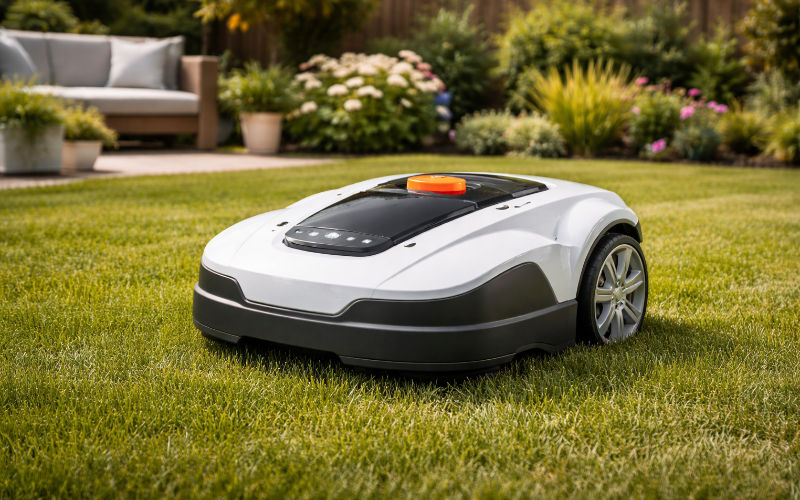
Robot mowers are autonomous lawn care devices designed to maintain grass with minimal hands-on effort. Using boundary guidance, sensors, and programmed schedules, they trim lawns incrementally rather than relying on occasional, intensive mowing sessions. This approach results in frequent cutting cycles that keep grass consistently short and evenly maintained.
Understanding how robot mowers function, what features influence their behavior, and where they perform effectively can help clarify whether this category aligns with your lawn care needs. While the concept is straightforward, real-world performance depends on terrain, layout, and user setup.
How Robot Mowers Operate in Practice
Robot mowers navigate defined lawn areas using perimeter boundaries, often established through physical wires or virtual mapping systems. Once configured, the mower operates on a schedule, moving in patterns that may appear random but are designed to ensure full coverage over time.
Most units return to a charging station automatically when battery levels drop, then resume mowing once recharged. This continuous cycle allows the mower to maintain grass height rather than cutting large amounts at once, which can influence both lawn appearance and maintenance habits.
Types and Navigation Approaches
Robot mowers vary in how they define and navigate mowing zones. These differences can affect installation complexity and adaptability to changing landscapes.
Common configurations include:
- Wire-guided systems: Use a physical boundary wire installed around the lawn perimeter. These systems are widely used and provide consistent containment once installed.
- GPS-assisted models: Incorporate satellite positioning to improve navigation efficiency and coverage tracking, particularly in larger spaces.
- Camera or sensor-based mapping: Use onboard sensors to identify edges and obstacles, reducing reliance on physical boundaries in some setups.
- Hybrid systems: Combine multiple navigation methods to balance precision and flexibility.
The choice between these approaches often depends on lawn complexity, user preference for installation, and desired level of automation.
Key Features That Influence Performance
While robot mowers share a common goal, their capabilities can vary based on design and feature sets. Evaluating these elements helps clarify how a unit may behave in everyday use.
- Cutting width and height adjustment: Determines how much grass is trimmed per pass and how precisely height can be controlled.
- Battery capacity and runtime: Affects how long the mower operates before returning to recharge, which influences coverage efficiency.
- Slope handling: Indicates how well the mower performs on inclined terrain, which is important for uneven lawns.
- Obstacle detection: Sensors help the mower avoid objects, reducing interruptions and potential damage.
- Weather resistance: Enables operation in varying conditions, though performance may still depend on grass moisture and soil firmness.
- Connectivity and controls: Some models allow scheduling and monitoring through apps or remote interfaces, offering more control over operation.
- Noise output: Typically lower than traditional mowers, which can influence when and how often the device is used.
Each feature contributes to how the mower integrates into a routine, rather than dramatically changing the core function.
How Robot Mowers Fit Into Lawn Care Routines
Robot mowers shift lawn care from periodic activity to ongoing maintenance. Instead of mowing once a week or less, the device trims small amounts frequently, which can change how the lawn looks and grows over time.
This continuous trimming produces fine clippings that settle into the lawn, reducing the need for collection. However, it also requires consistent scheduling and a willingness to let the mower operate regularly, sometimes daily.
Users typically spend more time on initial setup and less on ongoing mowing tasks. Maintenance shifts toward monitoring blades, cleaning components, and ensuring boundary integrity rather than manual cutting.
Where Robot Mowers Perform Well
Robot mowers tend to work most effectively in environments with clearly defined boundaries and moderate terrain. Lawns that are relatively even, with minimal obstructions, allow the mower to operate efficiently and cover the area predictably.
They are also suited to users who prefer a consistent lawn appearance without dedicating time to manual mowing. Smaller to medium-sized spaces often align well with the typical runtime and navigation patterns of many units.
In structured outdoor spaces where landscaping elements are stable and predictable, robot mowers can operate with minimal intervention once configured.
Situations That May Require Closer Evaluation
Not all lawns align seamlessly with autonomous mowing. Complex layouts, frequent changes in landscaping, or areas with multiple disconnected sections may require additional setup or adjustments.
Other considerations include:
- Dense obstacles such as trees, furniture, or garden features
- Steep or uneven terrain beyond the mower’s handling capability
- Limited access points between lawn sections
- Heavy debris like sticks or fallen branches
These factors do not necessarily prevent use, but they can influence how much oversight or customization is needed.
Design Constraints and Practical Limits
Robot mowers are designed for maintenance rather than recovery. They perform best when grass is already within a manageable height range and may not handle overgrown lawns efficiently.
Battery limitations also mean that coverage occurs over time rather than in a single session. While this aligns with their intended use, it may differ from expectations shaped by traditional mowing.
Installation requirements, particularly for boundary-based systems, can also introduce an upfront time investment. Adjustments to lawn layout may require revisiting this setup.
Balancing Automation With Control
One of the defining characteristics of robot mowers is the balance between autonomy and user input. While the mower operates independently, outcomes depend heavily on initial configuration and ongoing adjustments.
Users retain control through scheduling, boundary definition, and maintenance decisions. Understanding this balance helps set realistic expectations about how “hands-off” the experience will be.
Making Sense of the Category
Robot mowers represent a shift in how lawn care is approached, emphasizing consistency and automation over manual effort. Their value lies in maintaining established lawns rather than transforming neglected ones.
Understanding how navigation systems, feature sets, and environmental factors interact can make evaluating different options more straightforward. With a clear sense of your lawn’s layout and your expectations for maintenance, it becomes easier to determine how this category fits into your routine.
For more information and to compare options, check out our website!


