How to Choose Backyard Tree Swing
Posted on Thursday, April 23, 2026
To keep this site free for consumers, we receive compensation for customer referrals.
Backyard Tree Swings Guide
Backyard tree swings occupy a unique space between simple outdoor play and intentional landscape design. While the concept is familiar, the category itself has expanded into a range of formats, materials, and installation approaches that shape how the swing performs over time. Understanding these variables can help clarify what type of tree swing fits your space, how it will function day to day, and what trade-offs may come with each option.
Beyond their visual appeal, tree swings introduce motion, relaxation, and interaction into outdoor environments. Whether used for quiet moments or active play, they tend to become a focal point in the yard. The details behind their construction and setup play a significant role in how enjoyable and sustainable that experience is.
How Tree Swings Fit Into Backyard Use
Tree swings are often integrated into outdoor spaces as both a recreational feature and a design element. Their placement can influence how a yard is used, encouraging people to spend more time outdoors while creating a defined gathering or resting spot. The surrounding environment, including tree type and ground conditions, directly affects usability.
Unlike freestanding outdoor furniture, tree swings rely on natural structures. This makes them more dependent on the characteristics of the tree itself, including branch strength, height, and positioning. These factors shape everything from swing motion to long-term durability.
Common Types of Backyard Tree Swings
Tree swings come in several configurations, each offering a different experience and accommodating different user needs. The choice often depends on who will use the swing and how it will be incorporated into the backyard.
- Classic plank swings: A flat seat suspended by rope or chain. This design emphasizes simplicity and is often used for individual swinging.
- Disc swings: A compact, circular seat that typically hangs from a single rope. It allows for spinning as well as swinging, which changes how motion is experienced.
- Platform swings: A larger, flat surface designed to hold more than one person or allow varied seating positions. These tend to prioritize stability over speed.
- Hammock-style swings: Fabric or flexible material creates a cradle-like seat. This format leans toward relaxation rather than active movement.
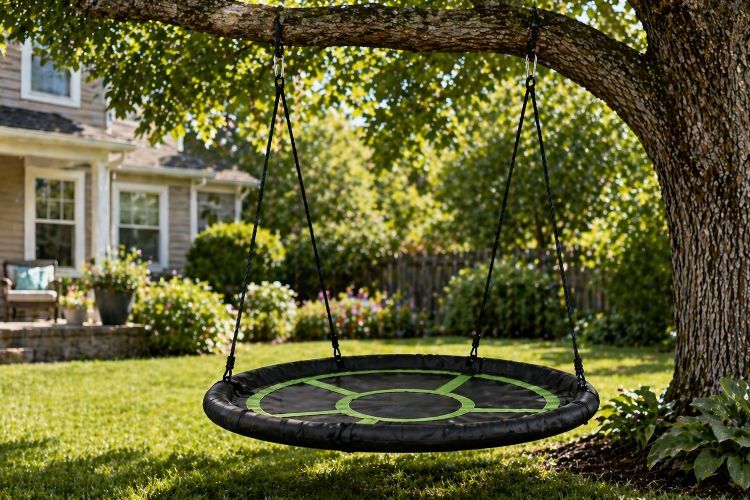
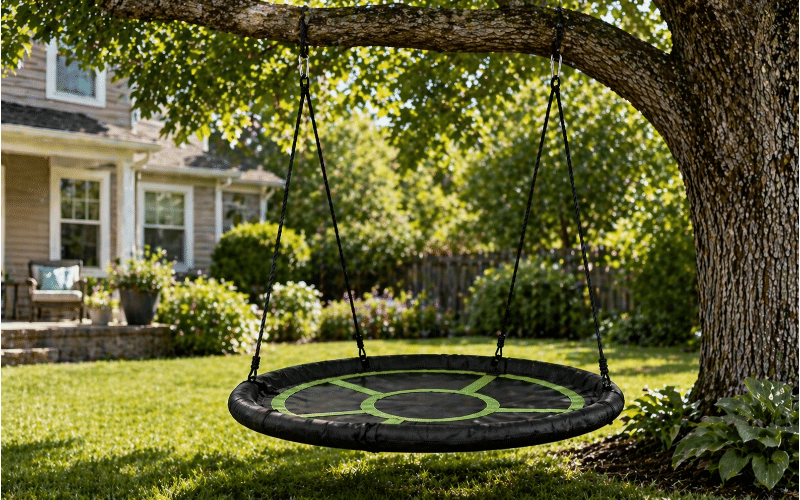
- Tire-style swings: A suspended circular form that supports multiple sitting positions. It introduces multidirectional movement and can be used by more than one person at a time.
Each type influences how the swing moves, how much space it requires, and how users interact with it. Some prioritize dynamic motion, while others are better suited for stationary comfort.
Material Choices and Their Impact
The materials used in tree swings affect both durability and overall feel. Exposure to outdoor conditions makes material selection particularly important, especially in environments with intense sun, moisture, or seasonal changes.
- Wood: Often used for seats, wood provides a natural look that blends with outdoor settings. It can vary in weight and resistance to weather depending on the type and finish.
- Plastic or molded materials: These are typically lightweight and resistant to moisture. They tend to require less maintenance but may feel different in temperature depending on sun exposure.
- Rope: A common suspension method that offers flexibility and a softer aesthetic. The thickness and fiber type influence strength and longevity.
- Chain: Provides a more rigid connection and can handle consistent stress over time. It may be paired with protective coatings to reduce wear.
- Fabric: Found in hammock-style swings, fabric introduces comfort but may require more attention to weather resistance and cleaning.
Material combinations are common, and each pairing brings different performance characteristics. For example, a wooden seat with rope suspension behaves differently from a molded seat with chain support.
Installation Considerations That Shape Performance
Installing a tree swing involves more than attaching a rope to a branch. The setup determines how safely and smoothly the swing operates, as well as how it impacts the tree over time. Careful positioning and hardware selection can reduce strain on both the tree and the swing itself.
Branch selection is a key factor. A horizontal branch with sufficient thickness is typically preferred, as it distributes weight more evenly. The height of the branch influences swing arc, while the distance from the trunk affects clearance during movement.
Attachment methods vary. Some setups rely on wrapping rope directly around the branch, while others use specialized straps or hardware designed to reduce friction and protect the bark. The choice of method can affect both installation ease and long-term tree health.
Ground clearance is another practical detail. Adequate space beneath the swing ensures consistent motion without obstruction and contributes to a more comfortable experience for users.
Performance and Everyday Use
In daily use, tree swings are shaped by a combination of design and environment. Motion range, seating comfort, and ease of access all contribute to how often the swing is used and by whom. A swing designed for active play may not offer the same comfort as one intended for relaxation, and vice versa.
Weather exposure plays an ongoing role. Materials can heat up under direct sunlight or retain moisture after rain, which influences when and how the swing is used. Seasonal changes may also affect tension in ropes or the condition of the supporting branch.
Maintenance tends to be minimal but still important. Periodic checks for wear, tension, and attachment stability can help maintain consistent performance over time.
Trade-Offs and Practical Constraints
While tree swings offer a simple concept, there are trade-offs to consider. Heavier designs may provide stability but require stronger branches and more involved installation. Lighter options are easier to set up but may feel less anchored during use.
Space limitations can also influence choice. Larger swings need more clearance to move freely, which may not be feasible in smaller backyards. Similarly, not all trees are suitable for supporting a swing, which can limit placement options.
Material durability varies with climate. Some materials handle prolonged sun exposure better, while others perform more consistently in damp conditions. These differences can affect how the swing looks and functions over time.
Where Tree Swings Make the Most Sense
Backyard tree swings are most practical in spaces where a suitable tree is already present and can support consistent use. They often appeal to households looking to add an interactive element to outdoor areas without introducing large structures.
They can also serve as a transitional feature between active and passive outdoor use. For some, the swing becomes a place to read or relax; for others, it supports play and movement. This flexibility is part of what makes the category broadly adaptable.
Bringing Movement Into Outdoor Spaces
Tree swings introduce a sense of motion that static outdoor elements do not provide. That movement can shape how people engage with their backyard, offering a simple way to shift between activity and rest. The experience varies depending on design, installation, and environment, making each setup somewhat unique.
Understanding how different types, materials, and configurations influence performance can make evaluating options more straightforward. With a clear view of how these elements interact, it becomes easier to identify what aligns with your space and how you plan to use it. For more structured insights into outdoor product categories, visit our site to continue exploring.

Related Blog Posts