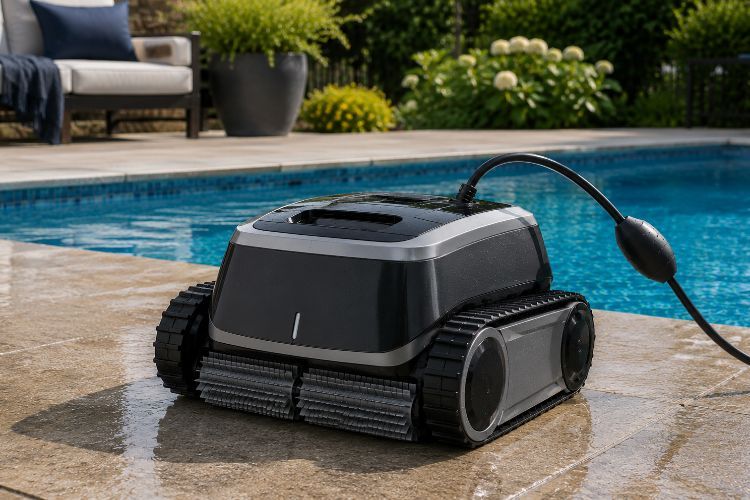
Finding the Right Pool Cleaner Setup
Posted on Thursday, May 28, 2026
To keep this site free for consumers, we receive compensation for customer referrals.
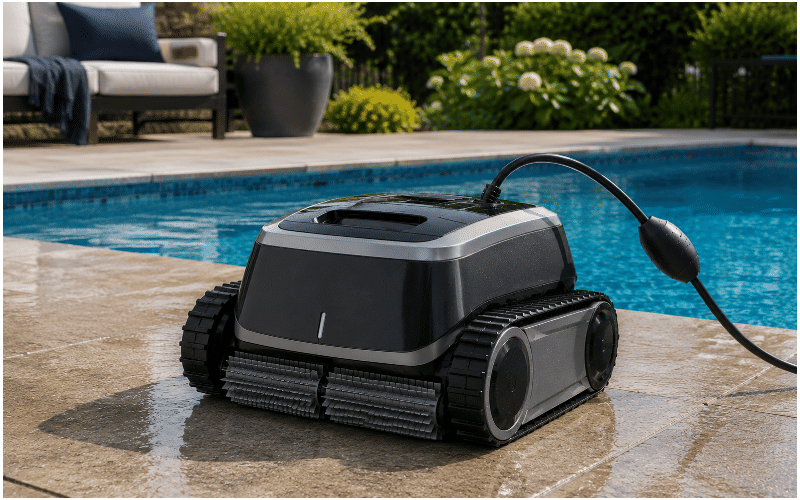
Finding the Right Pool Cleaner Setup
Pool maintenance tends to become much more demanding once debris starts collecting faster than the filtration system can comfortably manage on its own. Leaves settle into corners, sediment builds along the floor, pollen clings to waterlines, and fine particles continue circulating even when the water initially appears clean. Pool cleaners are designed to reduce that manual workload, but the category has become far more advanced and specialized than many pool owners realize.
Modern pool cleaner systems now range from traditional suction-driven units to highly automated robotic cleaners with onboard navigation, internal filtration, programmable cleaning cycles, and app-based controls. As robotic models have grown in popularity, the conversation around pool cleaning has shifted away from simple debris collection and toward automation, efficiency, and long-term maintenance reduction.
Understanding how different pool cleaner systems operate can make it much easier to evaluate which setup actually fits the pool environment, debris conditions, and maintenance expectations.
Why Robotic Pool Cleaners Have Become So Popular
Robotic pool cleaners have changed the category because they operate independently from the pool’s primary filtration and circulation systems. Instead of relying on the pool pump for movement or suction pressure, robotic cleaners use internal motors and self-contained filtration compartments to navigate and clean the pool.
This independence creates several practical advantages. Robotic systems can scrub surfaces directly, capture debris internally, and reduce strain on the pool’s main filtration equipment.
Many newer robotic cleaners now include advanced navigation systems that map cleaning paths rather than moving randomly throughout the pool. Some models can climb walls, clean waterlines, detect obstacles, or adjust movement patterns based on pool shape.
The popularity of robotic cleaners also comes from convenience. Programmable schedules, automatic shutoff cycles, and easier debris collection have made them appealing for pool owners looking to reduce manual vacuuming and routine maintenance time.
However, robotic systems also introduce their own trade-offs involving cable management, onboard filter cleaning, storage considerations, and higher mechanical complexity.
The Three Main Pool Cleaner Categories
Pool cleaners generally fall into three major categories: suction-side, pressure-side, and robotic systems. Each handles cleaning differently and creates different maintenance expectations.
Suction-side cleaners connect directly to the pool’s filtration system and use suction pressure to move across the pool floor while collecting debris. These systems are often mechanically simpler but rely heavily on the pool pump’s overall performance.
Pressure-side cleaners use pressurized water flow to propel movement and direct debris into collection bags or chambers. Some systems require separate booster pumps for stronger operation.
Robotic cleaners function independently using internal motors, drive systems, and onboard filters. Because they do not rely entirely on pool circulation, they often provide more controlled cleaning patterns and surface scrubbing capabilities.
The better setup usually depends on pool size, debris conditions, cleaning frequency, and how automated the maintenance process is expected to become.
Pool Shape and Surface Material Affect Cleaner Performance
Not every cleaner performs equally well across all pool designs.
Flat-bottom pools with simple rectangular layouts tend to be easier for most systems to navigate consistently. Freeform pools, deep transitions, tanning ledges, steps, and sharp corners may create more navigation challenges depending on the cleaner design.
Surface material also influences cleaning effectiveness. Vinyl liners, fiberglass, plaster, tile, and textured finishes each create different traction conditions and debris behavior.
Some robotic cleaners are specifically designed to improve wall climbing and grip on smoother surfaces, while others prioritize floor cleaning efficiency over vertical movement.
For pools with frequent algae buildup or fine sediment accumulation, active scrubbing capability often becomes more important than suction strength alone.
Features That Influence Everyday Pool Cleaning
Modern pool cleaners include a wide range of features that affect usability, cleaning efficiency, and long-term maintenance requirements.
- Navigation systems: Advanced robotic cleaners may use sensors or mapping technology to improve cleaning coverage and reduce repeated overlap.
- Wall climbing capability: Some cleaners can scrub walls and waterlines in addition to floor cleaning.
- Debris filtration: Fine filtration systems help capture smaller particles such as pollen, sand, and algae debris.
- Cleaning cycle programming: Adjustable cleaning modes allow users to target specific cleaning durations or pool zones.
- Cord management systems: Swivel cables and anti-tangle designs improve robotic cleaner mobility during operation.
- Debris capacity: Larger internal baskets or bags reduce how frequently the cleaner requires emptying.
- Surface scrubbing brushes: Active brushes help loosen dirt and buildup from pool surfaces during cleaning cycles.
- Waterline cleaning: Some robotic systems specifically target residue buildup along the waterline.
- App connectivity: Certain robotic cleaners support remote scheduling, monitoring, and cycle adjustments through mobile apps.
Debris Type Often Determines the Better Setup
The kind of debris entering the pool has a major impact on cleaner performance.
Pools surrounded by trees may accumulate larger leaves, sticks, seed pods, and heavier organic debris that place greater demands on intake systems and debris storage capacity.
Open pools exposed to wind may collect fine dust, pollen, sand, or insects that require finer filtration capability.
Some cleaners handle large debris effectively but struggle with finer sediment, while others prioritize fine filtration but require more frequent cleaning during heavy leaf accumulation.
Understanding what typically enters the pool throughout the season often helps narrow down cleaner priorities more effectively than focusing on generalized cleaning claims.
Automation and Maintenance Expectations
One reason robotic pool cleaners continue gaining popularity is the growing preference for automation in routine pool maintenance.
Programmable cleaning schedules allow many robotic systems to operate with minimal supervision throughout the week. Some units automatically return to accessible positions after completing cleaning cycles.
At the same time, robotic systems still require maintenance. Internal filters need cleaning, brushes experience wear over time, and electronic components may require careful storage during colder seasons.
Simpler suction-side systems may involve fewer electronic components but often require more direct interaction with the pool’s filtration and circulation setup.
The ideal balance depends on whether the priority is lower upfront complexity or reduced long-term manual cleaning involvement.
Energy Use and System Efficiency
Because robotic cleaners operate independently from the pool pump, many pool owners view them as a way to reduce overall circulation system strain during cleaning cycles.
Suction-side and pressure-side systems rely more directly on pool pump operation, which can increase runtime demands depending on cleaning frequency.
Robotic cleaners generally use separate low-voltage power supplies and focus energy specifically on targeted cleaning tasks.
However, efficiency also depends on cleaning frequency, pool conditions, and how effectively the cleaner navigates the space without unnecessary overlap.
Thinking Beyond Basic Vacuuming
The pool cleaner category has evolved well beyond simple floor vacuuming. Modern systems now incorporate navigation technology, active scrubbing, programmable automation, and independent filtration designed to reduce ongoing maintenance demands across a wide range of pool environments.
Rather than focusing only on cleaning power or debris capacity, it often makes more sense to evaluate how the cleaner fits the pool layout, surrounding environment, and desired maintenance routine.
Navigation reliability, debris handling, filtration capability, automation features, and long-term maintenance requirements all contribute to overall usability in ways that specification sheets alone may not fully explain.
With a clearer understanding of these trade-offs, comparing pool cleaner setups becomes far more practical. For more information about pool equipment and outdoor maintenance categories, check out our website.

Related Blog Posts