Choosing the Right Bread Maker
Posted on Tuesday, May 19, 2026
To keep this site free for consumers, we receive compensation for customer referrals.
Choosing the Right Bread Maker
Bread makers occupy a surprisingly specific corner of the kitchen appliance world. They are not purely convenience machines, and they are not entirely hobby tools either. Somewhere between automation and hands-on baking, bread makers appeal to people who like the idea of fresh bread without necessarily wanting to spend an entire afternoon kneading dough by hand and monitoring oven timing.
What often surprises first-time users is how much a bread maker changes the atmosphere of a home. Fresh bread has a way of becoming an event rather than just another grocery item. The smell alone tends to pull people into the kitchen asking questions they normally never ask about dinner.
Modern bread makers have also evolved beyond basic white sandwich loaves. Many now support specialty doughs, programmable cycles, texture customization, delayed baking schedules, and nontraditional recipes. Understanding those differences matters because the experience of owning a bread maker depends heavily on expectations, baking habits, and how involved someone actually wants to be in the process.
Why Bread Makers Appeal to Different Types of Home Cooks
Some people buy a bread maker because they enjoy baking but dislike the repetitive labor of kneading. Others are more interested in routine and convenience, particularly the ability to wake up to freshly baked bread without starting from scratch in the morning.
There is also a category of users who simply enjoy the ritual. Measuring ingredients, hearing the paddle begin mixing, checking the dough texture midway through the cycle, and eventually slicing into a still-warm loaf creates a very different experience than buying packaged bread.
Interestingly, bread makers often attract people who never considered themselves “bread bakers” at all. The machine lowers some of the intimidation factor while still preserving enough involvement to feel satisfying.
The Difference Between Baking and Dough Preparation
One of the most important distinctions in this category is whether the bread maker will primarily handle complete baking cycles or function more as a dough preparation tool.
Some users rely on the appliance from start to finish. Ingredients go in, bread comes out, and the machine handles mixing, kneading, rising, and baking automatically.
Others use bread makers mainly for dough preparation before transferring dough into ovens, loaf pans, pizza stones, or specialty baking setups. In those cases, the bread maker acts more like an automated mixing and proofing assistant.
This difference influences which features matter most. A person focused on fully automated sandwich loaves may prioritize timer functions and loaf consistency, while a hobby baker experimenting with artisan-style doughs may care more about kneading performance and programmable cycles.
Texture Expectations Matter More Than Most People Realize
Bread makers produce bread differently than conventional oven baking, and expectations should reflect that reality. Machine-baked loaves often develop softer crusts and more uniform shapes compared to traditional bakery-style breads.
That is not necessarily a drawback. Many households actually prefer softer crust textures for sandwiches, toast, and everyday use.
However, users expecting heavily blistered crusts or highly irregular artisan structures may discover that some bread maker styles prioritize convenience and consistency over rustic presentation.
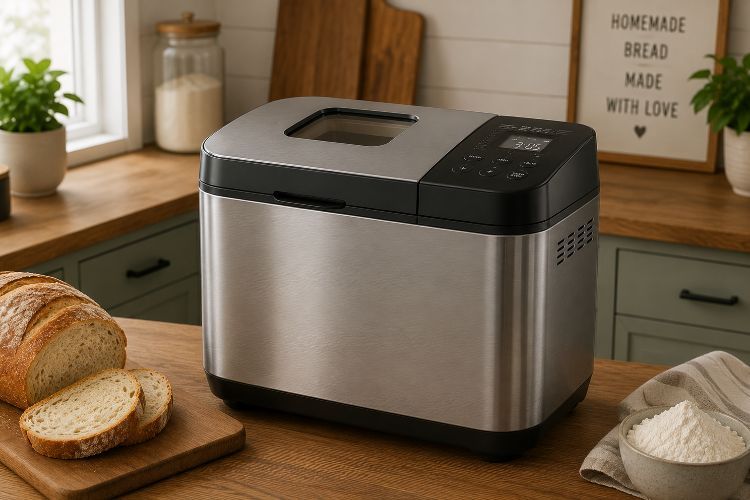
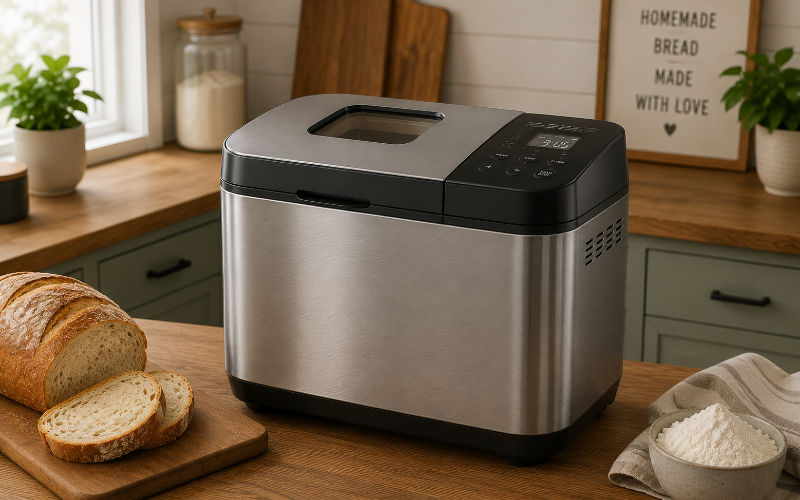
The machine’s internal shape also affects loaf appearance. Vertical bread makers produce taller loaves, while horizontal designs create more traditional sandwich proportions.
Features That Affect Everyday Baking
Bread makers can appear similar externally, but daily usability depends heavily on smaller design and programming details. Some features genuinely improve flexibility and consistency over time.
- Programmable Cycles: Adjustable baking programs may allow greater control over kneading time, rise duration, and crust development.
- Loaf Size Settings: Variable loaf options help households avoid producing more bread than they realistically consume.
- Crust Control: Light, medium, and darker crust settings influence texture and browning levels.
- Delay Timers: Scheduled baking allows fresh bread preparation around work schedules, mornings, or evening meals.
- Dough-Only Modes: Dedicated dough settings support pizza dough, rolls, cinnamon buns, and other oven-finished recipes.
- Viewing Windows: Transparent lids allow users to monitor dough consistency and baking progress without interrupting cycles.
- Dual Mixing Paddles: Multiple paddles may improve dough mixing consistency, especially for denser recipes.
- Specialty Program Support: Some machines include settings for gluten-free recipes, whole grain breads, or enriched doughs.
- Pan Removal and Cleaning: Nonstick surfaces and removable components simplify cleanup after repeated use.
These details often become more important after the first few baking cycles, once experimentation and routine baking begin.
The Appeal of Homemade Bread Beyond Convenience
Fresh bread changes how people interact with meals. Toast feels different. Sandwiches become more intentional. Even simple buttered slices somehow feel more substantial when the loaf came from your own kitchen a few hours earlier.
There is also something unexpectedly satisfying about seeing ingredients transform gradually throughout the baking cycle. Bread makers create a process people can observe rather than simply consume.
For families, the experience often becomes interactive. Children check the dough while it rises, people gather when the baking smell spreads through the house, and someone inevitably slices the loaf before it has cooled properly.
That atmosphere is difficult to quantify, but it explains why bread makers continue attracting interest even among people who already have access to quality bakery products.
Where Bread Makers Fit Into Modern Kitchens
Bread makers are not necessarily daily-use appliances for every household. Some people use them several times a week, while others reserve them for weekends, colder months, or occasional baking projects.
Kitchen space becomes an important consideration because bread makers tend to occupy more room than many initially expect. Taller vertical machines may fit differently under cabinets, and horizontal models often require larger storage areas.
Noise levels are also worth considering. Mixing and kneading cycles are not silent, especially during denser dough preparation.
Still, many users find the trade-off worthwhile because bread makers remove some of the unpredictability associated with manual bread baking while preserving much of the satisfaction.
Finding a Bread Maker That Matches Your Routine
The most useful bread maker is usually the one that aligns with realistic habits rather than ambitious baking fantasies. Some households want reliable sandwich loaves with minimal effort. Others want flexibility for experimenting with doughs, specialty recipes, and baking techniques.
Automation level matters too. Some users enjoy tweaking hydration levels, flour blends, and rise cycles. Others simply want consistent fresh bread without monitoring every stage of the process.
That balance between convenience and involvement is what defines the category. Bread makers succeed when they make homemade bread feel approachable enough to become part of normal life rather than an occasional project.
Understanding how machine size, baking style, programmability, and dough handling affect everyday use can make comparing bread makers far more manageable. Buyer’s Guide can serve as a useful resource when evaluating different bread maker features and baking approaches for home kitchens. Visit our website.

Related Blog Posts