











We also considered 10 others:


Our Top Choice
The order above is not editorial opinion, and it is not paid placement. It comes from what shoppers across our network actually do - which bed slats they compare, and which they ultimately buy. We re-rank as new data comes in, so the long-term favorites have to keep earning their spot against new entrants. The full method, including how we make money.
Bed Slats Buyer's Guide
Bed slats sit in the narrow tradeoff between adding firm, even mattress support and not raising or complicating the bed more than necessary. The biggest risks are poor frame fit, sliding on metal rails, and support that still lets foam or heavier loads sag between gaps.
Sag Control
Bed slats are not just a platform for the mattress; they determine whether the mattress is evenly supported or allowed to sag into gaps. The right support surface can extend mattress comfort, while the wrong one can create dips, pressure points, and premature wear.
For foam, latex, hybrid, or any mattress prone to sagging, prioritize close, evenly spaced slats or a flat bunkie-style surface that prevents the mattress from dipping between supports. Avoid widely spaced, flexible, or bowed slats unless you are only reinforcing an already supportive base; heavier sleepers and all-foam mattresses usually need the firmest, flattest option. Owner feedback supports this: buyers most often praise bed slats and boards that add firm, flat support, reduce sag, and restore comfort, while mixed reports note that some setups still sink when the support is not strong enough for the mattress or sleeper load.
Frame Fit
A slat set that is technically the right mattress size can still fit poorly if the bed frame has unusual rails, brackets, lips, or center supports. Proper fit keeps the support surface seated, prevents shifting, and ensures the mattress load is carried where the frame is designed to carry it.
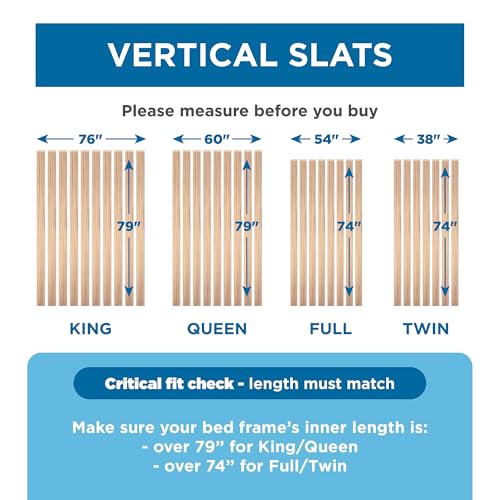
Measure the inside length and width of the frame, not just the mattress size, and check the ledge depth, center-rail clearance, and whether the slats need to sit inside rails or rest on top. For metal frames, confirm the board or slats will not teeter on narrow rails; for king sizes, look for split or two-section designs that are easier to place and less likely to flex awkwardly. Owners frequently report good results when the support sits correctly on king, queen, and metal-frame beds, but sizing feedback is mixed enough that measuring first is one of the safest ways to avoid sliding, overhang, or poor support.
Build Quality
Bed slats carry repeated dynamic weight from sleeping, sitting, and movement, so small weaknesses can turn into bowing, creaking, or broken supports. Strong materials and rigid construction matter more than appearance because they determine whether the mattress stays level over time.
Look for solid wood, steel, or reinforced composite construction with adequate thickness, strong cross-support, and no weak stapled or flimsy connection points. If replacing thin roll-out slats, make sure the new support is stronger than the original and can bridge any wide frame gaps without bowing; if using a full platform frame, check for center legs and a rigid middle support. Owner sentiment strongly favors options described as sturdy, well made, durable, and better built than expected, while the main caution is that some boards feel less strong than buyers hoped.
Stay-Put Stability
Bed supports fail in use not only by breaking, but also by sliding, rattling, or letting the mattress creep out of place. A stay-put design improves sleep comfort and reduces the need for constant adjustment, especially on metal frames and low-friction surfaces.
Choose slats or a bunkie board with anti-slip fabric, Velcro, side grips, straps, or a frame design that captures the support on all sides. Avoid smooth boards on slick metal rails unless you can secure them, because even a supportive surface becomes frustrating if the mattress or board shifts every few nights. Owners appreciate non-slip and Velcro details when they keep pieces positioned, but stability is also the most common watch-out, with some buyers needing to reposition the board or mattress.
Setup Handling
Bed slats are large, awkward parts, so ease of setup depends on sectioning and handling as much as on tool requirements. A support system that installs cleanly is less likely to be forced into the wrong position or damaged during setup.
If you are upgrading an existing bed, favor drop-in, folding, or two-section designs that can be carried through tight hallways and placed solo. Check whether any tools, screws, center brackets, or frame disassembly are required, and consider storage if you move often or need temporary guest-bed support. Owner reports consistently praise simple setup, no-complication installation, and sectioned designs that are easy to place, move, or store, especially compared with more involved frame assembly.
Practical Value
The best value in bed slats comes from solving the actual support problem, not from buying the most feature-heavy option. Matching the product type to the bed’s weakness helps avoid paying for extras while still leaving the mattress properly supported.
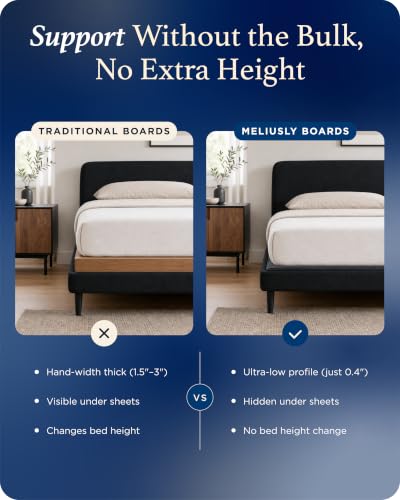
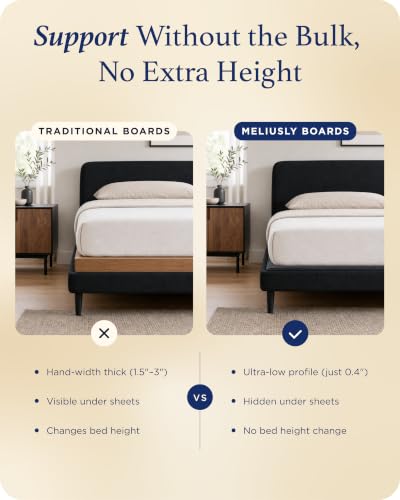
Decide whether you need a simple support upgrade, a low-profile bunkie-style board, or a full platform frame with extras before comparing value. A low-profile board is best when you want firmer support without adding much height; a full frame can make sense if you also need a headboard, storage, lighting, or charging, but extras should not compensate for weak slats. Owners often see strong value when the product combines sturdy support with practical design, while mixed feedback shows that buyers feel disappointed when anti-sag performance or build strength does not match expectations.
1,000,000+ shoppers use Buyer's Guide every week to find the best products and services online.

Helping millions of users make smarter purchases online.


