


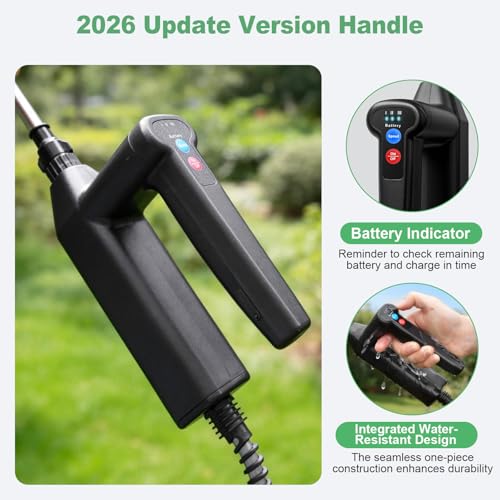




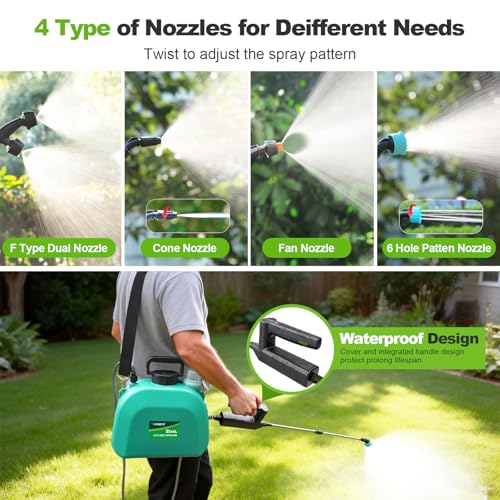


Our Top Choice
Why These Features Matter:
A battery sprayer sounds like a fussy suburban tool until the first time a hand-pump wand leaves forearms burning and shoes speckled with fertilizer. The appeal isn’t speed for speed’s sake; it’s consistency. A good battery sprayer keeps pressure steady so the last ten feet of hedge gets the same coverage as the first ten. It also keeps the job from turning into a sticky, stop-and-start pantomime of pumping, spraying, pumping, spraying — which is how “quick yard task” becomes an entire lost Saturday.
The best ones feel less like equipment and more like a practical household appliance: easy to grab, not too precious, forgiving when stored in a garage that’s half bikes and half regret. The details below are the things that separate “actually useful” from “why is this leaking on the patio again.”
Notable Strengths to Look For
- Consistent pressure (without constant fiddling): The whole point of battery power is a steady spray pattern. A sprayer that starts strong and then dribbles halfway through feels like being lied to.
- A wand that doesn’t fight back: Look for a wand with a comfortable grip and a trigger that doesn’t require a death squeeze. Long spray sessions should feel boring — not like hand rehab.
- Nozzle options that are actually distinct: A useful set is usually: a tight stream for cracks and edges, a fan for broad coverage, and something gentler for delicate plants. Anything beyond that can be nice, but it’s often drawer clutter with O-rings.
- A tank opening big enough for real life: Wide-mouth fill ports matter when pouring from a jug that sloshes. Bonus points if there’s a strainer that catches the tiny leaf bits that inevitably sneak in and clog things later.
- Comfortable carry options: A padded strap or a stable handle sounds minor until it’s full of liquid and swinging into your shin. Backpack styles can be great for larger yards — assuming they don’t feel like a sweaty camping pack by minute twelve.
- Parts that don’t feel disposable: Hoses should feel thick, connectors should click and hold, and the wand shouldn’t look like it would crack if it fell off a potting bench.
The Features That Make Daily Use Better (Not Just the Spec Sheet)
- Battery type and charging reality: Built-in rechargeable batteries are convenient until they’re not — especially if the charger is a weird proprietary brick that gets lost in the garage drawer. Replaceable battery packs can be easier to live with if the brand is common and replacements aren’t a scavenger hunt.
- Weight distribution: A full tank gets heavy fast. The most livable sprayers feel balanced when carried and don’t pull awkwardly when set down. If it tips easily, it will tip — usually on the nicest paved surface nearby.
- Shutoff that actually shuts off: Dribbles after releasing the trigger are more than an annoyance. They’re how herbicide ends up on sneakers, patio stones, and the dog’s favorite corner of the yard.
- Noise level: Battery sprayers aren’t silent. Some motors hum politely; others whine like a stressed-out kitchen appliance. If the sprayer will be used early mornings or in close quarters, a quieter motor is a genuine quality-of-life upgrade.
- Visible fill marks you can read: Measuring concentrate is easier when the markings don’t disappear the second liquid hits the tank. Clear, high-contrast marks save time and reduce the “did that line say 1 or 1.5?” guessing game.
Things to Know Before Buying (The Annoyances People Don’t Mention Until After)
- Cleaning is the difference between “handy tool” and “science project”: If the sprayer will be used for more than water, plan on rinsing right away. Models that are easy to flush — and easy to open without splashing — tend to get used more, because nobody wants to wrestle a chemical burp after dinner.
- Seals and O-rings are the quiet heroes: Small leaks are usually seal problems, not dramatic failures. A sprayer with easy-to-find replacement seals is the one that still works next season.
- Spray drift is real: Higher pressure and finer mist can be great for coverage, and terrible if there’s a breeze. A sprayer that can do a controlled stream (not just a fog) is kinder to neighboring plants and less likely to coat outdoor furniture in accidental “treatment.”
- Storage isn’t glamorous but it’s decisive: Long wands and floppy hoses can turn into a garage tripwire. Thoughtful storage hooks, clips, or at least a wand that locks into place keeps the thing from becoming an awkward plastic octopus.
- Backpack styles: comfort varies wildly: Some straps are padded and adjustable; others feel like thrift-store luggage. If it’s going on someone’s back, it should sit stable and not slide around like a half-full water balloon.
Honest Caveats (Because Perfect Tools Don’t Exist)
- Battery life claims are optimistic: Real use includes stopping, adjusting, walking, and occasionally leaving it running while moving a hose. A sprayer that can handle a full tank on one charge is more meaningful than a glossy “minutes of runtime” number.
- More power can mean more mess: Stronger pressure is satisfying, but it can bounce spray off hard surfaces and create fine mist that travels. This is how “just the weeds” becomes “mysteriously unhappy flower bed.”
- Cheap plastics age in unflattering ways: Sun, heat, and certain solutions can make tanks cloudy and brittle. A sprayer living in a hot shed needs sturdier materials than one stored in a temperate basement.
- Some nozzles clog if you look at them wrong: Especially with thicker mixes or anything that isn’t perfectly dissolved. If clogging makes someone furious, prioritize an easy-to-clean nozzle design over a big assortment.
How to Choose the Right Style for Your Space
- Small patio, balcony plants, or indoor use: A smaller-capacity sprayer with a manageable wand is easier to store and less likely to turn “plant care” into hauling equipment. The win here is control and not soaking the floor.
- Typical yard maintenance: Mid-size tanks hit the sweet spot: enough capacity to get through a task without constant refills, but not so heavy that carrying it feels like a workout you didn’t sign up for.
- Large yard, fence lines, long perimeter work: Backpack sprayers can make sense if they’re comfortable and stable. Look for straps that feel like they belong on a decent backpack, not a toy.
- People with limited hand strength: Prioritize an easy trigger, ergonomic grip, and a sprayer that doesn’t require awkward wrist angles. The joy is finishing the job without feeling it in the joints later.
Quick Checklist (The “Will This Annoy Me?” Test)
- Can it be filled without spilling concentrate down the side of the tank?
- Does the wand clip or store neatly, or will it flop around forever?
- Is the trigger comfortable enough to hold for 10–15 minutes?
- Are the measurement markings legible when the tank is wet?
- Can it be rinsed quickly without taking half the sprayer apart?
- Are replacement seals/nozzles easy to find if something wears out?
The Bottom Line
A great battery sprayer doesn’t feel “professional.” It feels obedient: it sprays evenly, carries comfortably, and doesn’t punish anyone with leaks, clogs, or a wand that refuses to behave. The best choice is the one that fits the way a home is actually used — squeezed between kids’ outdoor toys, patio dinners, and the reality that most people do not want a complicated relationship with their yard tools.
1,000,000+ shoppers use Buyer's Guide every week to find the best products and services online.

Helping millions of users make smarter purchases online.

