











We also considered 10 others:


Our Top Choice
The order above is not editorial opinion, and it is not paid placement. It comes from what shoppers across our network actually do - which basketball hoops for driveway they compare, and which they ultimately buy. We re-rank as new data comes in, so the long-term favorites have to keep earning their spot against new entrants. The full method, including how we make money.
Basketball Hoops for Driveway Buyer's Guide
Buying a driveway basketball hoop is a tradeoff between portable convenience and the stability of a more permanent setup. The sharpest concerns are whether the base stays safe during active play, whether the height works for growing kids and teens, and whether the hoop can move or store easily without becoming a chore.
Base Stability
Portable driveway hoops trade permanent in-ground strength for flexibility, so the base is the safety-critical part of the system. A hoop that shifts, rocks, or tips easily can make normal rebounds frustrating and unsafe, especially around children or parked cars.
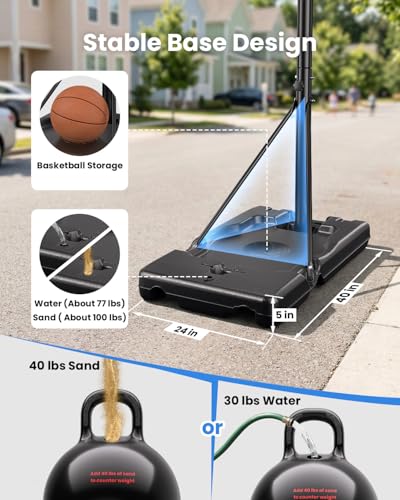
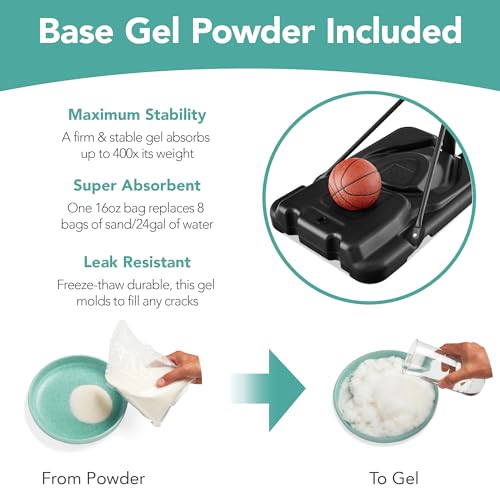
For a driveway hoop, prioritize a wide fillable base, clear ballast instructions, and a pole/base design that resists tipping when shots hit the rim or backboard. Fill the base completely with the recommended material, place it on level pavement, and avoid hanging or dunking unless the system is explicitly rated for it; wind is a common failure mode for portable hoops, so storage position matters when storms are expected. Owner feedback strongly supports this as a deciding factor: buyers repeatedly valued a stable fillable base and said the hoop felt sturdy enough after filling for casual practice and active family play.
Height Range
The right rim height keeps practice fun while still building real shooting form. A hoop that adjusts smoothly and locks firmly can serve multiple ages, while a poor mechanism may wobble, jam, or discourage regular adjustment.
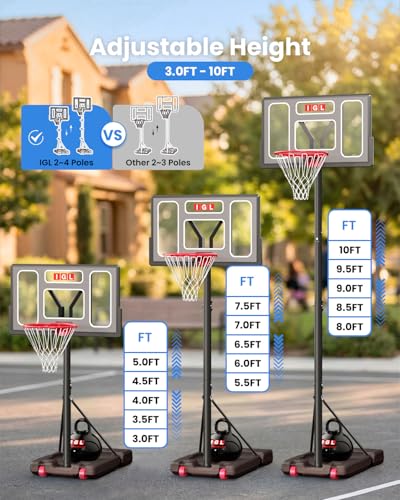
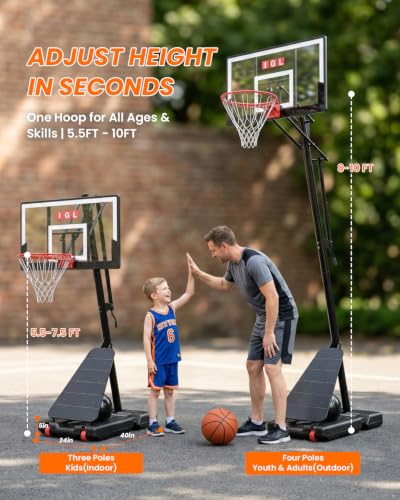
Look for a height range that matches the players now and leaves room to grow, not just a single full-size setting. Families with younger kids should favor an adjustment mechanism that adults can change easily and lock securely, with intermediate heights for skill progression before regulation height. Owners highlighted adjustable height as a major plus for growing children, from very young kids through teens who are not yet ready for a full-size hoop, and also liked that it made the hoop practical across driveway, yard, garage, and poolside use.
Portability
Driveway hoops often need to move for parking, mowing, weather, or seasonal storage. A portable hoop that is awkward to tilt, rolls poorly, or takes too much space can become a hassle even if it plays well.
Choose portability based on where the hoop will actually move: across smooth driveway pavement, into a garage, around a yard, or near a pool area. Wheels should be large enough to roll without scraping, the base should have a usable tilt-and-roll balance, and the stored footprint should fit without blocking cars, doors, or walkways. Owner comments support the importance of this dimension: buyers liked easy portability and wheels for moving around a driveway or garage, while also noting that smoother surfaces are easiest.
Build Quality
Outdoor hoops face impact, vibration, sun, rain, and repeated height adjustments. Better materials and tighter construction preserve rebound feel and reduce loosening, rattling, and premature wear.
For casual driveway play, inspect the pole sections, hardware, rim mount, and backboard material for flex, rattling, and weather exposure. A non-flimsy backboard and durable materials matter more than flashy looks, because missed shots and outdoor conditions stress the frame over time; if the hoop will live outside, check for corrosion-resistant hardware and secure caps or covers that keep water out of pole sections. Owner sentiment points to this as a strength when done well, with buyers describing durable materials, solid build quality, and a backboard that does not feel flimsy.
Easy Assembly
A driveway hoop is large enough that assembly quality affects both safety and play feel. Clear instructions and manageable hardware reduce the chance of misalignment, loose joints, and an unstable finished system.
Before buying, check whether assembly requires two adults, what tools are needed, how the pole sections join, and whether the instructions clearly separate similar bolts and spacers. Portable hoops can be manageable, but alignment mistakes during pole or backboard mounting can create wobble or force a frustrating rework; two-person setup is especially useful when lifting the backboard and pole sections. Owners generally found assembly straightforward with clear instructions and quick setup, especially with two people, but some also described it as a real project that goes much better with help.
Play Value
The best driveway hoop is the one that gets used regularly, especially in a family setting. Fun extras can extend playtime and motivation, but they should support the core hoop rather than compensate for weak construction.
After the safety and fit basics are covered, consider features that make kids actually want to play: visible markings, a satisfying rim/backboard feel, and extras such as lighting for evening driveway sessions. LED lighting can be a real engagement feature, but it should not come at the expense of stability, weather protection, or simple controls. Owner feedback supports this balance: buyers described the hoop as a fun upgrade for kids and teens, especially because LED lights made evening play more exciting, and several felt the overall package delivered strong value because it combined sturdiness, portability, adjustability, and fun.
1,000,000+ shoppers use Buyer's Guide every week to find the best products and services online.

Helping millions of users make smarter purchases online.


