














We also considered 10 others:


Our Top Choice
The order above is not editorial opinion, and it is not paid placement. It comes from what shoppers across our network actually do - which baking sheets they compare, and which they ultimately buy. We re-rank as new data comes in, so the long-term favorites have to keep earning their spot against new entrants. The full method, including how we make money.
Baking Sheets Buyer's Guide
A baking sheet has to balance flat, even heat for cookies with enough toughness for high-heat roasting and repeated cleanup. The biggest niche-specific risks are pans that warp in the oven, coatings that lose release or scratch, and set sizes that look useful but do not actually fit your oven or batch style.
Warp Control
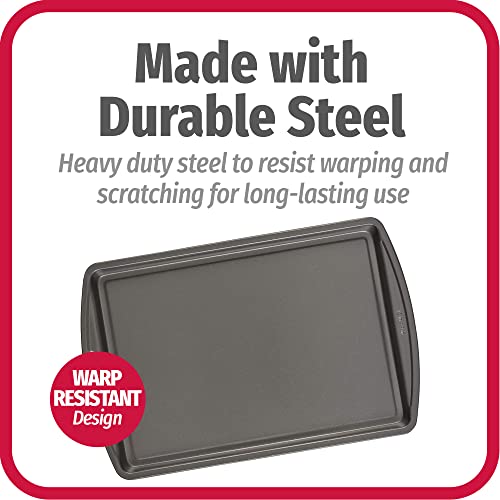
Baking sheets expand when heated, and thin or poorly reinforced pans can flex enough to tilt liquids, shift cookies, or create uneven browning. Warp resistance matters most for delicate baked goods, sheet-pan meals with oil, and any recipe that depends on a level surface.
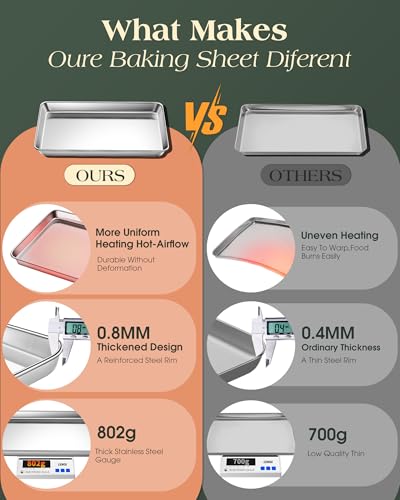
Look for a baking sheet with a heavy-gauge body and a reinforced rim, especially if you roast at higher temperatures or move pans between cold prep surfaces and a hot oven. Avoid very lightweight sheets if you bake delicate cookies, meringues, brittle, or anything with runny batter, because a bowed pan can pool fat, slide food, and bake unevenly. Owner feedback makes this a key watch-out: while many buyers describe everyday baking-sheet sets as sturdy and good for cookies and baked goods, warping is the main reported failure mode, with some pans bowing in the oven and performing worse for delicate baking.
Release & Cleanup
The sheet surface determines whether cookies lift cleanly, roasted vegetables release, and caramelized sugars scrub off without damaging the pan. Nonstick surfaces can make daily cleanup easier, but they require gentler tools and more careful heat and washing habits than bare metal.
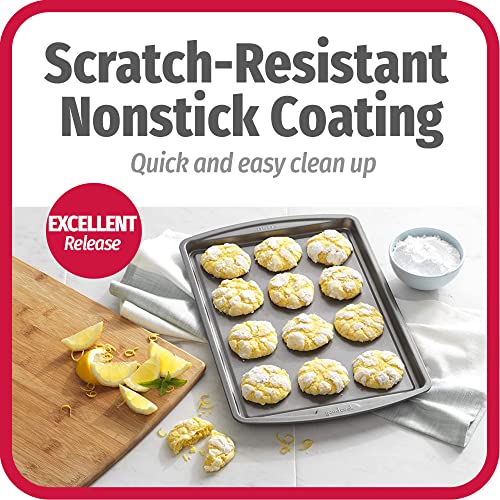
Choose nonstick if your priority is easy cookie release and low-effort washing, but pair it with silicone, wood, or nylon utensils and avoid abrasive pads. If you often roast at high heat, broil, or use metal spatulas, consider a more durable uncoated sheet used with parchment or a silicone baking mat instead. Owner sentiment strongly supports the convenience side: nonstick coatings are praised for easy food release, and cleanup is repeatedly described as one of the strongest advantages, with pans often washing easily after use.
Size Fit
The right size affects more than capacity: it controls airflow around the pan, how evenly food browns, and whether the sheet can be rotated during baking. Sets are most useful when each size fills a real role rather than duplicating a pan you already own.
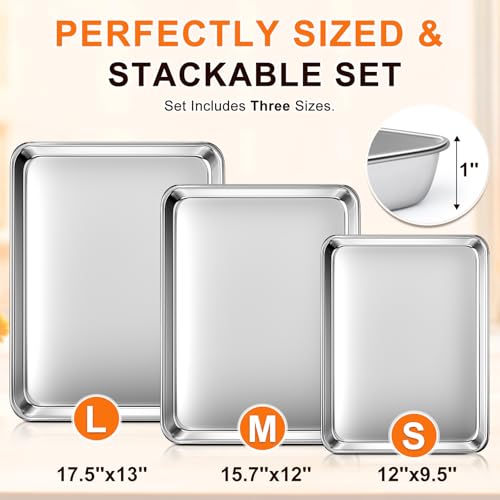
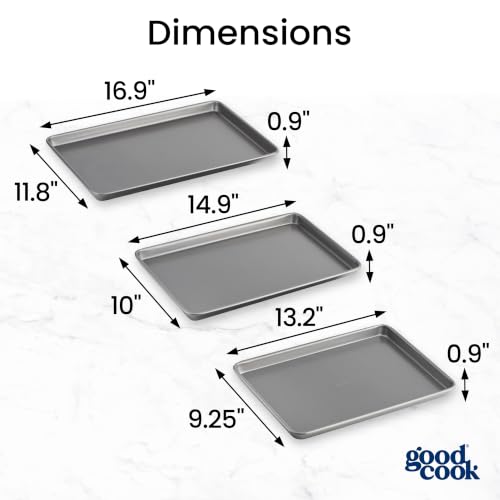
Check the actual outside dimensions, not just the advertised category name, and confirm the pan leaves space around the oven walls for air circulation. A large sheet is best for batches and roasting, a medium sheet covers most everyday baking, and a small sheet is useful for toaster ovens, reheating, nuts, small portions, and prep work. Owner reports align with this: three-size sets are repeatedly valued because they handle small, medium, and large jobs without needing extra pans, from bigger batches to quick baking.
Long-Term Wear
A baking sheet can feel excellent at first but degrade if the coating scratches, the base rusts, or the pan cannot tolerate the way it is cleaned. Long-term durability depends on both construction and care habits, especially around dishwashers, soaking, and metal tools.
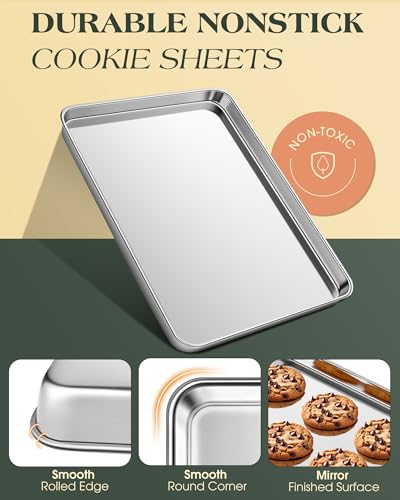
If you want the pan to look and perform well over repeated use, prioritize thicker construction, smooth rolled edges, and care instructions you will actually follow. Avoid dishwasher cleaning unless the manufacturer clearly supports it; trapped water around rolled rims and worn coatings can contribute to rust or staining. Owner feedback is mixed over time: some buyers find pans thick and long-lasting, but others report lightweight feel, coating wear or scratching, and rust when pans are put in the dishwasher.
Handling Safety
Baking sheets are often moved while loaded with hot oil, cookies, or loose roasted food, so grip and stiffness affect both comfort and safety. A pan that is hard to grasp or flexes when full is more likely to spill or twist as it comes out of the oven.
Look for raised rims that are easy to grab with oven mitts and strong enough not to flex under a full load. Silicone grip areas can improve comfort, but they should be securely attached and rated for the oven temperatures you actually use; they do not replace oven mitts. Owner sentiment supports the usefulness of better handling features, with silicone handles called out as adding comfort and making a set feel more practical.
Set Value
A baking-sheet set is only a good value if the included pans match your cooking patterns and hold up under repeated use. More pieces can be helpful, but weak construction, redundant sizes, or fragile coatings can erase the benefit.
Judge value by usable sizes, warp resistance, coating or surface longevity, and whether the set reduces the need for extra pans. A practical set should cover everyday cookies, roasting, small portions, and reheating without including awkward sizes that will sit unused. Owner feedback points to this as a real separator: buyers often describe multi-size sets as strong value, especially when the pans feel sturdy, clean easily, and cover a range of baking and roasting jobs.
1,000,000+ shoppers use Buyer's Guide every week to find the best products and services online.

Helping millions of users make smarter purchases online.


