











We also considered 10 others:





Our Top Choice
Compare Features


The order above is not editorial opinion, and it is not paid placement. It comes from what shoppers across our network actually do - which bagged vacuum cleaners they compare, and which they ultimately buy. We re-rank as new data comes in, so the long-term favorites have to keep earning their spot against new entrants. The full method, including how we make money.
Bagged Vacuum Cleaners Buyer's Guide
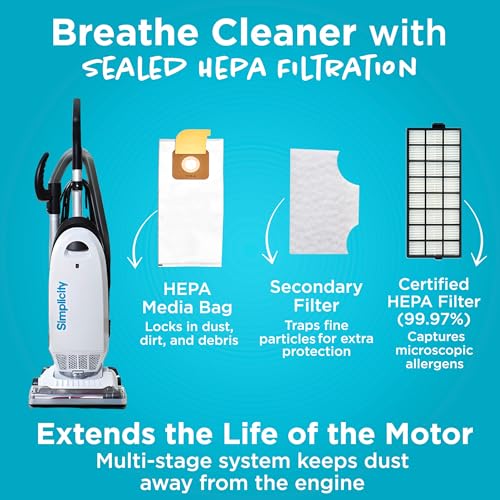
Bagged vacuums trade dust containment and steadier airflow for ongoing bag/filter costs and the need to match the right bag system to your home. The sharpest checks are whether the machine is truly sealed for allergy/pet-dander control, and whether its floorhead, hose, and attachments fit your mix of carpet, hard floors, stairs, and above-floor cleaning without losing suction or becoming awkward.
Performance
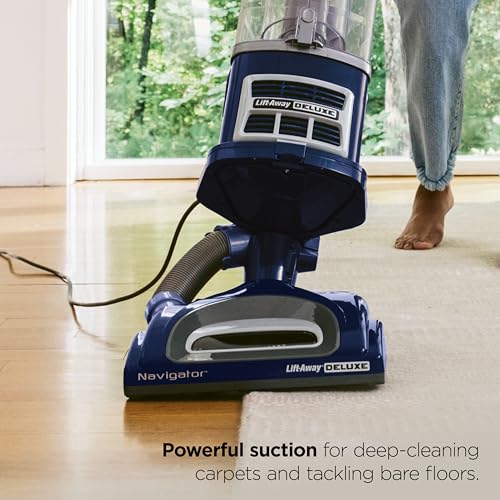
Strong suction and overall cleaning performance determine how reliably a vacuum pulls dust, hair, crumbs, and larger debris from your floors instead of just pushing them around. Look for evidence of consistent pickup on the surfaces you actually clean, such as carpet, hard floors, rugs, and along edges, and be cautious of vacuums that advertise high power but struggle with airflow, clogging, or maintaining suction as the bin fills.
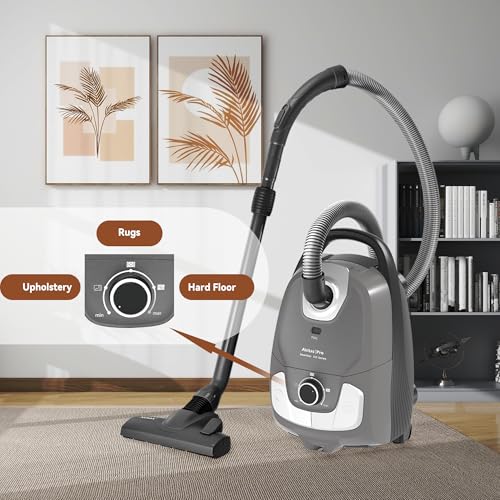
For bagged-vacuum performance, prioritize sealed airflow, a well-gasketed bag dock, easy-to-source high-filtration bags, and a floorhead that matches your flooring: brush-roll shutoff or a dedicated hard-floor mode for bare floors and area rugs, plus height adjustment or a strong powered brush for medium/high-pile carpet and pet hair. Avoid models that rely only on high motor wattage claims; the practical test is whether suction and airflow stay strong as the bag fills and whether fine dust is captured instead of leaking around the bag collar. Owner feedback supports this focus: buyers often praise strong suction for lifting dirt, dust, debris, and fine pet hair from carpet, and many report good cleaning across bare floors, textured surfaces, rugs, stairs, and carpet when the brush roll or floor mode is appropriate.
Usability
You’ll use a vacuum more often if it’s easy to set up, maneuver, empty, and clean, so pay attention to weight, handle comfort, cord length or battery convenience, attachment changes, and how well it reaches under furniture or into tight spaces. Look for straightforward maintenance, including washable or easy-to-replace filters, simple brush-roll access for hair removal, and bins or bags that empty without making a mess. Also watch for noise level, awkward assembly, finicky controls, or “self-cleaning” features that still require regular hands-on upkeep.
For usability, check the bag-change system before buying: the bag should self-seal or remove cleanly, the compartment should be easy to access, and the full-bag indicator should be visible enough that you do not run the vacuum clogged. Also weigh the tradeoff between upright and canister layouts: uprights can be faster for carpeted rooms, while canisters often make stairs, under-furniture cleaning, and above-floor dusting easier, but only if the hose, wand release, cord length, and tool storage are convenient. Owner sentiment aligns with these needs, with many buyers appreciating lighter bodies, straightforward assembly, simple daily operation, handy wand releases, and bag changes that feel cleaner than emptying dust cups.
Handling
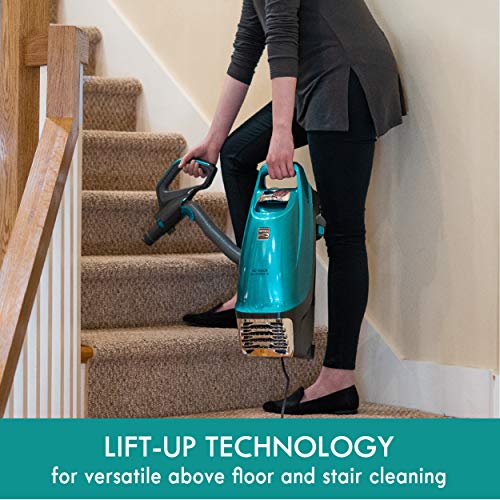
Handling matters because even a powerful vacuum can be frustrating if it feels too heavy, bulky, or awkward to move around your home. Look for a size and weight you can comfortably push, carry, steer around furniture, and lift for stairs or overhead cleaning, and consider whether features like compact storage or a handheld mode fit your space and routine. Watch out for designs that are easy on open floors but cumbersome in tight corners, on stairs, or when stored between uses.
For handling, focus on real in-use reach and control, not just listed weight: check handle weight, swivel steering, floorhead width, hose stretch, cord length, stair stability, and whether the vacuum tips when the hose is pulled. Bagged canisters should roll without snagging and not flip on thresholds; bagged uprights should push easily on your carpet pile and have a hose that is long enough for stairs and furniture without dragging the whole machine behind it. Owners frequently support lightweight and easy-steering designs, noting that lighter vacuums are easier to carry between floors, around apartments, and for older users, while swivel heads and compact bodies help around furniture, corners, and stairs.
Build
A vacuum’s build quality affects how well it holds up to frequent use, bumps, full bins, and repeated attachment changes. Look for solid-feeling materials, tight-fitting parts, stable wheels or bases, and latches, hoses, and handles that don’t feel flimsy. Be cautious with units that wobble, have loose seams, arrive in poor renewed condition, or show early signs of cracking, rattling, or unreliable operation.
For build quality, inspect the failure points that matter most on bagged machines: bag-door latch, bag collar seal, hose cuffs, wand locks, brush-roll bearings, belt access, wheel mounts, and the plastics around attachment ports. A simple bagged vacuum can be very durable, but flimsy wands, loose hose connections, or a poorly sealed bag chamber can turn good suction into dust leakage or repeated repairs; choose models with replaceable belts, filters, bags, hoses, and brush rolls if you plan to keep it for years. Owner feedback backs up both sides: many buyers describe simple bagged uprights and canisters as high-quality, dependable, and strong cleaners, but durability complaints often concentrate around plastic wands, hose attachments, and parts that feel flimsy or come apart during use.
Value
A vacuum’s value is about whether its cleaning performance, durability, features, and ease of maintenance justify what you pay. Look for the right balance for your home: strong pickup on your floor types, useful attachments, reliable construction, and affordable replacement parts or filters. Watch out for paying extra for features you will not use, or choosing the cheapest option if it struggles with your messes or wears out quickly.
For value, calculate the lifetime cost around consumables and repairability: bag price, bag availability, pre-motor and exhaust filter replacement, belts, brush rolls, and whether common parts can be bought without replacing the whole vacuum. A cheap bagged vacuum is not a bargain if it uses hard-to-find proprietary bags, leaks dust without premium bags, or becomes uneconomical after a hose or wand breaks; conversely, a basic repairable model with consistent suction can be a strong long-term buy. Owner sentiment generally finds strong value when cleaning power feels comparable to pricier machines, when buyers get deep cleaning across floor types, and when bagged HEPA/allergy-focused setups replace cheaper vacuums that lost suction; value becomes more mixed when replacement parts or repairs start piling up.
Attachments
Attachments determine how well a vacuum handles the surfaces and messes you actually have, from carpet and hard floors to upholstery, stairs, crevices, and pet hair. Look for useful tools you’ll genuinely use, such as a crevice tool, dusting brush, upholstery tool, or motorized mini brush, and pay attention to whether the main brushroll is suited to your flooring. Watch out for accessory bundles that look generous but lack onboard storage, easy tool changes, or the right cleaning head for your home.
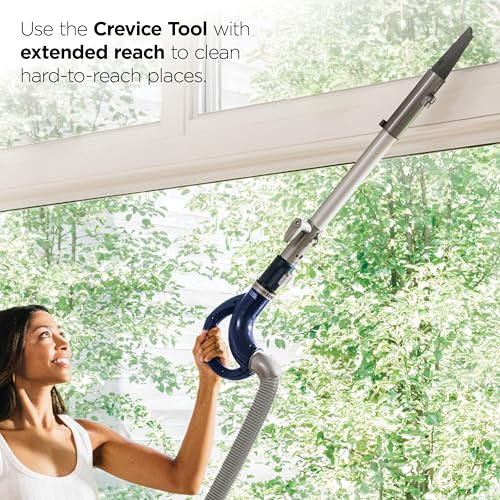
For attachments, verify the tools match the specific messes bagged-vacuum shoppers often care about: a powered or air-driven pet tool for upholstery and stairs, a crevice tool long enough for baseboards and car seats, a soft dusting brush for vents and shelves, and a hard-floor tool that will not scatter grit. Just as important, check hose length, wand rigidity, tool-locking design, and standard versus proprietary fitting size, because strong suction is wasted if the hose is too short, the wand flexes, or attachments pop off under load. Owner feedback supports this: buyers value useful attachments for pet hair, upholstery, stairs, and above-floor cleaning, but complaints often center on short or limited hoses and plastic wand or hose connections that feel flimsy or come apart.
1,000,000+ shoppers use Buyer's Guide every week to find the best products and services online.

Helping millions of users make smarter purchases online.


