


- Coverage: 1,115 sq ft in 1 hour
- Particle Removal: 99.99% down to 0.1 microns
- Filter Type: HEPA 14
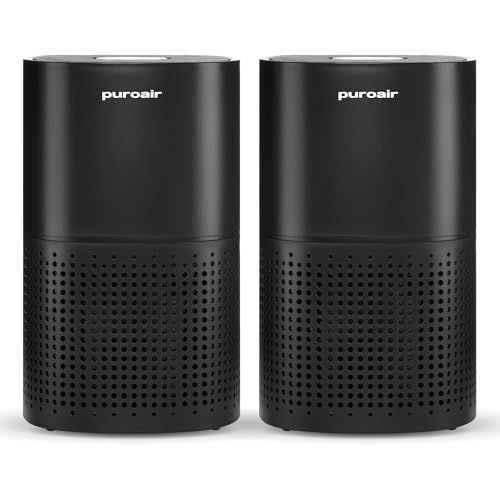
- Dimensions: 8.5" wide x 8.5" deep x 14.25" tall (each)
- Ideal For: Allergens, dust, pet dander, smoke, odors, mold, VOCs





PuroAir HEPA 14 Air Purifier
Overall Performance and Everyday Use

The PuroAir HEPA 14 Air Purifier is positioned for people who want a more rigorous level of particle filtration than the typical “HEPA-style” or even standard HEPA marketing you see on many consumer units. In practical, day-to-day terms, that focus shows up in how confidently the purifier addresses common indoor air problems like dust, pet dander, pollen, and smoke-related fine particles. If you live in a region with seasonal allergies, near traffic, or in a home with pets, the appeal of a HEPA 14–rated approach is straightforward: it is designed to target very small airborne particles that are often the ones that irritate sinuses and lungs most. As with any purifier, results are usually most noticeable when you keep it running consistently rather than treating it as an occasional “quick fix.”
In typical use, what matters is not only filtration on paper but how well the unit integrates into your routine. A purifier that is too loud on the setting you need, or too large for the space you want to place it in, tends to get used less, which defeats the purpose. The PuroAir HEPA 14 Air Purifier is best thought of as an appliance you will live with: it sits in a main room or bedroom, it runs for hours, and it should not demand constant attention. If you value a “set it and forget it” experience, you’ll want to pay attention to how it handles automatic operation, how clear its controls are, and whether filter replacements are easy to source and simple to install.
Another practical performance factor is how the purifier behaves in real rooms with doors opening, people moving around, and activities like cooking or cleaning sending particles into the air. Even strong filtration media can be undercut by weak airflow or poor placement. A unit like this tends to perform best when it has breathing room on all sides and isn’t tucked behind a couch or under a shelf. If you can place it where air circulates naturally and let it run steadily, you’re more likely to notice improvements such as less visible dust settling, reduced lingering odors, and fewer allergy-trigger moments during high-pollen days.
What to Consider Before Buying (and What Matters Most)
The first factor most people should consider is room size and air exchange needs. Air purifiers are often marketed with large coverage numbers, but what matters is the effective cleaning rate at a fan speed you can actually tolerate. If a unit technically covers a big area only when run at its loudest setting, that may not be realistic for a bedroom at night or a living room during a movie. Before buying, match the purifier to the room where you will use it most, and consider whether you want it to excel in one key room rather than trying to stretch one unit across an entire home.
The second factor is filtration standard and what you are trying to remove. A HEPA 14 focus is most relevant for fine particulate reduction, which is the core of allergy and smoke mitigation. If your main concern is dust, pollen, pet dander, and wildfire smoke haze, high-grade HEPA filtration is typically the most important feature. If your main concern is strong odors from cooking, pets, or smoke, you should also consider whether the unit includes substantial activated carbon or other odor-focused media, because particle filtration and odor adsorption are related but not identical jobs. Many users assume “HEPA” automatically solves odors; in practice, odors often require enough carbon weight and surface area to make a noticeable difference.
The third factor is noise and sleep compatibility. Many buyers discover after the fact that the setting that makes the air feel freshest is also the setting that is too loud for them to live with. The most important question here is not whether the purifier can get loud, but whether its lower and medium settings are quiet enough for your lifestyle while still delivering meaningful cleaning. If you plan to run it in a bedroom, noise becomes a top-tier priority alongside filtration quality. If you plan to run it mainly in a busy daytime space, you might accept more fan noise in exchange for faster cleanup after cooking, vacuuming, or high-traffic periods.
The fourth factor is total cost of ownership. The purchase price is only part of what you pay; replacement filters are the long-term expense that can make a “good deal” turn into a costly commitment. Before purchasing, look into how often filters need to be replaced based on typical use, whether replacements are readily available, and what they cost over a year. This is one of the most important considerations because it affects whether you’ll keep the purifier running as intended. If filters are expensive or hard to find, people tend to delay replacements, and performance can drop significantly.
The fifth factor is maintenance and usability. You want a purifier that makes it easy to do the right things: check filter status, clean any pre-filter surfaces if applicable, and swap filters without tools or frustration. Also consider whether you prefer automatic sensing modes or manual control. Automatic modes can be convenient, but they should behave predictably rather than constantly ramping up and down in a way that feels intrusive. If you are sensitive to changing noise levels, manual control may actually feel more comfortable.
If you have to prioritize, the most important factors are matching the purifier to your room size, ensuring the filtration type aligns with your air quality goal, and confirming that ongoing filter costs are reasonable. Noise level is equally important if you plan to use it while sleeping. Everything else, including secondary features and aesthetics, matters most after those fundamentals are satisfied.
Common Questions
Does a HEPA 14 purifier make a noticeable difference for allergies? For many users, yes, especially when symptoms are driven by airborne particles like pollen, dust mite debris, and pet dander. The biggest improvements typically come from running the purifier consistently in the rooms where you spend the most time, rather than only turning it on when symptoms flare.
Will it remove odors from cooking or pets? It can help, but odor removal depends heavily on the amount and quality of activated carbon or other adsorbent material in the filter system. HEPA filtration targets particles, while many odors are gases or volatile compounds that need adsorption. If odors are your primary issue, verify that the unit’s filtration includes meaningful odor-control media.
How often do the filters need to be replaced? Replacement intervals vary based on air quality, pets, smoke exposure, and how many hours per day you run it. Homes with pets or frequent cooking typically load filters faster. A good rule is to follow the manufacturer’s guidance, but also watch for signs like reduced airflow, increased noise at the same setting, or lingering dust and smells that used to be controlled.
Where should I place the purifier for best results? Place it in a frequently used room with a bit of clearance around it so air can circulate freely. Avoid corners that block intake or output, and don’t hide it behind furniture. If you’re using it for sleep, place it in the bedroom and run it continuously at a comfortable setting rather than relying on short bursts.
Is it better to run it all day or only when air quality seems bad? Continuous operation is usually more effective because it prevents particle levels from building up. Running it all day at a moderate, tolerable setting often provides steadier results than occasional high-speed runs, especially for allergy control.
Overall, the PuroAir HEPA 14 Air Purifier is a compelling option for buyers who prioritize serious particulate filtration and want a reliable, live-with-it appliance for cleaner daily air. The smartest purchase approach is to align the unit with your room size and usage habits, confirm that noise levels fit your space, and make sure replacement filters are affordable and easy to obtain so performance stays strong over time.