


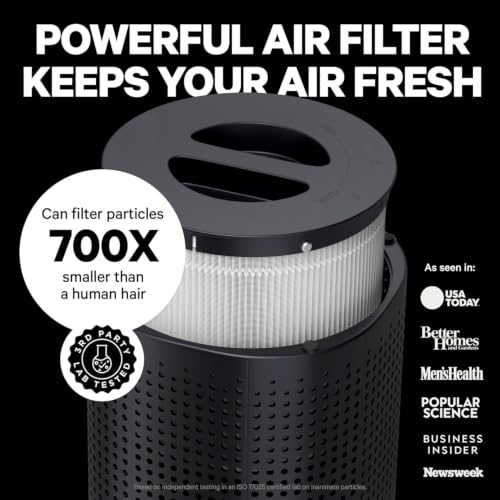
- Coverage: 1,115 sq ft in 1 hour
- Particle Removal: 99.99% down to 0.1 microns
- Filter Type: HEPA 14
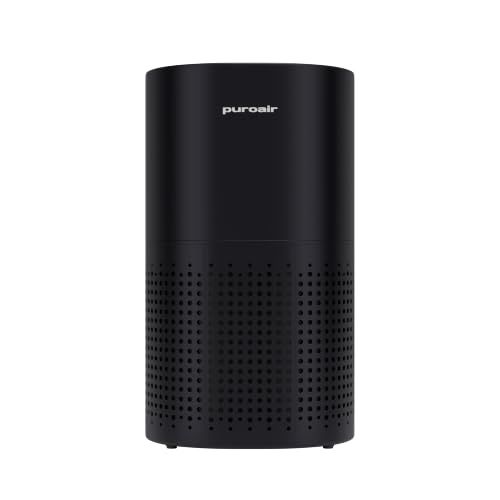
- Dimensions: 8.5" wide x 8.5" deep x 14.25" tall
- Ideal For: Allergens, dust, pet dander, smoke, odors, mold, VOCs





PuroAir HEPA 14 Air Purifier
Overview and Real-World Performance

The PuroAir HEPA 14 Air Purifier positions itself as a high-filtration, home-friendly option for people who want noticeably cleaner indoor air without turning their living space into a loud, drafty wind tunnel. The big headline feature is the HEPA 14 rating, which generally signals a higher capture efficiency than the more common “True HEPA” label that many shoppers associate with HEPA 13 performance. In practical terms, that can translate into stronger removal of fine airborne particles that often drive day-to-day discomfort: dust, pollen, smoke particles, and pet dander. If you’re sensitive to seasonal allergies or you notice that your home seems to collect dust quickly, the PuroAir’s filtration focus is the main reason it stands out in a crowded category.
In everyday use, the value of an air purifier comes down to whether it can cycle air through its filters often enough for the size of your room, and whether you’ll actually keep it running. The PuroAir HEPA 14 is best thought of as a set-it-and-forget-it appliance for the rooms you live in most. When sized appropriately, you should expect a gradual but meaningful reduction in lingering odors and haze, plus a more consistent “clean” feel in the air, particularly during high-pollen weeks or when outdoor air quality drops. Like most purifiers, it performs best when doors and windows are mostly closed, because constant incoming outdoor air can outpace what even a strong purifier can process.
Noise and airflow are also part of “real-world performance.” The highest fan levels on most purifiers will be audible, but the important question is whether lower settings still do enough to justify running the unit continuously. Many users end up operating on low or medium most of the time and only increase speed when cooking, vacuuming, wildfire smoke is present, or guests arrive with pets. If the PuroAir’s sound profile is tolerable in your bedroom or office, it becomes far more effective simply because it stays on longer. Even a highly efficient filter can’t help much if the purifier is frequently turned off due to annoyance.
Another practical point is that filtration is not the same as ventilation. A purifier can capture particles and sometimes reduce odors, but it won’t add oxygen, reduce carbon dioxide buildup, or fix underlying moisture problems. If your main goal is to address dust, allergens, or smoke particulates, a HEPA 14 purifier is a solid tool. If the goal is to address humidity, mold growth from leaks, or stale air from limited ventilation, you may need a dehumidifier, building repairs, or better HVAC strategies alongside an air purifier.
What to Consider Before Buying (and What Matters Most)
Before purchasing the PuroAir HEPA 14 Air Purifier, the most important factor to evaluate is room size coverage and air changes per hour. Marketing claims can be confusing, because brands sometimes quote coverage based on a single air change, which is not the same as meaningful ongoing cleaning. A better way to think about it is whether the purifier can circulate the air multiple times per hour in the room where you’ll use it most. If the unit is undersized, you may run it at higher speeds to keep up, which increases noise and can make ownership less pleasant. If it’s correctly sized or slightly oversized, you can often run it on quieter settings while still getting consistent results.
The next most important factor is filter cost and replacement frequency. HEPA 14 filtration is a premium category, and replacement filters are a recurring expense that determines the true long-term price of ownership. You’ll want to check how often filters are recommended to be replaced based on typical use, and how that changes if you have pets, live near traffic, burn candles, cook frequently, or deal with smoke events. If replacements are expensive or hard to find, the purifier can become less useful over time because people tend to delay filter changes when the cost feels inconvenient. A purifier is only as good as the condition of its filters.
Noise level should be considered right alongside performance. If your plan is to run the unit in a bedroom, nursery, or office, you’re choosing a device that will share your space for many hours each day. A purifier that is technically powerful but distractingly loud may not be used consistently. The most important question is not whether it can get loud on turbo mode, but whether its low and medium settings are quiet enough that you’ll leave it running while you sleep, work, or watch TV. Consistency is what turns filtration into noticeable comfort.
Energy use and controls also matter, though they’re usually secondary to sizing and filters. If you plan to run the purifier continuously, you’ll appreciate a unit that doesn’t significantly increase your electricity bill. Features like automatic modes, air quality sensors, and timers can be helpful, but they shouldn’t override the fundamentals: appropriate coverage, efficient filtration, and tolerable sound. A simple, reliable purifier that you run 24/7 often delivers more benefit than a feature-rich unit that is used sporadically.
Finally, consider your specific air-quality problem. If your biggest issue is fine particulate matter from allergies or smoke, a HEPA 14 purifier is a strong match. If odors are your primary concern, you’ll want to pay attention to whether the filtration system includes substantial activated carbon, because HEPA media focuses on particles rather than gases and smells. For households with pets, the combination of strong particulate capture and a thoughtful pre-filter approach can make maintenance easier by catching larger hair and dust before they clog the main filter. Matching the tool to the problem is the difference between “it seems nice” and “I can actually feel the change.”
Common Questions
Does HEPA 14 really make a difference compared with standard HEPA?
HEPA 14 generally indicates higher filtration efficiency than HEPA 13, which is often what “True HEPA” products effectively deliver. The difference can matter most for very fine particles, especially for people who are highly sensitive. In normal homes, correct sizing, run time, and timely filter replacement can be just as important as the jump from 13 to 14.
How long should I run the PuroAir HEPA 14 Air Purifier each day?
For most households, continuous operation is ideal, especially during allergy season or periods of poor outdoor air quality. If you prefer a schedule, running it during sleeping hours and during the times you’re most active in the room is a practical minimum. The more consistently it runs, the more stable your indoor air quality becomes.
Will it remove pet odors and cooking smells?
It can help, but results depend on the amount of activated carbon and the strength of airflow through that carbon. HEPA filtration captures particles that carry some odors, but true odor control is largely a gas-phase filtration problem. For persistent smells, you may need stronger carbon filtration, better kitchen ventilation, or source control like cleaning fabrics and litter areas.
Where should I place it in a room?
Place it where airflow is not blocked, leaving space around the intake and outlet. A central location can work well, but many people get the best real-life results by placing it near the main “source” area, such as near a bed for nighttime allergies or closer to a living area where pets spend time. Avoid tucking it behind furniture or in tight corners where circulation is restricted.
Conclusion
The PuroAir HEPA 14 Air Purifier is a compelling choice for shoppers who want high-grade particulate filtration and are focused on reducing allergens, dust, and smoke-related particles in everyday living spaces. The most important purchase considerations are matching the purifier to your room size, planning for ongoing filter replacement costs, and choosing a noise level you can live with long term. If those boxes are checked, a HEPA 14 unit like this can become one of the most consistently helpful, low-effort upgrades to indoor comfort.