


- Coverage: 3,048 sq ft in 1 hour
- Particle Removal: 99.97% down to 0.1 microns
- Filter Type: H13 True HEPA
- Dimensions: 14.4" wide x 14.4" deep x 22.7" tall
- Ideal For: Allergens, dust, pet dander, smoke, odors, mold. VOCs





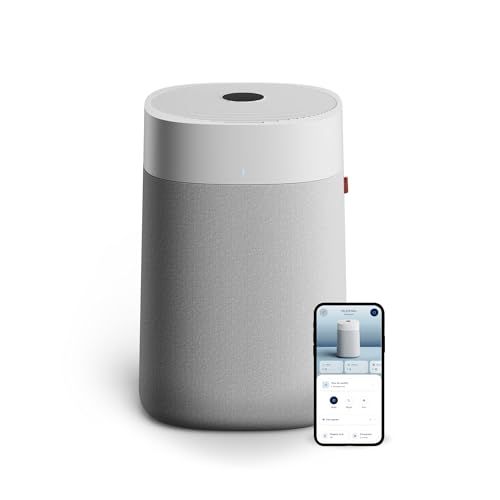
Blueair Blue Pure 211i Max Air Purifier
Overview and Everyday Performance

The Blueair Blue Pure 211i Max Air Purifier is designed for people who want meaningful improvements in indoor air quality without turning their living room into a science project. It’s a large-room purifier that focuses on the fundamentals: moving a lot of air, filtering fine particles effectively, and staying pleasant to live with day to day. In practice, it feels like a purifier built for real homes rather than a product that only looks good on a spec sheet. If you’re dealing with seasonal pollen, dusty rooms, pet dander, or the lingering haze from cooking, the 211i Max aims to be the “set it and forget it” option that keeps air noticeably fresher without constant attention.
One of its biggest strengths is how it balances strong airflow with a generally quiet profile at lower to mid settings. For many households, that’s where the purifier will spend most of its time, steadily cleaning the air in the background. On higher speeds it becomes more audible, as most high-output purifiers do, but the tradeoff is rapid air turnover that can be especially helpful when you’ve just cooked, cleaned, opened windows during high pollen hours, or had guests over. In those moments, you can feel the device shift from background helper to “active cleanup” mode.
Blueair’s design approach also tends to be more living-space-friendly than the boxy industrial look common in this category. The purifier’s footprint is substantial, but it’s visually approachable and easy to place near a wall in a family room, open-plan space, or large bedroom. For buyers who care about aesthetics, this matters because the best air purifier is the one you’ll actually keep out and running consistently.
Key Factors to Consider Before Buying
The first factor to weigh is room size and how you actually use your space. Large-room purifiers are often purchased for “the whole house,” but air cleaning is most effective when the purifier is matched to a particular area where you spend time. If your primary goal is improving air in a big open living room, the Blue Pure 211i Max is much more appropriate than a compact unit that would need to run constantly on high. If you’re trying to cover multiple closed-off rooms, you may be better served by more than one smaller purifier rather than a single large model placed in a hallway.
The most important purchase consideration for most people is clean-air performance at a comfortable noise level. High airflow is only useful if you’ll tolerate running it long enough to matter. A purifier that is technically powerful but so loud that it lives on the lowest setting can underdeliver in real life. The 211i Max is generally compelling because it can provide meaningful cleaning on lower and mid speeds, where it’s easier to live with during work calls, sleeping hours, or quiet evenings. When comparing alternatives, think less about the maximum setting and more about how it performs at the speed you’ll actually use daily.
Filter cost and replacement cadence are the next big practical issue, and they often decide long-term satisfaction. Air purifiers are not a one-time purchase; they’re an ongoing system with consumable parts. Before buying, look up the price of genuine replacement filters, consider whether you’re comfortable with that recurring expense, and think about your environment. Homes with pets, nearby construction, frequent cooking, or wildfire smoke exposure can load filters faster than a cleaner suburban environment. A purifier with affordable filters that you replace on time can outperform a more expensive model if you delay replacements because the filters are costly or hard to find.
Another factor is smart features and how much you value automation. The “i” in 211i Max signals app connectivity and features like remote control, status monitoring, and potentially scheduling or automation depending on the ecosystem. Some buyers love this because it helps them run the purifier consistently and keep an eye on filter life. Others prefer a simple physical interface and never open an app after setup. The key is honesty about your habits: if app control will make you more likely to run the purifier, it’s a meaningful benefit; if you dislike connected devices, prioritize intuitive controls and easy maintenance over software features.
Energy use is worth considering, especially if you plan to run the purifier all day. Most modern purifiers are relatively efficient at lower speeds, but running any high-airflow device continuously can add up over months. If you’re sensitive to utility costs, plan to use automatic or medium settings most of the time and reserve high speed for temporary events like cooking or smoke intrusion.
Finally, consider placement and airflow behavior. Large purifiers need breathing room. If you tuck the unit behind a sofa or wedge it into a tight corner, you may reduce how effectively it circulates cleaned air. Ideally you place it in the room where people and pollutants are, give it a little clearance, and keep doors and windows behavior consistent with your goal. If you want to clean a bedroom at night, the best approach is often to run it in that bedroom with the door mostly closed rather than hoping it will pull air from across the house.
Common Questions
Will the Blueair Blue Pure 211i Max help with pet hair and pet dander?
It can help significantly with dander and fine particulate that stays suspended in the air, which is often what triggers allergies. It won’t “vacuum” heavy pet hair off floors and furniture, but it can reduce the airborne portion and help rooms feel less dusty over time when used consistently.
Is it loud enough to be distracting in a bedroom?
On lower settings it’s typically suitable for sleep for many people, especially if you’re used to a fan at night. On higher settings it becomes more noticeable, so a common routine is to run it higher for a short period before bed and then switch to a quieter setting overnight.
How often do filters need to be replaced?
Replacement intervals depend on your air quality, usage hours, and whether you have pets, smoke exposure, or frequent cooking. Many households find that following the filter-life indicator or checking the filter condition periodically leads to the best results. If you notice reduced airflow, more odor retention, or visible filter loading, it’s a sign to replace sooner.
Does it remove odors and smoke smells?
It can reduce some smells by capturing particles associated with smoke and cooking, but “odor removal” varies by the type of filter media and the nature of the odor. For persistent odors, performance depends heavily on ventilation habits and whether the odor source is ongoing.
Is one unit enough for an open floor plan?
It depends on how open the space truly is and where pollutants are generated. In a moderately open living/dining area, one large purifier can make a noticeable difference. If the layout has separate rooms, long hallways, or multiple floors, you may get better results by placing additional units closer to the spaces where you spend the most time.
Overall, the Blueair Blue Pure 211i Max is a strong choice for buyers who want a large-room purifier that can move serious air while remaining livable in daily routines. The most important things to get right are matching it to your room size and choosing a model you’ll run consistently at a noise level you can tolerate, while also budgeting for filter replacements. If those fundamentals align with your home and habits, the 211i Max is well positioned to deliver cleaner-feeling air with minimal fuss.