









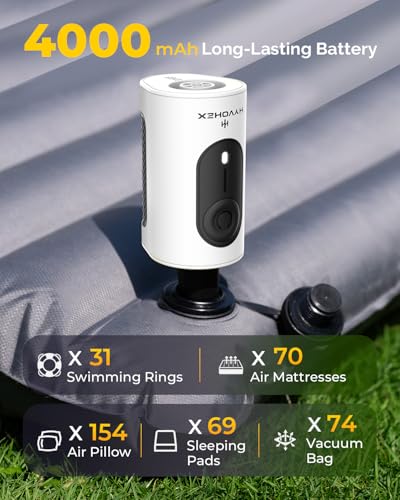


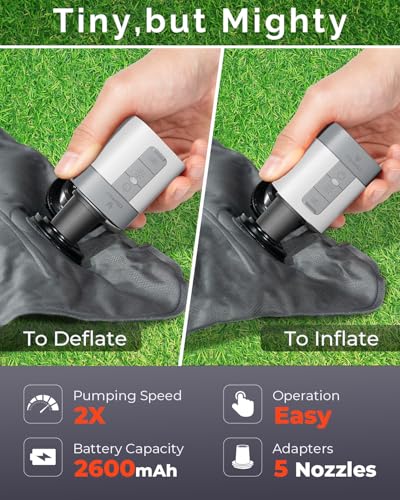


We also considered 10 others:


Our Top Choice
Compare Features


The order above is not editorial opinion, and it is not paid placement. It comes from what shoppers across our network actually do - which air pumps for inflatables they compare, and which they ultimately buy. We re-rank as new data comes in, so the long-term favorites have to keep earning their spot against new entrants. The full method, including how we make money.
Air Pumps for Inflatables Buyer's Guide
Air pumps for inflatables sit at a real tradeoff: large pool floats and air mattresses need high airflow, while tires, balls, and some pressure-rated inflatables need controlled PSI. The biggest buying risks are choosing a pump with the wrong valve adapters, too little pressure or airflow for your use, or a runtime/duty cycle that quits before the job is done.
Ease
You’ll use an air inflator more often if it’s quick to set up, easy to read, and simple to control without digging through confusing menus or attachments. Look for intuitive buttons, clear pressure settings, an accessible hose and power connection, and a design that’s easy to carry and position; watch out for awkward controls, hard-to-see displays, or accessories that make routine inflation feel like a chore.
Start by matching the pump style to the inflatable: high-volume/low-pressure pumps are easiest for air mattresses, pool toys, rafts, and float tubes, while high-pressure inflators with PSI presets are easier for tires, balls, some kayaks, and certain boards. Look for clearly labeled nozzle adapters, a hose that does not fight the valve angle, a readable pressure display if pressure matters, and automatic shutoff so you do not overinflate a tire or pressure-rated inflatable. Owners consistently support these priorities, praising compact pumps that are simple to keep in a car, preset PSI controls that reduce guesswork, useful nozzle sizes for different valves, and dependable everyday performance on pool floats, kid pools, river toys, air mattresses, tires, and other inflatables.
Performance
Performance matters because it determines whether an air inflator can handle your most common jobs quickly and reliably, from topping off car tires to filling bike tires, sports balls, or small inflatables. Look for enough pressure range and airflow for your vehicle type and intended uses, and watch out for compact units that may reach the right PSI but inflate large tires slowly or struggle with repeated use.
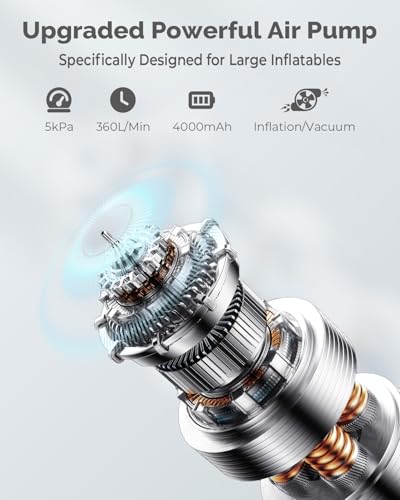
For this category, performance is not just “power”—it is the right combination of airflow, pressure, and runtime for your largest item. A pump that quickly fills a queen air mattress may not safely reach tire pressure, while a tire-focused compressor may be slow and hot when used on big pool inflatables; check maximum PSI, airflow rating, supported inflatable types, duty-cycle limits, and whether the battery can finish all items you plan to inflate in one outing. Owner reports back this split: high-airflow pumps are praised for filling air mattresses, pool floats, kayaks, and larger inflatables faster than expected, while stronger emergency inflators are valued for steady fills on large vehicle tires and even bringing a flat tire back to road pressure, with cordless battery life often sufficient for multiple tires or bikes.
Build
A well-built air inflator is more likely to work when you need it, especially if it lives in a trunk, garage, or emergency kit and gets bumped around between uses. Look for sturdy housing, secure hose and power connections, durable buttons or switches, and a gauge that stays consistent over repeated use. Watch out for flimsy plastic, loose fittings, overheating during longer fills, or reviews that mention early failures or inconsistent performance.
Prioritize sealed, sturdy valve fittings, a kink-resistant hose, heat-resistant housing, and controls that remain usable with wet hands or in low light, because inflatable pumps often fail at the adapter, hose, switch, or overheating point rather than the motor alone. If you need exact pressure, choose a model with a dependable gauge and auto-stop; if you need repeated pool, camping, or boating use, check for rugged adapters and whether the pump is intended for continuous high-volume inflation. Owner sentiment supports choosing a solidly built unit: buyers describe many pumps as dependable over years of car use, accurate enough for preset-pressure top-offs, thoughtfully designed, and solid for repeated inflatable use, with some reporting enough confidence to buy additional units for family.
Portability
A compact air inflator is easier to keep in your trunk, glove box, garage shelf, or emergency kit, so you’re more likely to have it when a tire or inflatable needs topping off. Look for a size and weight you can comfortably carry, plus practical storage for the hose, power cord, and adapters. Watch out for units that are small but awkwardly shaped or lack cord management, since they can be harder to pack neatly in a vehicle or small space.
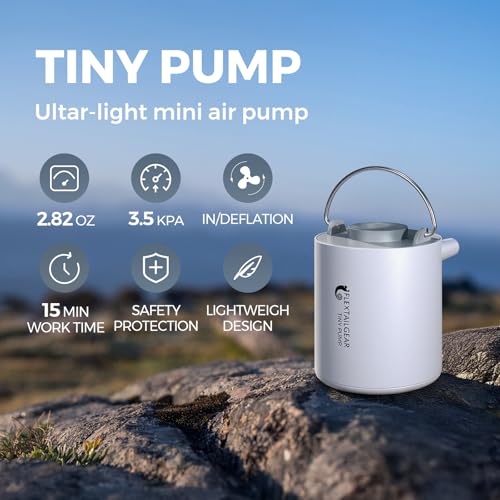
Portability should be judged by where the pump will live: glove box and roadside kits need compact storage plus a long enough cord or battery runtime, while beach, camping, cruise, and lake use benefit from cordless operation, a carry case, and adapters that stay organized. Avoid choosing the smallest pump blindly if you need to fill large rafts, air beds, or multiple floats; tiny pumps are convenient, but capacity and cooling still matter. Owners strongly value compact, lightweight designs, saying they are easy to keep in a car, truck, bag, pool kit, beach bag, boat, or camping pack, and many find them useful as just-in-case tools for roadside, bike, travel, and inflatable needs.
Value
Value matters because you want an air inflator that performs reliably, works at the pressure and speed you need, and includes useful features without making you pay for extras you will rarely use. Look for a balance of build quality, accuracy, power options, hose and cord length, and included attachments, and be cautious of very cheap models that may inflate slowly, overheat, or give inconsistent readings.
The best value comes from buying the pump that prevents your most likely hassle: manual inflation fatigue, a useless beach pump with the wrong nozzle, a tire inflator that cannot handle a real flat, or a pool pump that overheats before a large inflatable is full. Pay for the features you will actually use—auto shutoff and gauge accuracy for pressure-critical items, deflation mode for air beds and pool gear, cordless convenience for travel, and enough airflow for large-volume inflatables—rather than assuming one cheap compact pump can do every job well. Owners tend to see strong value when a pump is compact, durable, and genuinely useful in emergencies or trips, especially when it saves manual effort, works across cars, bikes, tractors, sports balls, air beds, and pool inflatables, or includes both inflation and deflation capability.
Speed
Inflation speed matters because it determines how long you’ll be waiting to top off a tire, especially in bad weather, on the roadside, or when filling multiple tires in a row. Look for an inflator that can reach your typical target pressure without excessive run time, and watch for performance differences between topping off a few PSI and inflating a large tire from low pressure.
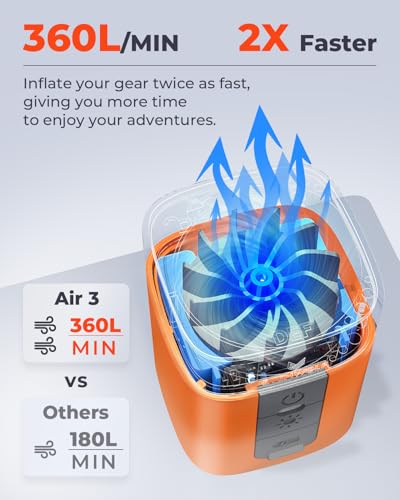
Speed depends on volume versus pressure: for pool floats, air mattresses, rafts, and kayaks, look for high airflow and wide nozzles; for tires and sports balls, look for pressure capability, gauge accuracy, and auto-stop rather than raw airflow alone. Also check whether the pump can run long enough without overheating, because a fast first fill is less useful if it needs cooldown breaks before finishing a large mattress, multiple floats, or several tires. Owner feedback consistently highlights speed as a major strength when the pump is properly matched to the task, with reports of quick emergency inflation, fast results through useful nozzle sizes, steady fills on large tires, and large summer inflatables, air mattresses, tubes, rafts, and pool floaties filling in only a few minutes with little effort.
1,000,000+ shoppers use Buyer's Guide every week to find the best products and services online.

Helping millions of users make smarter purchases online.


