


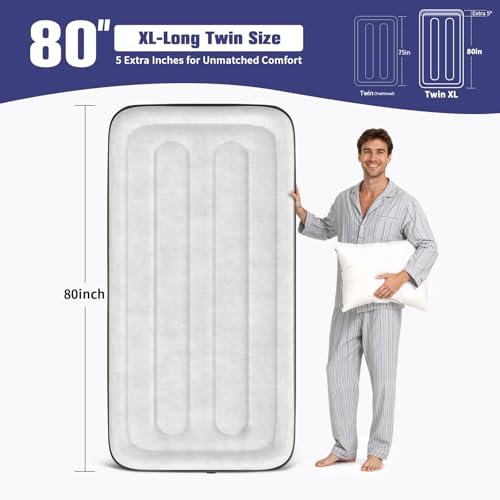





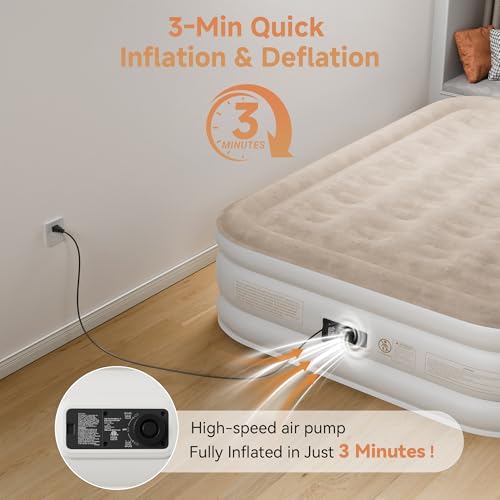


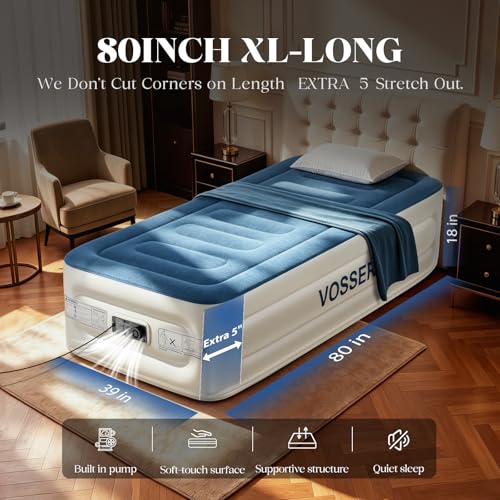


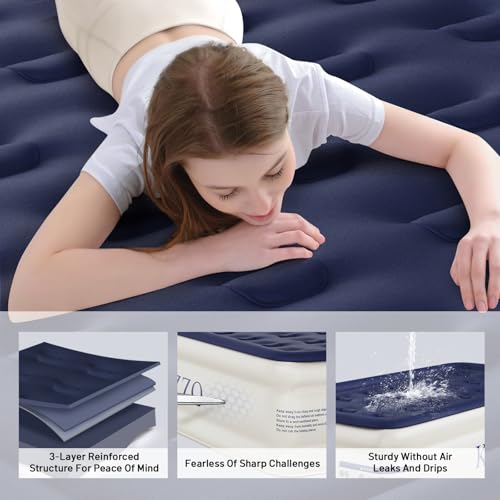











We also considered 10 others:


Our Top Choice
Compare Features


The order above is not editorial opinion, and it is not paid placement. It comes from what shoppers across our network actually do - which air mattresses they compare, and which they ultimately buy. We re-rank as new data comes in, so the long-term favorites have to keep earning their spot against new entrants. The full method, including how we make money.
Air Mattresses Buyer's Guide
Air mattresses trade packable convenience against two niche-specific risks: slow air loss and pump/valve failure right when a guest or camper needs a real bed. The smartest buy is not simply the thickest or tallest model; it is the one whose seams, internal support structure, pump access, and intended power source match where and how you will use it.
Build
Build matters because an air mattress has to handle body weight, floor contact, repeated inflation, and packing without stretching, leaking, or losing shape. Look for thick, puncture-resistant materials, reinforced seams, a stable internal support structure, and a dependable valve or pump connection; watch out for flimsy vinyl, weak edge support, or reviews that mention slow leaks and sagging after limited use.
Look first for puncture-resistant material, reinforced seams, a stable internal coil or beam structure, and a pump housing that does not feel like a weak plastic insert in the sidewall. For guest use, a raised profile can feel more bed-like, but for camping or kids it may be less stable and more exposed to punctures; also check weight capacity, edge stability, and whether the top surface is flocked enough to keep sheets from sliding. Owner feedback supports prioritizing build: many buyers describe better-than-expected materials, sturdy support, and a well-made feel for temporary sleeping, guests, camping, or lounging.
Comfort
Comfort matters because an air mattress that feels too hard, too bouncy, or too saggy can leave you with sore spots, poor sleep, or inadequate back support. Look for a surface that balances cushioning with stable firmness, holds air evenly through the night, and offers enough pressure relief for your hips, shoulders, and lower back. If you’ll use it for guests or longer stays, pay close attention to texture and edge support, since slick or unstable surfaces can make the bed feel less restful.
For comfort, prioritize support geometry over plushness: internal coils or beams should prevent the sleeper from sinking into a hammock shape, especially for two adults sharing the bed. Adjustable firmness is important because air beds can feel too hard when fully inflated but saggy if underfilled; side sleepers may also need a mattress pad, and campers should consider insulation because air mattresses can feel cold from below. Owners commonly report that these beds are comfortable enough for guests, temporary sleep, or camping, especially when firmness can be adjusted and the sleeping surface is roomy and raised.
Ease
An air mattress that’s easy to use saves you frustration when you need a bed quickly, whether you’re hosting guests or setting up camp. Look for simple inflation and deflation controls, clear firmness adjustments, and a design that’s manageable to move, store, and pack away. Watch out for confusing pumps, awkward valves, or setup steps that make routine use feel more like a chore.
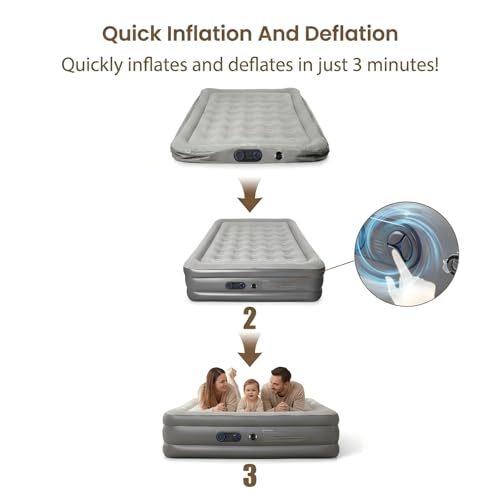
Match setup to the real location: a built-in electric pump is ideal for a spare bedroom with an outlet, but it is a liability for primitive camping unless there is also a manual or external-pump valve. Check total packed weight, whether the bed folds back into its storage bag after deflation, and whether the controls are simple enough for a guest to top off firmness without help. Owner sentiment strongly backs this as a key strength, with many buyers praising quick self-inflation, easy deflation, folding, and storage when a built-in pump is included.
Inflation
Inflation affects how quickly and easily you can set up or pack away an air mattress, especially if you’re using it for guests or travel. Look for a pump that fills and deflates the bed efficiently without needing constant monitoring, and consider whether a built-in pump, rechargeable pump, or external power source best fits where you’ll use it. Also watch for pump reliability and whether the mattress can be adjusted easily if it loses a little firmness overnight.
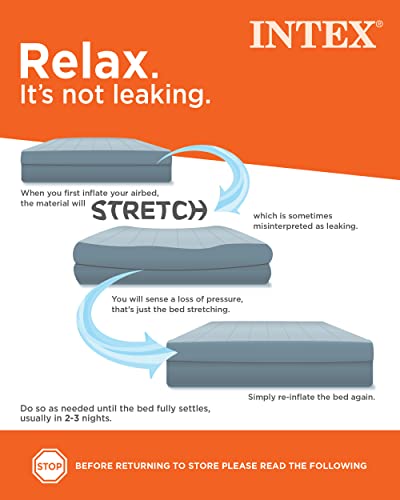
Check the inflation system as a failure point, not just a convenience feature: the best designs have separate inflate/deflate controls, a secure valve cap or gasket, and a pump that can reach usable firmness without overheating. Avoid relying on an outlet-only pump for travel unless you know power will be available, and do not overinflate on first use because new vinyl can stretch and temperature changes can alter pressure. Owners frequently highlight fast inflation and straightforward deflation from built-in pumps, making this a major convenience advantage when the pump and valve are well designed.
Retention
You want an air mattress that holds pressure through the night, because slow leakage can leave you sagging toward the floor and waking up uncomfortable. Look for strong seam construction, a reliable valve that seals tightly, and materials that resist punctures; be cautious if owners repeatedly mention “air retention” problems or waking up to a noticeably softer bed.
Air retention is the dimension to test before the first overnight use: inflate the mattress fully, let the material stretch, top it off, then leave it weighted for several hours to separate normal stretch from a real leak. Pay special attention to air loss around the pump, inflate/deflate mechanism, valve seams, and any spout area, because tiny leaks there can cause overnight softening without an obvious puncture. Owner reports are mixed in exactly this way: many say their beds stay firm through the night or multiple uses, while others report slow leaks, daily reinflation, or air escaping near the pump or valve hardware.
Value
Value matters because an air mattress that seems inexpensive can cost you more if it leaks, sags, or feels uncomfortable after only a few uses. Look for a balance of durable materials, reliable inflation, comfort, and included essentials like a pump or storage bag, and be wary of paying extra for features that do not improve sleep quality or long-term use.
Judge value by expected duty cycle: an occasional guest bed can be a good buy if it has reliable seams, a usable pump, and acceptable comfort, but frequent multi-night use is worth upgrading for stronger air retention and better support. Look for a repair kit, clear return window, realistic weight rating, and a storage method that prevents creases or punctures; a cheap-feeling valve or pump can erase any savings if the bed deflates mid-use. Owners often see strong value when the mattress feels sturdier, more supportive, and easier to set up than expected, especially as a spare bed, travel backup, or temporary alternative to a regular mattress.
1,000,000+ shoppers use Buyer's Guide every week to find the best products and services online.

Helping millions of users make smarter purchases online.


