












We also considered 10 others:


Our Top Choice
The order above is not editorial opinion, and it is not paid placement. It comes from what shoppers across our network actually do - which tsa approved pet carriers they compare, and which they ultimately buy. We re-rank as new data comes in, so the long-term favorites have to keep earning their spot against new entrants. The full method, including how we make money.
TSA Approved Pet Carriers Buyer's Guide
Buying a TSA-style pet carrier is really a balance between airline under-seat fit and humane pet space: the carrier must be compact enough for cabin rules but supportive enough for a cat or small dog to breathe, turn, and rest. The sharpest failure points are vague “approved” claims, cramped sizing for larger pets, and weak zippers or seams that can become safety risks during travel.
Under-Seat Fit
For in-cabin pet travel, the carrier has to satisfy two different fit tests: the airline’s published limits and the real under-seat space on the aircraft. Soft-sided carriers help because they can flex slightly, but too much collapse can crowd the pet or block ventilation.
Do not buy on a “TSA approved” label alone; for cabin travel, check the specific airline’s soft-carrier dimensions, whether the carrier can compress without folding onto the pet, and whether the pet can stay in a natural position once it is under the seat. Look for a rectangular soft-sided shape, semi-rigid frame, low enough height for under-seat clearance, and enough structure that the top does not sag into the pet’s head. Owner feedback strongly supports this as a deciding factor: the best-received carriers were repeatedly used successfully on flights, fit under airplane seats, and made multi-flight or long airport days more manageable, while fit became more variable for larger or heavier pets.
Pet Comfort
A travel carrier is not just a bag; it is the pet’s confined space during check-in lines, terminals, car rides, and time under the seat. The right size gives the animal room to turn, sit, and lie down without making the carrier too large for airline use.
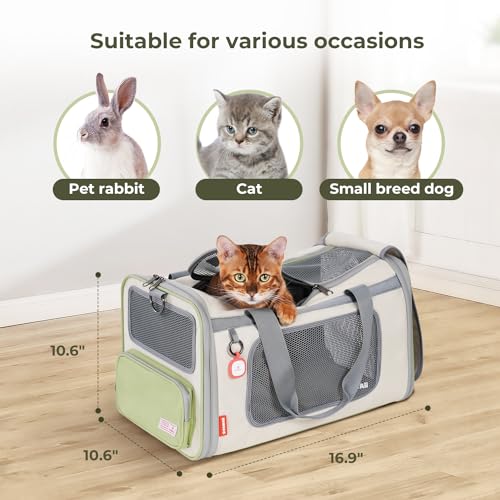
Measure the pet from nose to base of tail and from floor to shoulder or ear height, then choose a carrier that lets them lie down, turn around, and sit naturally while still meeting airline limits. Prioritize mesh ventilation on multiple sides, a supportive removable bottom pad, and visibility panels so anxious pets can see out; avoid carriers that are technically long enough but too low, narrow, or flimsy on the floor. Owners consistently praised carriers that gave cats and small dogs room to stretch, snooze, shift around, or sit comfortably, especially for small pets and many medium cats. They also valued fuzzy or washable pads, ventilated mesh, and open sides that helped pets settle during travel.
Secure Build
Pet carriers fail in places that matter: zippers, mesh seams, bottom panels, and frames. A secure carrier should resist clawing, keep its shape when lifted, and prevent a nervous pet from forcing an opening.
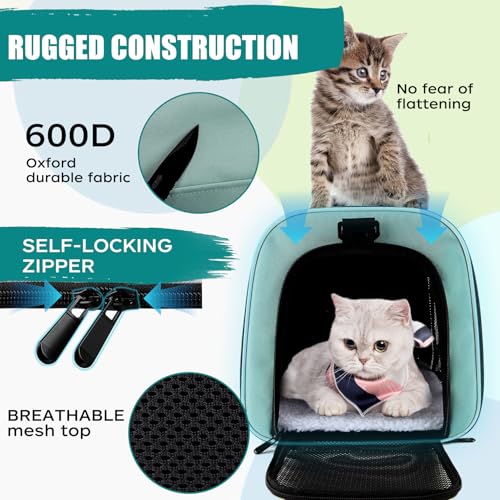
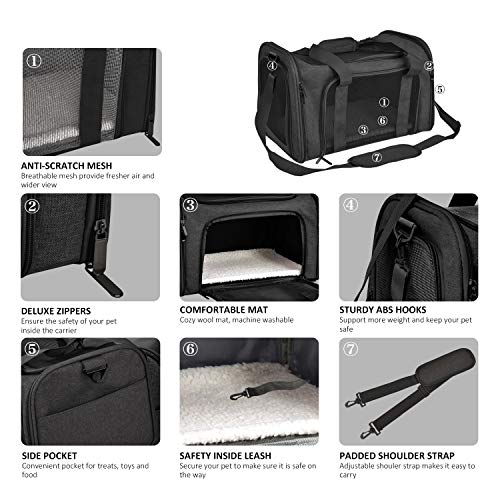
Inspect the stress points before trusting a carrier for travel: zipper tracks should run smoothly and meet securely, mesh should be tightly sewn into the fabric, handles should be reinforced, and the bottom should not bow sharply under the pet’s weight. For escape-prone cats or anxious small dogs, interlocking or lockable zippers and strong seam construction matter more than decorative features. Owner sentiment strongly favors carriers that feel well constructed, sturdy, durable, and safer than basic options, with praise for strong fabric, well-sewn mesh, solid frames, and long-term durability. The main warning is zipper consistency: feedback on zippers was more mixed than on overall build, with some owners reporting stable, secure operation and others noting zippers coming undone or feeling less reliable.
Travel Handling
Air travel with a pet means carrying the animal, documents, treats, and luggage through crowded spaces. A good carrier reduces strain without compromising the pet’s support or the carrier’s stability.
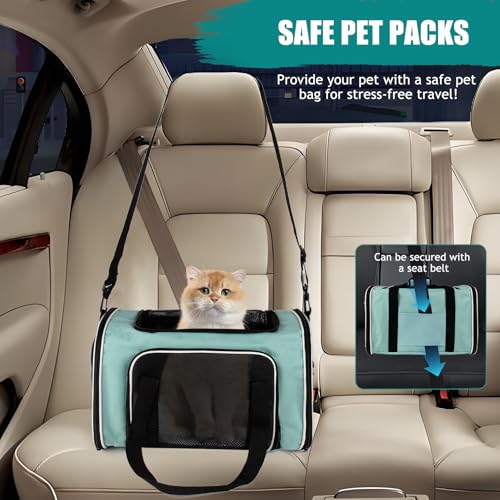
Choose a carrier that is light enough to carry one-handed but structured enough that the pet does not swing, sag, or slide when you walk. Useful travel features include padded shoulder straps, sturdy grab handles, a luggage-handle sleeve, fold-flat storage, a seatbelt loop for car rides, and pockets for small essentials; for heavier pets or long terminal walks, consider whether the carrier can work with a wheeled base. Owners repeatedly praised carriers that were lightweight, practical for car rides and flights, easy to carry, foldable for storage, and able to slide over luggage handles. They also noted that heavier pets can make long walks harder, even when the carrier itself is roomy and dependable.
Access Features
Expandable panels and multiple openings can make travel calmer, but only when they are used at the right time and do not interfere with airline fit. They are most useful during waiting periods, car stops, or once the carrier is positioned safely, not as a substitute for correct base sizing.
Look for top and end openings so you can load a reluctant cat or small dog without forcing them through one narrow door. Expandable sides or tops are helpful for airport waiting areas and longer layovers, but the carrier still needs to fit under the seat when zipped to travel size; also check that expansion panels do not weaken the frame or create escape gaps. Owner feedback highlights expandable sides and tops as standout comfort features because they let pets spread out once the carrier is under a seat or opened during waiting time. Buyers also appreciated practical details such as pockets, padding, good visibility, harness straps, top openings, multiple access points, and easy storage.
1,000,000+ shoppers use Buyer's Guide every week to find the best products and services online.

Helping millions of users make smarter purchases online.


