






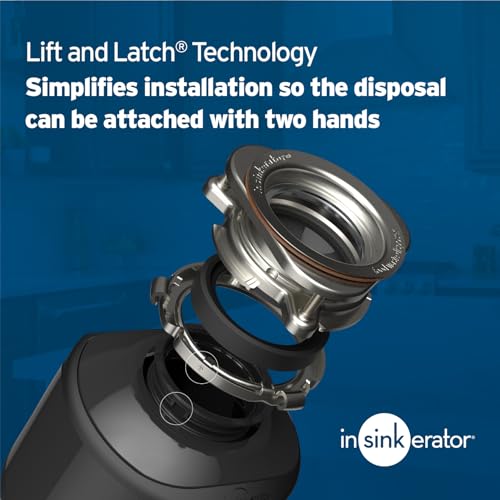





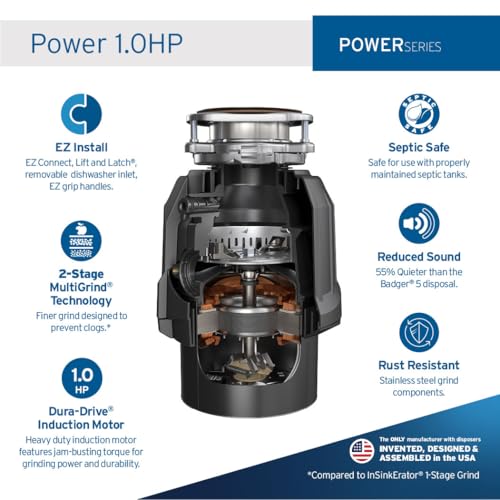


We also considered 10 others:


Our Top Choice
Compare Features


The order above is not editorial opinion, and it is not paid placement. It comes from what shoppers across our network actually do - which insinkerator batch feed garbage disposals they compare, and which they ultimately buy. We re-rank as new data comes in, so the long-term favorites have to keep earning their spot against new entrants. The full method, including how we make money.
InSinkErator Batch Feed Garbage Disposals Buyer's Guide
Batch-feed garbage disposals trade speed for controlled operation: they only run when the stopper is locked in place, which can be safer and useful where a wall switch is inconvenient, but slower for high-volume prep cleanup. The sharpest buying concerns are stopper compatibility/reliability, replacement fit under the sink, and having enough power to clear each covered batch without jams.
Build
Build quality matters because a garbage disposal lives in a wet, high-vibration environment, so weak materials or sloppy assembly can lead to leaks, corrosion, jams, or early failure. Look for durable grind components, a sturdy housing, tight seals, and solid mounting hardware, and be cautious of units that feel flimsy or rely heavily on lightweight plastic in stress points.
For a batch-feed disposal, inspect the stopper-activated start system as closely as the grind chamber: the cover/stopper must fit securely, engage the switch reliably, and be easy to replace, because the unit will not run without it. Also verify the box includes the sink flange, mounting hardware, discharge elbow, gaskets, and any outlet-pipe parts you need; missing internal or outlet hardware is a known frustration in owner reports. Shoppers replacing an existing compatible unit often find the compact body and familiar mount helpful, and owners generally describe the build as solid, durable for everyday use, and a good fit under the sink.
Performance
You want a garbage disposal that grinds food waste thoroughly and clears the sink without constant resets, jams, or lingering scraps in the drain. Look for steady day-to-day functionality with enough grinding power for your typical kitchen waste, and watch out for units that struggle with fibrous or tougher scraps, drain slowly, or require frequent intervention to keep water moving.
Because batch-feed models grind only when the stopper is locked in place, prioritize fast clearing per covered load rather than just general grinding claims; a larger chamber and jam-resistant grind system matter if you scrape full plates or prep vegetables often. Avoid undersized models if you expect to process repeated batches, since stopping to reload and re-cover the drain can feel slower than continuous feed. Owner feedback supports that everyday sink waste is handled smoothly, with many users reporting dependable grinding, few jams, and effective clearing in normal kitchen use.
Installation
Installation matters because even a good garbage disposal can become a hassle if it doesn’t fit your existing sink flange, plumbing layout, or under-sink space. Look for a unit with a compatible mounting system, clear replacement fit, and wiring setup that matches your situation—some include a power cord, while others require one to be purchased separately or hardwired. Also watch the disposal’s size and weight, since heavier or bulkier units can be harder to align and support during installation.
Before buying, confirm the disposal matches your existing sink mount, discharge height, dishwasher drain connection, and electrical setup; batch-feed units may eliminate the need for a wall switch, but they still need the correct cord or hardwired connection and a functional stopper-start assembly. Measure under-sink clearance carefully, especially if you have a deep sink, pull-out trash system, reverse-osmosis tank, or offset plumbing. Owners most often praise these as straightforward replacement installs when the existing mount and plumbing line up, while also noting that included cords or reusable mounting hardware can simplify the job.
Noise
Noise level matters because a loud garbage disposal can disrupt conversations, wake household members, or make cleanup feel more stressful, especially in open kitchens. Look for models with sound insulation, anti-vibration mounting, and smoother grinding, and remember that higher power can sometimes mean more noise if the unit is not well dampened.
In batch-feed disposals, the drain cover can help contain sound, but the real noise difference comes from motor insulation, mount vibration, stopper fit, and whether the discharge plumbing is rigidly transmitting vibration into the cabinet. If the kitchen is open to living space, look for sound insulation and a snug cover rather than assuming all covered-feed designs are quiet. Owner sentiment is favorable here: many buyers say the units sound smoother, quieter, or less intrusive than the older disposals they replaced while still grinding effectively.
Value
A garbage disposal that seems inexpensive can cost more in the long run if it jams often, struggles with everyday scraps, or wears out quickly. Look for value for money by weighing the purchase cost against motor strength, build quality, noise control, warranty coverage, and how well it fits your household’s usage. Be cautious of paying extra for features you won’t use, or choosing the cheapest option if it sacrifices durability or reliable performance.
Judge value by the total replacement package, not just the disposal body: a batch-feed model should include or clearly specify the stopper, flange, mounting parts, discharge hardware, and power connection you need, because buying missing pieces separately can erase the savings. Also factor in whether the unit can reuse your current mount and plumbing; avoiding electrical switch work or major drain changes is a major practical value advantage. Owners generally see the category as strong on price-to-performance, especially when the unit feels sturdy, fits a compact under-sink space, includes the needed cord or hardware, and performs better than a cheaper builder-grade disposal.
Power
A disposal’s power determines how easily it can grind food scraps without slowing, jamming, or leaving waste behind. Look for enough horsepower for your household’s typical use: lower-power units can suit light, occasional scraps, while stronger motors are better if you cook often or need to handle tougher items. Watch for the tradeoff that more power can mean a larger unit, so make sure it fits under your sink.
Choose horsepower based on batch size and food type: 1/2 HP can be enough for light everyday scraps, 3/4 HP is the safer middle ground for family kitchens and repeated covered loads, and 1 HP is better if you regularly grind tougher scraps or want less bogging between batches. With batch feed, underpowered units are more annoying because you cannot keep feeding continuously while the motor works; each stalled or slow batch interrupts the workflow. Owner reports line up with this: 1/2 HP models are often considered capable for normal waste, 3/4 HP models feel like a worthwhile upgrade, and 1 HP models are described as strong enough for heavier scraps and quick grinding.
1,000,000+ shoppers use Buyer's Guide every week to find the best products and services online.

Helping millions of users make smarter purchases online.