











We also considered 10 others:


Our Top Choice
Compare Features


The order above is not editorial opinion, and it is not paid placement. It comes from what shoppers across our network actually do - which bbq knives they compare, and which they ultimately buy. We re-rank as new data comes in, so the long-term favorites have to keep earning their spot against new entrants. The full method, including how we make money.
BBQ Knives Buyer's Guide
BBQ knives have to bridge two jobs that fight each other: clean, presentation-worthy slices through brisket and roasts, and enough strength for trimming, portioning, and handling large smoked meats. The biggest things to check are blade shape and length for the cuts you actually serve, edge durability around bark and fat, and a handle that stays secure when your hands are greasy or working outdoors.
Cutting
Cutting performance determines how easily your knife set handles everyday tasks like slicing, chopping, carving, and quick prep without crushing food or forcing your hand. Look for blades that feel sharp, controlled, and versatile across different ingredients, with enough flexibility for delicate cuts but enough stability for firm foods. Watch out for sets that include many pieces but lack consistent effectiveness across the core knives you’ll actually use most.
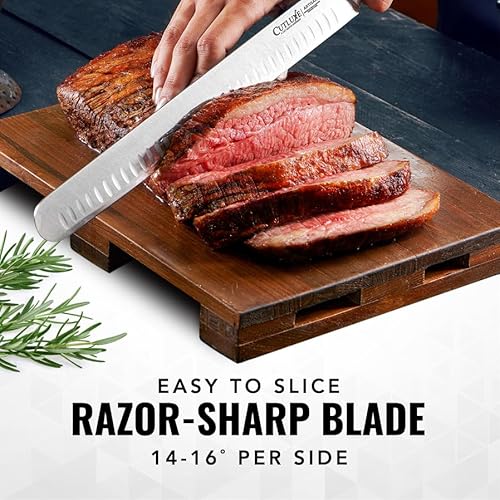
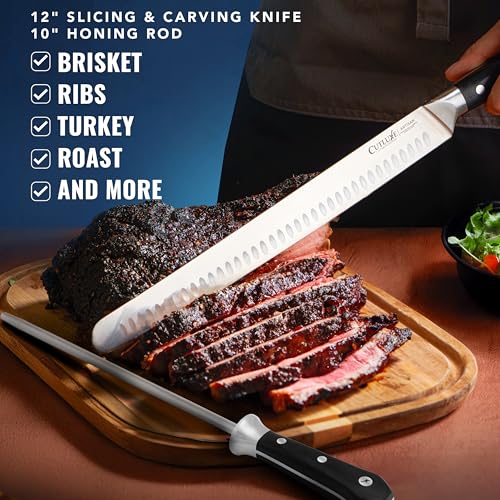
For BBQ slicing, prioritize the right blade geometry before anything else: a long, narrow slicer for brisket, ribs, turkey breast, and roasts; a curved butcher or cimeter-style blade for breaking down larger cuts; and a shorter utility or chef-style knife for trimming fat and silver skin. Avoid thick, wedge-like blades if you care about clean slices, because they can tear bark, squeeze juices out, or create ragged brisket edges. Owner feedback supports this: buyers repeatedly praise sturdy, heavy-duty knives for grilling and smoking, and long sharp blades are especially appreciated for making smooth, easy slices through brisket, steaks, roasts, poultry, pork shoulder, and other large cuts.
Quality
Quality matters because a knife set should feel solid, balanced, and dependable every time you prep food, not flimsy or rough around the edges. Look for well-finished blades and handles, tight joins with no gaps or rattling, and materials that resist staining, warping, or premature wear. Watch out for sets that include many pieces but cut corners on blade quality, handle comfort, or overall fit and finish.
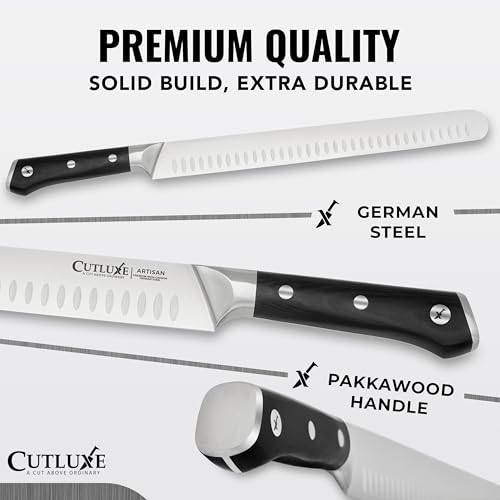
For BBQ use, quality means more than looking solid: check for full-tang construction, corrosion-resistant steel, tight handle fit, and a blade that will not flex unpredictably when moving through dense roasts or crusty bark. If the knife will live near a grill, smoker, sink, or cutting board covered in meat juices, avoid flimsy stamped-feeling tools, loose handle scales, and finishes that seem likely to trap moisture or grime. Owners tend to back up these priorities, describing many well-received BBQ knives and tool sets as substantial, thick, durable, balanced, sharp out of the box, and capable of holding up under serious meat-prep use rather than feeling like disposable budget gear.
Handling
You’ll use a knife set more safely and confidently when each knife feels comfortable, balanced, and secure in your hand. Look for handles that suit your grip size and texture preferences, with enough weight for control but not so much that chopping feels tiring. Watch out for knives that feel handle-heavy, slippery, awkwardly large, or uncomfortable during repeated cuts.
For long BBQ sessions, choose a handle and balance that let you slice repeatedly without wrist fatigue or slipping when your hands are wet, greasy, or gloved. A brisket slicer should feel controlled at the tip despite its length, while a butcher knife should have enough heft to guide cuts without feeling blade-heavy or unsafe. Buyer sentiment aligns with this: owners often praise knives that feel balanced, comfortable, firm in the grip, and substantial without becoming awkward, with some specifically noting that heavier knives still feel controlled during carving and meat prep.
Sharpness
Sharp blades make prep faster, cleaner, and safer because you use less force and get more control through foods like herbs, tomatoes, onions, and proteins. Look for a set that arrives genuinely sharp across the knives you’ll use most, with edges that bite cleanly rather than slipping or crushing, and be wary of blades that feel only moderately sharp out of the box since they’ll need maintenance sooner.
Sharpness is non-negotiable for BBQ because dull edges drag through bark, shred smoke rings, crush tender meat, and make trimming fat more dangerous. Look for a knife that arrives genuinely sharp but also has an edge profile you can maintain; very hard or decorative blades are less useful if you cannot resharpen them easily. The owner feedback strongly reinforces this concern: many buyers highlight razor-sharp out-of-box performance, effortless slicing through brisket, steaks, roasts, and everyday prep, and in some cases blades that stay sharp while handling brisket and other meats.
Value
A good knife set should feel worth what you paid because you’re buying tools you’ll use often, not just filling a block with extra pieces. Look for durable, comfortable knives that cover your real cooking needs, and watch out for large sets that seem like a bargain but include rarely used pieces or cut corners on blade quality.
Value in BBQ knives should be judged by whether the knife covers your actual cook flow: trimming before the smoke, slicing after the rest, carving poultry or roasts, and possibly serving. A multi-piece set can be worthwhile if every blade has a BBQ role, but avoid paying for filler pieces or presentation-only extras if what you really need is one excellent slicer and one durable trimming knife. Owner sentiment generally supports strong value when knives feel well-made, durable, sharp, and useful beyond one task, with buyers often saying solid construction, multiple substantial meat-prep tools, and complete grilling assortments exceeded expectations for the cost.
Design
Because a knife set often lives out on your counter, its appearance can affect how well it fits your kitchen as much as how it stores your blades. Look for a design, color, and block style that matches your space and feels easy to keep clean, but watch out for looks that hide impractical details like bulky storage, hard-to-read handle shapes, or finishes that show smudges and wear quickly.
Design should serve outdoor meat work first: look for a blade length that fits your cutting board, a profile that clears tall briskets or roasts, and handle materials that are easy to clean after smoke, grease, rub, and sauce exposure. Decorative finishes, etched patterns, gift boxes, and dramatic shapes are secondary unless the knife still has a sanitary handle, secure grip, and practical sheath or storage option. Owners do like attractive presentation, with many calling sets premium-looking, gift-worthy, distinctive, balanced, and comfortable, but those design positives matter most when they do not compromise grip, cleaning, or slicing control.
1,000,000+ shoppers use Buyer's Guide every week to find the best products and services online.

Helping millions of users make smarter purchases online.


