




















We also considered 10 others:


.png)

Our Top Choice
Compare Features


The order above is not editorial opinion, and it is not paid placement. It comes from what shoppers across our network actually do - which ada-approved water flossers they compare, and which they ultimately buy. We re-rank as new data comes in, so the long-term favorites have to keep earning their spot against new entrants. The full method, including how we make money.
ADA-Approved Water Flossers Buyer's Guide
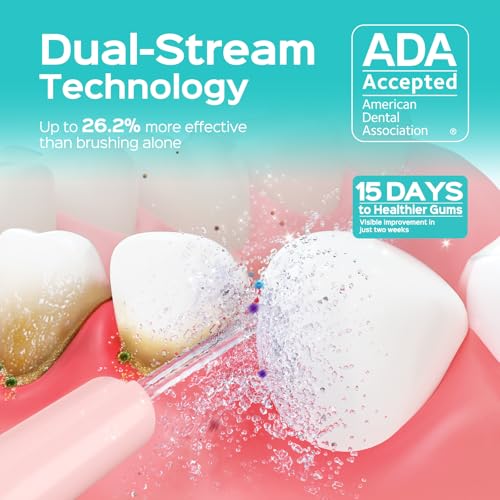
ADA-approved water flossers are worth shopping differently because the goal is not just a stronger jet—it is a device with evidence-backed gum-health and plaque-removal claims that you can use safely every day. The sharpest checks are whether the exact model carries the ADA Seal, whether the pressure range can be gentle enough for sensitive gums or dental work, and whether the tank, tips, and battery make full-mouth use realistic rather than annoying.
Cleaning
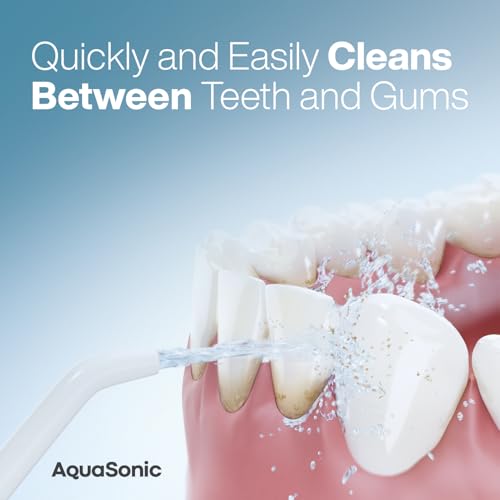
Cleaning performance matters because the main job of a water flosser is to dislodge food debris and plaque along the gumline and between teeth where brushing can miss. Look for a model with enough pressure range to feel effective without irritating your gums, and pay attention to tip design, water flow consistency, and reservoir capacity so you can complete a full clean without frequent refills. If the stream feels weak, uneven, or hard to aim, you’re less likely to get the cleaner-feeling teeth and gum support you’re buying it for.
For an ADA-approved water flosser, prioritize proven interdental and gumline cleaning over splashy “power” claims: look for angled or orthodontic/perio tips, good tip rotation, and a stream that can reach around braces, bridges, implants, crowns, tight molars, and other areas string floss may miss. Avoid models that only feel forceful but do not offer controlled gumline access or appropriate tips for your dental work. Owner feedback supports this priority: buyers often report a noticeably cleaner mouth than brushing alone, strong debris removal between teeth and around the gumline, and easier cleaning of hard-to-reach areas including braces, bridges, and implants.
Pressure
The right water pressure determines whether a water flosser feels effective without being uncomfortable, especially if you have sensitive gums, braces, implants, or tight spaces between teeth. Look for steady pressure that doesn’t pulse unpredictably or weaken during use, plus enough adjustability to start gentle and increase power as needed. Be wary of models that are either too weak to clear debris well or too harsh at their lowest setting.
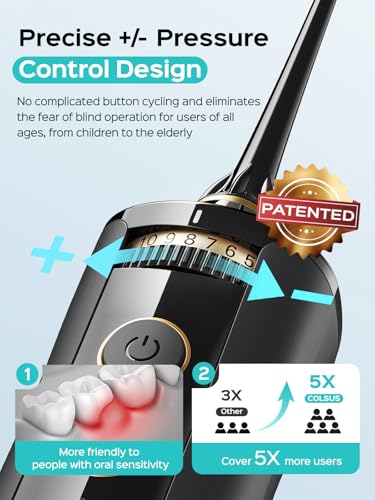
Choose a flosser with a wide, clearly stepped pressure range, because ADA-oriented daily gum care should let you start low for bleeding, recession, sensitivity, implants, recent dental work, or periodontal tenderness, then increase only as tolerated. Avoid single-speed or overly aggressive units if you have sensitive gums, exposed roots, orthodontics, or restorations, since too much pressure can make consistent use uncomfortable. Owner sentiment backs the value of adjustability: users praise multiple modes, gentle-to-strong ranges, and enough power to flush debris from molars and tight spots while still staying comfortable for sensitive gums.
Capacity
You want enough water capacity to complete a thorough cleaning without stopping to refill, especially if you use higher pressure settings or spend extra time around braces, implants, or gum pockets. Larger reservoirs are more convenient but can make a unit bulkier, while compact or cordless designs may require mid-session refills. Look for a reservoir that matches your routine and is easy to fill, empty, and clean.
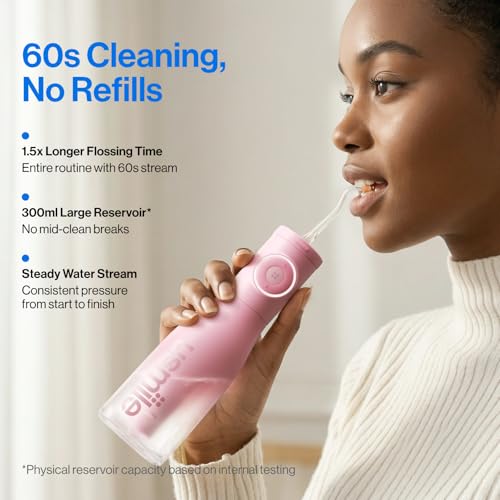
Check whether the reservoir can complete your actual full-mouth routine at the pressure you will use, especially if you have braces, aligners, implants, bridges, or multiple gumline problem areas that require slower passes. A tank around the larger cordless range is more likely to prevent mid-session refills; very small reservoirs can undermine compliance because you may stop before finishing every quadrant. Owners echo this tradeoff: larger tanks are praised for finishing a full session without refilling, while smaller reservoirs are a common watch-out when they run dry before the cleaning is done.
Ease
A water flosser that’s easy to use is more likely to become part of your daily routine, especially if you’re buying for kids, people with braces, or anyone who dislikes traditional flossing. Look for straightforward controls, a comfortable grip, simple refilling and cleaning, and tips that are easy to change; watch out for bulky tanks, awkward buttons, or pressure settings that feel confusing or hard to adjust.
The best ADA-approved option is the one you will use correctly every day, so look for simple fill/drain access, intuitive pressure controls, a grippy handle for wet hands, easy tip changes, and a form factor that fits your sink routine or travel bag. If you wear braces or aligners, check that it is easy to aim along brackets, wires, attachments, and gum margins without awkward wrist angles. Owner feedback supports ease as a major compliance factor: buyers like cordless, compact designs for travel and small bathrooms, straightforward modes, detachable tanks, and handling that makes daily use feel more practical than string flossing.
Build
A well-built water flosser is more likely to handle daily pressure, water exposure, and repeated filling without leaks, weak buttons, cracked reservoirs, or failing hoses. Look for sturdy materials, tight seals, stable charging or power connections, and parts that feel easy to remove and reattach; be cautious of flimsy plastic, loose tank fit, or reviews that mention declining pressure or early motor failure.
For this category, build quality should be judged by leak resistance, hygienic tank design, tip-lock security, water-safe construction, and whether the exact unit still qualifies for the ADA-backed claim—not just whether it feels sturdy out of the box. Avoid flimsy tip connections, hard-to-clean reservoirs, poorly sealed charging ports, or bulky shapes that make precise gumline aiming difficult. Owners generally report solid handling, lightweight designs, easy cleaning, and effective use around braces and tight spaces, which reinforces the importance of a durable but controllable build.
Battery
Battery life matters because it determines how often you’ll need to recharge your water flosser and whether it’s practical for travel, shared use, or a busy bathroom routine. Look for enough runtime to cover multiple full cleanings between charges, along with convenient charging options and clear battery indicators. Watch out for units that lose power noticeably as the battery drains or require frequent, awkward recharging.
For a cordless ADA-approved flosser, battery life matters because interrupted power can break the daily habit the device is meant to support; look for enough runtime for repeated full-mouth sessions, a clear charge indicator, and convenient charging that suits travel or small bathrooms. If you travel often, USB-C or widely compatible charging is useful, but also confirm the unit maintains pressure as the battery drains rather than fading mid-clean. Owner sentiment is strongly positive here: many buyers describe long intervals between charges, weeks of daily use, quick or convenient recharging, and cordless portability that pairs well with regular refilling and cleaning.
1,000,000+ shoppers use Buyer's Guide every week to find the best products and services online.

Helping millions of users make smarter purchases online.


