




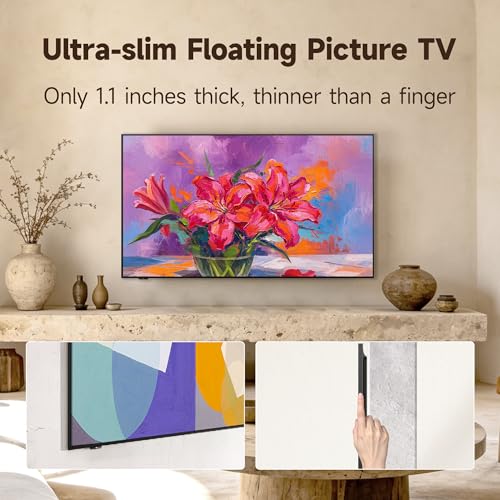




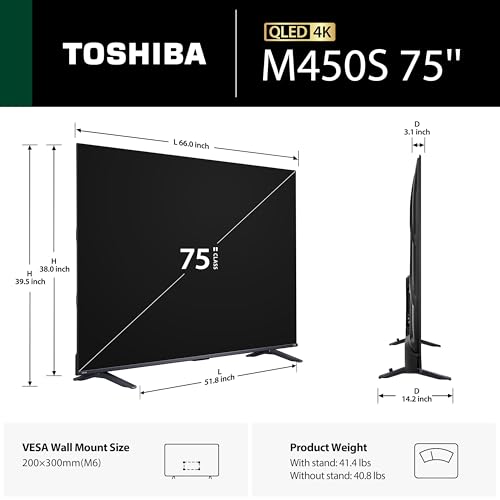


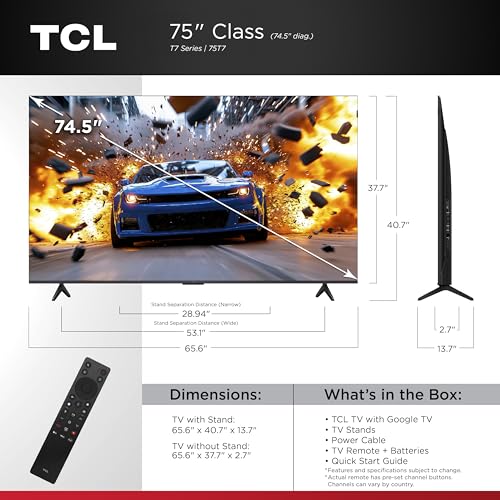
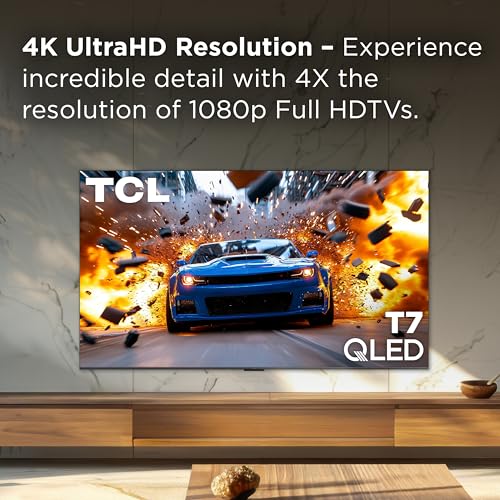


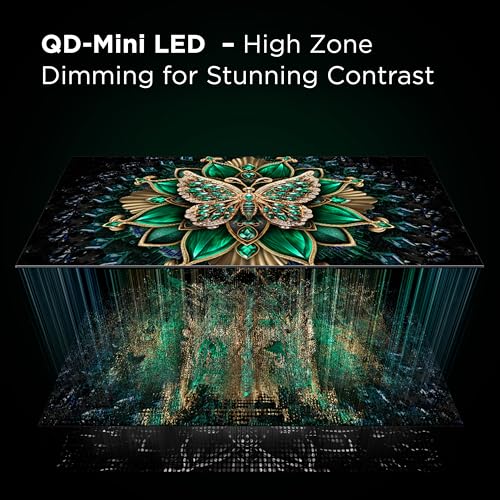


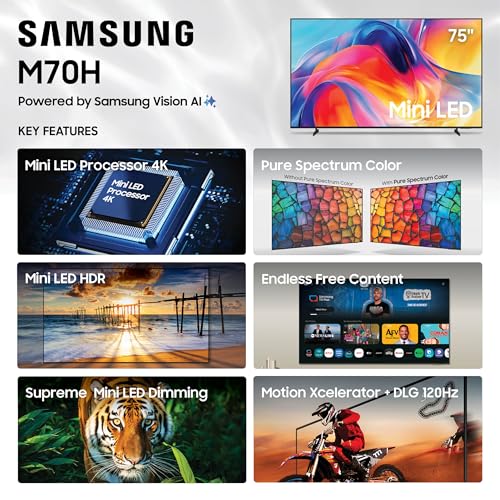


We also considered 10 others:


Our Top Choice
Compare Features


The order above is not editorial opinion, and it is not paid placement. It comes from what shoppers across our network actually do - which 75-inch qled tvs they compare, and which they ultimately buy. We re-rank as new data comes in, so the long-term favorites have to keep earning their spot against new entrants. The full method, including how we make money.
75-Inch QLED TVs Buyer's Guide
A 75-inch QLED TV is a living-room centerpiece, so the core tradeoff is not just size versus cost—it is whether the panel can stay bright, uniform, and controlled across a very large screen. The sharpest concerns are bright-room performance, blooming and screen uniformity, smart-TV responsiveness, and the practical realities of mounting or returning something this large.
Picture
Picture quality determines how clear, natural, and immersive everything looks, from dark movie scenes to bright sports broadcasts. You should look for a TV with accurate color, strong contrast, enough brightness for your room, and good motion handling, while watching out for sets that look vivid in a showroom but make skin tones, shadows, or fast action appear unnatural.
For a 75-inch QLED, prioritize brightness, local dimming quality, and viewing-angle behavior before chasing spec-sheet color claims. At this size, weak upscaling, blooming around subtitles, dirty-screen effect during sports, and washed-out off-axis seats are much more noticeable; shoppers in bright living rooms should look for strong sustained brightness and Mini-LED/full-array local dimming, while movie-focused dark-room viewers should check black levels and blooming control carefully. Owner feedback supports this emphasis: buyers consistently praise sharp, bright 4K images, vivid color, strong contrast, deep blacks on better-performing sets, and brightness high enough to stand out in sunlit rooms or even need turning down.
Features
Smart features determine how easily you can find, stream, and control the content you actually watch, so look for a clear interface, broad app support, reliable voice or remote controls, and smooth casting or device integration. Also watch for sluggish menus, missing services, limited update support, or features that sound impressive but do not improve everyday use.
For features, make sure the TV has the specific connections and formats your setup needs: enough HDMI 2.1 ports for consoles or a receiver, eARC for a soundbar, the HDR formats used by your streaming sources, reliable voice/privacy controls if you use them, and picture presets that are easy to tune for sports, movies, and daytime viewing. A 75-inch QLED often becomes the main household screen, so slow menus, confusing remotes, or limited input bandwidth can become daily irritations even if the panel looks great. Owners often feel these TVs deliver strong everyday usability for the money, but setup and remote learning can require trial and error rather than feeling effortless for everyone.
Quality
You want a smart TV that feels well built, runs consistently, and keeps delivering stable performance after the novelty wears off. Look for signs of solid construction, dependable software behavior, sturdy ports and stand hardware, and owner feedback about long-term reliability; watch out for reports of freezing, random restarts, loose panels, weak stands, or performance that degrades with regular use.
Quality checks should focus on the failure modes that matter most on a large QLED: panel uniformity, dead pixels, dirty-screen effect, local-dimming artifacts, firmware stability, Wi-Fi reliability, and whether apps remain responsive after updates. Because a 75-inch TV is difficult to return or exchange, inspect it immediately with gray-screen, sports, subtitle, and dark-scene tests, and keep packaging until you know the panel and smart platform are stable. Owner sentiment is split in the same way: buyers like the crisp, premium-feeling image and strong specs, but some report sluggish smart-TV behavior, freezes, remote problems, resets, crashes, black screens, or delayed app and channel switching.
Setup
Setup matters because a smart TV can be large, fragile, and awkward to position, especially if you plan to wall-mount it or connect multiple devices. Look for clear instructions, stable stand assembly, accessible ports, straightforward Wi-Fi and account sign-in, and a guided on-screen setup that helps you tune channels and configure picture, sound, and apps without guesswork. Watch out for TVs that require extra tools, uncommon mounting hardware, or two-person lifting beyond what your space and setup plan can handle.
Before buying, confirm that delivery, stand placement, wall-mount compatibility, and cable routing will actually work in your room; a 75-inch QLED may need two people to lift, a wide media console if using feet, the correct VESA mount, studs or masonry anchors, and enough clearance for rear or side ports. Also plan for calibration time: big bright QLEDs often look best after reducing aggressive default brightness, motion smoothing, and oversaturated store-style modes. Owners generally describe initial setup as straightforward once everything is connected, but some say the process takes time, needs trial and error, or involves a remote and smart-TV setup flow that takes getting used to.
Sound
Sound quality affects how clear dialogue, music, and effects feel, especially when you’re watching movies, sports, or shows without extra speakers. Look for a TV that can get loud enough for your room without sounding harsh, thin, or distorted, and pay attention to whether voices remain easy to understand. If the built-in speakers seem weak or lack bass, plan on pairing the TV with a soundbar or external audio system.
Do not assume a 75-inch screen automatically gives theater-grade audio; check speaker layout, dialogue clarity, bass handling, eARC support, and whether the stand or mount leaves room for a soundbar. Built-in speakers may be fine for news, sports, and casual streaming, but large open rooms, movie nights, and deep bass effects usually benefit from an external sound system. Owner feedback is better than the usual thin-TV expectation, with many buyers finding built-in audio, Dolby Atmos-style processing, or integrated speaker/subwoofer systems satisfying, though others still consider the sound merely acceptable and want a soundbar for fullness.
Value
You want a smart TV that delivers strong picture quality, smooth performance, and useful streaming features without making you pay for extras you won’t use. Look for a balanced mix of display quality, app support, connectivity, and reliability at your budget level, and watch out for models that seem inexpensive but cut corners on brightness, processing speed, or long-term software support.
Value in a 75-inch QLED comes from matching the panel technology to your room, not just maximizing screen size: a cheaper large set can disappoint if it lacks enough dimming zones, brightness, HDMI capability, or processing power for sports and streaming. Compare the total package—panel type, Mini-LED or full-array dimming, gaming ports, smart-platform speed, warranty, return logistics, and likely need for a soundbar or mount—because add-ons and exchange hassles matter more at this size. Owners frequently view these large QLEDs as strong deals, especially when they deliver bright 4K picture quality, big-screen immersion, premium-style features, and everyday navigation that feels competitive with more expensive alternatives.
1,000,000+ shoppers use Buyer's Guide every week to find the best products and services online.

Helping millions of users make smarter purchases online.


