











We also considered 10 others:


Our Top Choice
Compare Features


The order above is not editorial opinion, and it is not paid placement. It comes from what shoppers across our network actually do - which 14ft trampolines they compare, and which they ultimately buy. We re-rank as new data comes in, so the long-term favorites have to keep earning their spot against new entrants. The full method, including how we make money.
14ft Trampolines Buyer's Guide
A 14ft trampoline offers the sweet spot between backyard fun and serious space, but its size also magnifies safety, anchoring, and durability concerns. The biggest checks are whether the frame and enclosure can handle multi-child use and weather exposure, and whether your yard has enough level clearance for safe installation.
Build
You want a trampoline with a rigid, well-braced frame that stays level under repeated bouncing, because weak construction can lead to wobbling, shifting, or premature wear. Look for heavy-duty, corrosion-resistant metal, secure joints, solid legs, and a design that distributes weight evenly; be cautious of thin tubing, loose hardware, flimsy welds, or frames that flex noticeably during use.
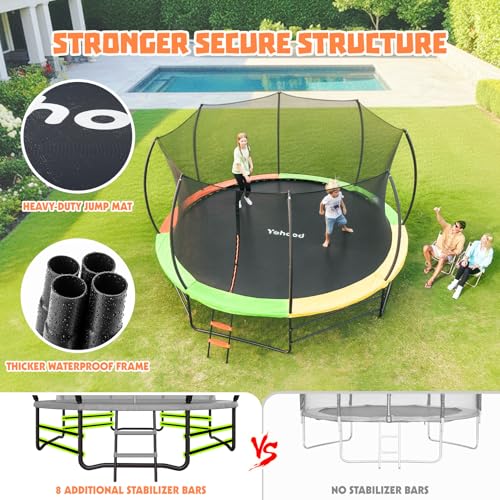
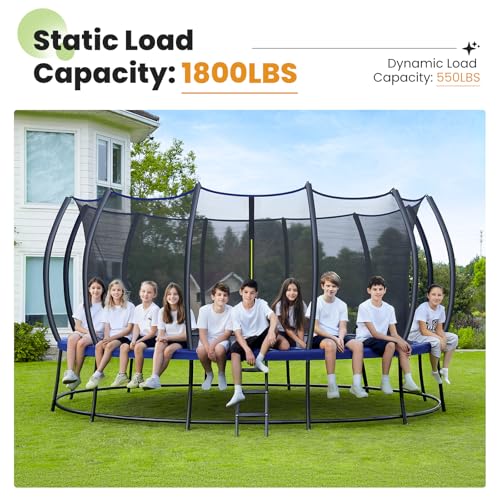
For a 14ft trampoline, prioritize a heavy-gauge galvanized steel frame, W-shaped or otherwise broad-set legs, rust-resistant hardware, UV-resistant mat and padding, and a stated user weight limit that fits the biggest likely jumpers—not just the youngest kids. Avoid models where the spring cover is thin plastic, the frame tubing feels light, or replacement mats, pads, springs, and netting are hard to source, because a 14ft unit is large enough to see years of weather exposure and multi-child use. Owner feedback supports this: families most often praise models that feel heavy-duty, substantial once assembled, stable at the base, and durable enough to justify the purchase over years of backyard use.
Safety
Safety matters because a trampoline’s protective design can reduce falls, pinches, and awkward landings, especially if kids or toddlers will use it. Look for sturdy construction, secure padding over springs or frame edges, a well-fitted enclosure or stable handle where appropriate, and clear age or weight suitability; avoid designs that feel wobbly, have exposed hard parts, or are easy for children to use unsupervised.
For safety on a 14ft trampoline, look first for a no-gap enclosure design that keeps feet away from springs, a taut net mounted inside or well away from the poles, padded poles, a secure zipper or overlapping entry, and a stable ladder that can be removed or controlled when unsupervised children are nearby. The larger jumping surface can tempt multiple kids to jump at once, so check whether the enclosure stays tight under side contact and whether the frame remains stable during uneven bouncing. Owners consistently feel most comfortable with trampolines that combine a tight safety net, no-gap mat area, stable base, ladder, and dependable closure system, especially when younger kids are using it.
Assembly
A trampoline can be large, heavy, and under a lot of spring tension, so assembly affects both how frustrating setup is and how secure the finished frame feels. Look for clear instructions, well-labeled parts, hardware that lines up cleanly, and realistic guidance on how many people are needed; be cautious of vague diagrams, poorly fitting bolts, or steps that require forcing the frame or mat into place.
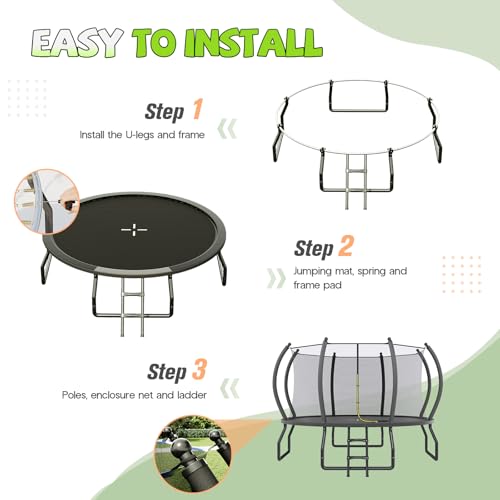
A 14ft trampoline is not a casual one-person setup: before buying, confirm the box count, yard access, required tools, anchor placement, and whether the spring tool, gloves, or T-hook are included. Plan for two adults, a level assembly area, and enough time to square the frame before attaching springs; rushing this step can create uneven mat tension, misaligned net poles, or a wobbly base. Owner reports generally support that assembly is manageable, often straightforward with clear directions and two people, though many still describe it as a one-to-several-hour project rather than a quick task.
Bounce
Bounce is the heart of how fun and usable a trampoline feels, so you want a surface that gives a lively, predictable rebound without feeling too stiff, saggy, or uneven. Look for consistent spring or elastic response across the jumping area, and watch out for designs that bottom out easily, feel dead underfoot, or lose their rebound as users get heavier or more active.
For a 14ft trampoline, choose the bounce based on who will use it: younger kids usually benefit from a controlled, not overly aggressive spring response, while teens and adults need enough spring count, spring length, and mat tension to avoid a dead or bottoming-out feel. Check the maximum user weight, spring configuration, and whether the mat remains centered under heavier jumpers; a large surface is only useful if the bounce is even across the bed. Owner sentiment is strongly positive here, with families saying the bounce is fun, roomy, and usable for children and adults, and that the large jumping area helps keep kids active for long periods.
Value
Value matters because a trampoline’s upfront cost is only part of what you’ll spend; you also want sturdy materials, safety features, weight capacity, and weather resistance that justify the price. Look for a package that includes essentials like an enclosure, ladder, padding, or anchor points, and watch out for cheaper options that seem like a deal but may need frequent replacement parts or lack key safety components.
The best value in a 14ft trampoline is not the most accessory-heavy option; it is the one that includes the safety system, ladder, weather-resistant padding, durable mat, reliable springs, anchors if needed, and obtainable replacement parts. Extras like hoops or lights can add play value, but they should not come at the expense of frame strength, enclosure quality, or UV durability. Owners tend to view these trampolines as worthwhile when they deliver a sturdy frame, secure netting, generous size, and heavy family use, with higher-cost models feeling justified when the build appears durable enough for years of use.
Size
Choose a trampoline that fits your space with enough clearance around and above it, not just one that fits the measured footprint. Pay attention to the actual jumping area, since padding, springs, and frames can make the usable space smaller than the overall size suggests. If you need to move or store it, look for a foldable design that is easy to collapse and secure without making the frame feel flimsy.
A 14ft trampoline needs more yard than its diameter suggests: allow clear space around all sides, overhead clearance from branches or wires, and level ground for every leg contact point. Also remember that a 14ft round trampoline provides less usable separation between multiple jumpers than the diameter implies, so it should still be treated as safest for one jumper at a time even if several children can physically fit. Owners like the spacious feel and say the size works for kids and even adults, but feedback is more divided on how many people it can realistically support and whether some frames or spring covers meet expectations under heavier use.
1,000,000+ shoppers use Buyer's Guide every week to find the best products and services online.

Helping millions of users make smarter purchases online.


